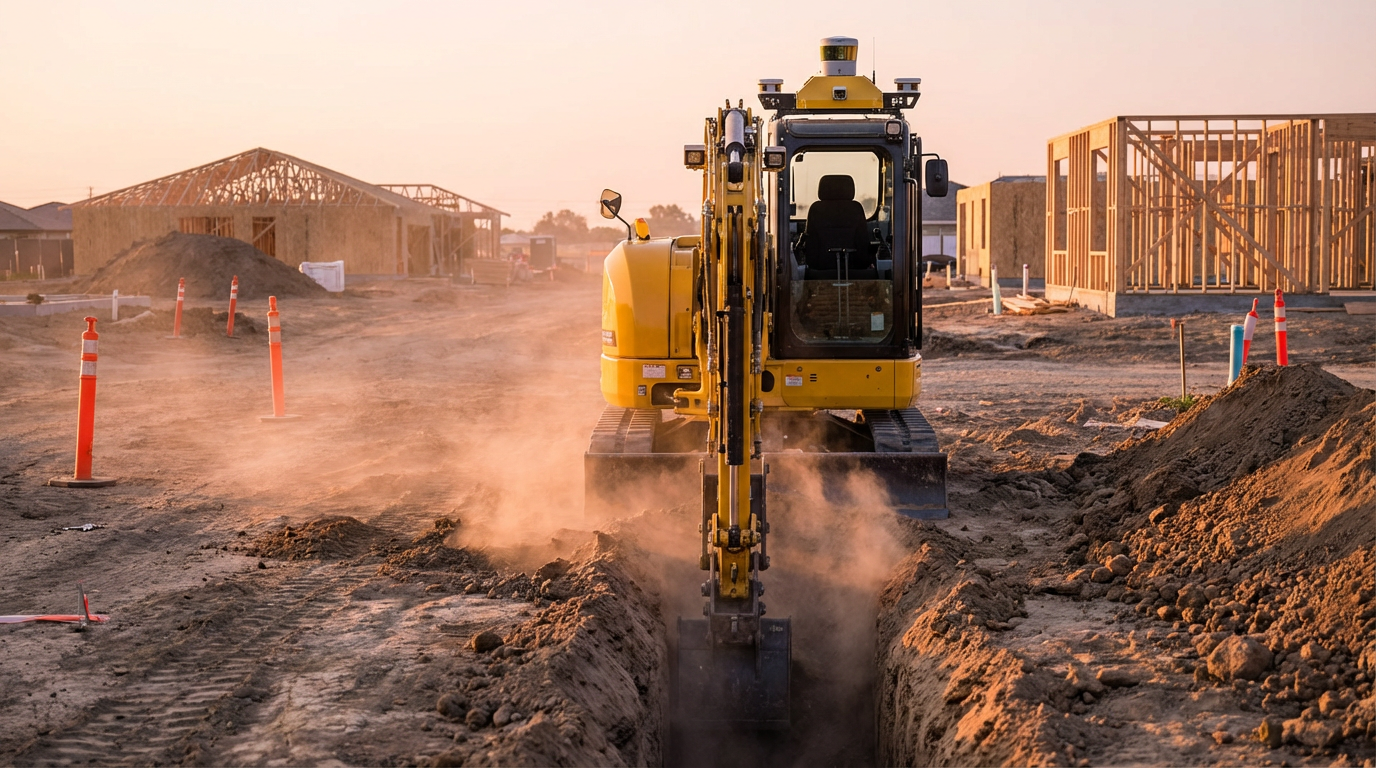
Last fall, a 40-ton excavator dug a residential foundation trench in San Mateo County. It ran for six hours straight, cutting precise grade lines within two centimeters of spec. The cab was empty the entire time. The machine was running Built Robotics’ Exosystem — an autonomy retrofit kit that turns any standard excavator into a self-driving earthmover. And it’s just the beginning of a market that analysts project will reach $7.3 billion by 2030.
The Retrofit Revolution
Built Robotics, founded by Noah Ready-Campbell in San Francisco, has raised $112 million to date. Their approach is clever: rather than building autonomous machines from scratch, they bolt AI onto equipment contractors already own. The Exosystem adds LiDAR, GPS-RTK, cameras, and an onboard computer to a standard Cat or Komatsu excavator. The machine reads a 3D site model and executes earthwork autonomously — trenching, grading, backfilling.
The economics are compelling. A skilled excavator operator in the US earns $55,000–$85,000 per year. An Exosystem-equipped machine runs nights, weekends, and holidays without overtime pay. One operator can supervise 3–5 autonomous machines simultaneously instead of running one. That’s a 3–5x labor multiplier on the most expensive phase of residential construction: site preparation.
“The ground doesn’t care if it’s 2 AM. The autonomous excavator doesn’t either. But the neighbors might — so we schedule the loud work during permitted hours and do the precision grading overnight.”
The Heavy Hitters Are Moving
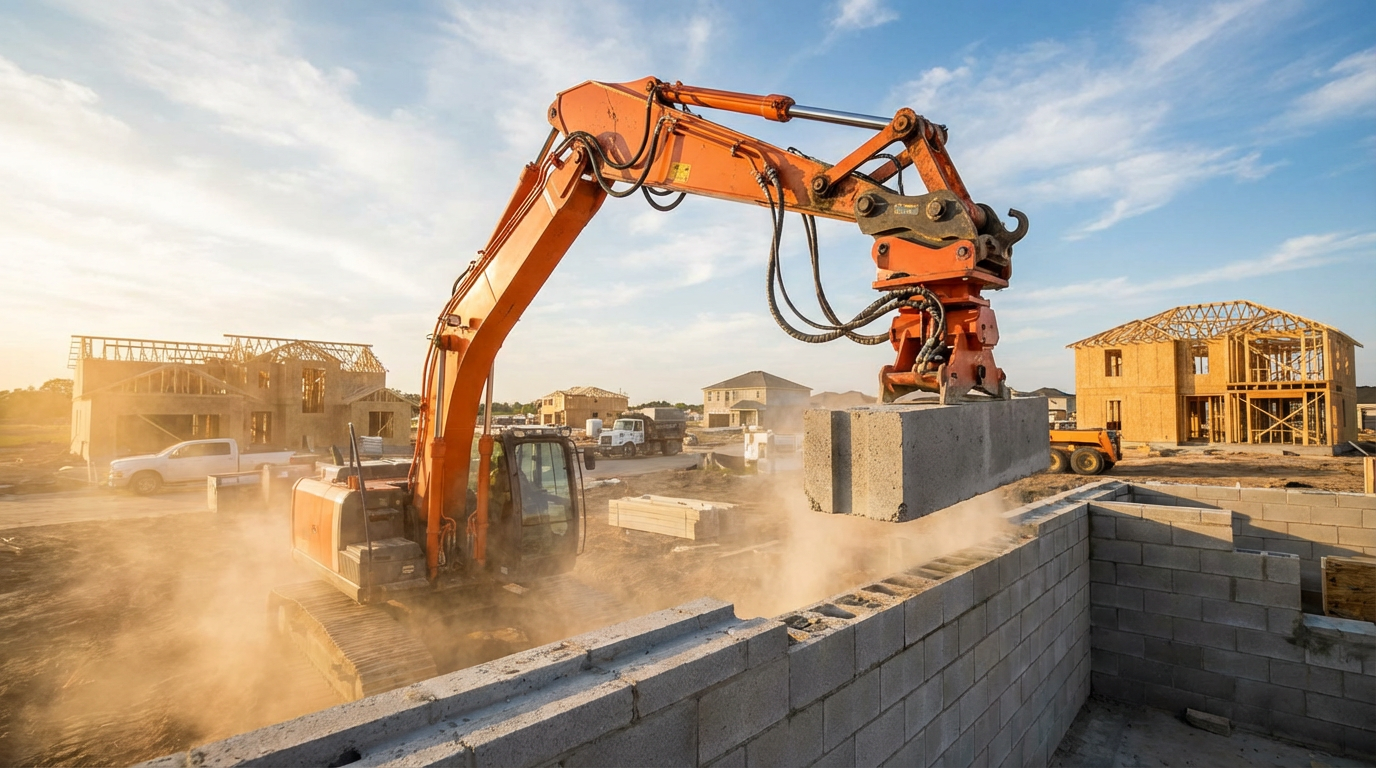
Caterpillar launched its Cat Command system for remote and autonomous operation across dozers, excavators, and compactors. In January 2026, Cat announced its “next era of autonomy” strategy, expanding from mining — where autonomous haul trucks have logged over 5 billion tons of material — into general construction. Their MineStar platform now works on construction-grade equipment.
SafeAI, backed by $67 million in venture funding, takes a similar retrofit approach to Built Robotics but targets larger fleets. Their autonomous systems run on Komatsu, Caterpillar, and Volvo equipment, with deployments across mining and infrastructure projects in North America, Australia, and Chile.
Then there’s Komatsu itself, which has been running autonomous haul trucks in mines since 2008 and is now pushing its Smart Construction platform into residential earthwork — combining drone surveys, 3D design data, and machine guidance into a single workflow.
What This Means for Your Foundation
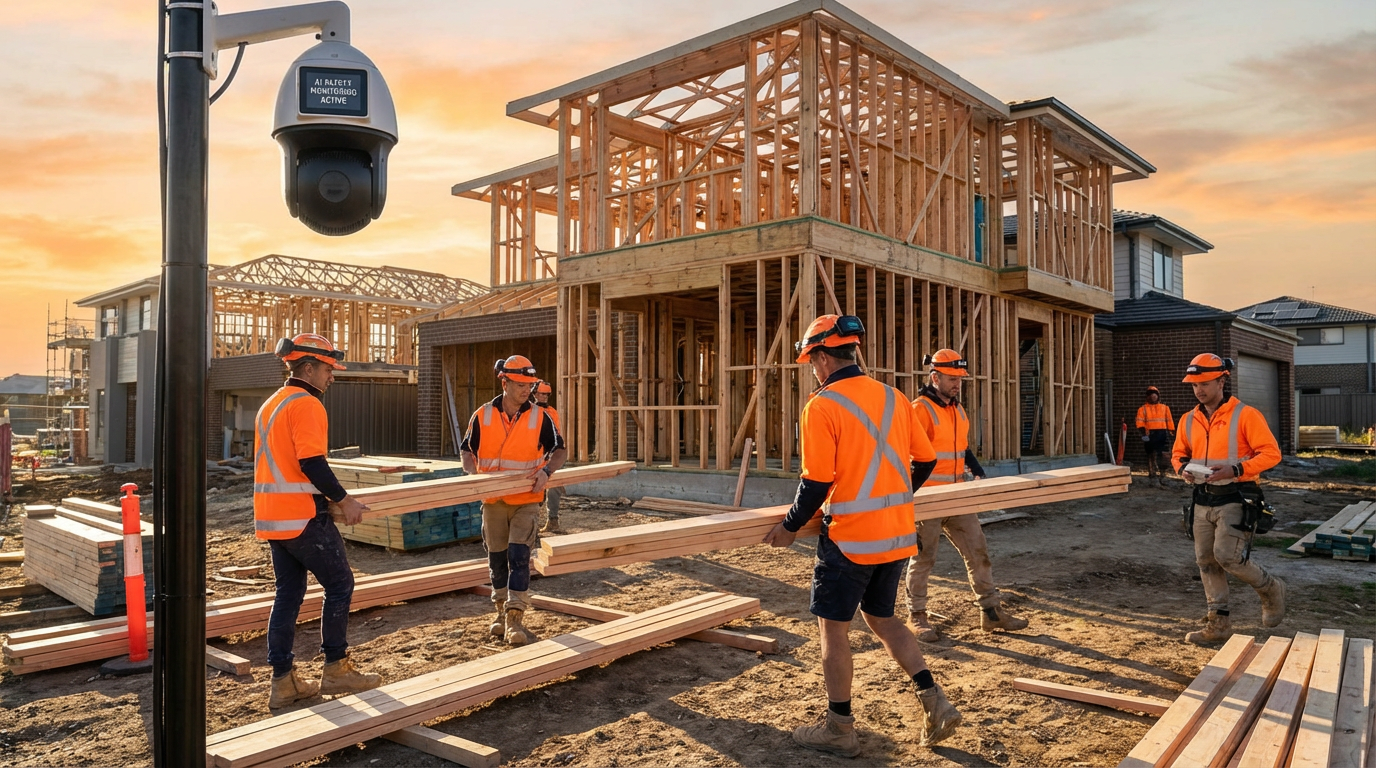
Site preparation is the most dangerous phase of residential construction. Excavation accidents account for roughly 1,000 injuries and dozens of deaths per year in the US, primarily from cave-ins, struck-by incidents, and equipment rollovers. An empty cab eliminates the operator fatality risk entirely.
Precision matters too. Traditional excavation relies on the operator’s eye and a set of grade stakes. Autonomous machines work from the digital model — the same BIM file the architect created. Overdig drops from the typical 15–20% to under 3%, which means less wasted material, less concrete to fill voids, and less money out of the homeowner’s pocket.
Don’t expect a robot excavator on your lot tomorrow. Most autonomous deployments today are on large-scale projects — solar farms, subdivisions, commercial pads. But the technology is trickling down fast. Built Robotics’ latest Exosystem fits machines as small as a mini excavator — the size you’d use on a single-family lot. Within five years, your site prep contractor might show up with a machine that digs itself.
The excavator operator isn’t disappearing. But they’re moving from the cab to a tablet, watching three machines work at once. The shovel got smart, and it doesn’t take bathroom breaks.