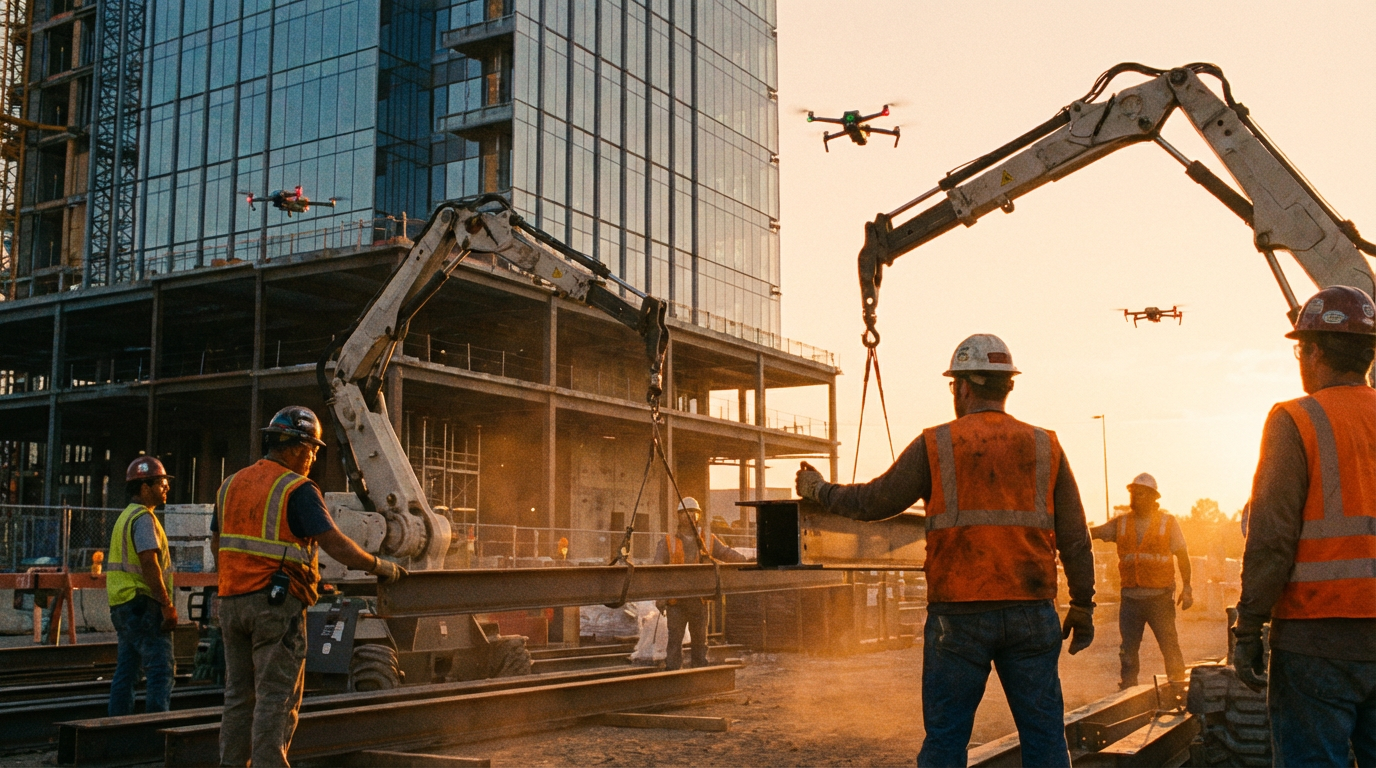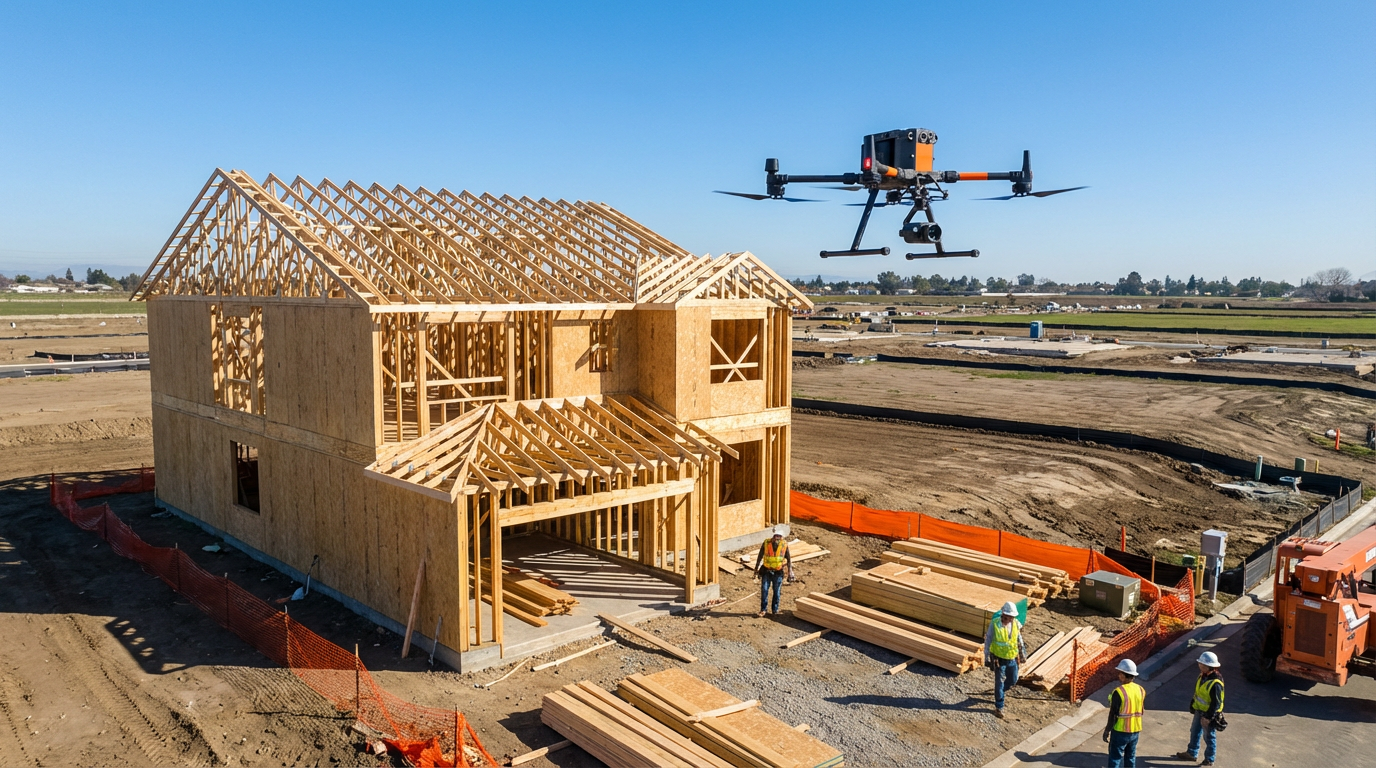
Construction kills more American workers than any other industry. In 2024, 1,032 construction and extraction workers died on the job — nearly three people every single day. Falls alone accounted for 370 of those deaths, down slightly from 400 in 2023 but still staggering. OSHA calls them the “Fatal Four”: falls, struck-by incidents, caught-in/between accidents, and electrocutions. Together they account for the vast majority of construction fatalities every year. And a new generation of AI-powered safety tools is finally attacking all four.
Eyes That Never Blink
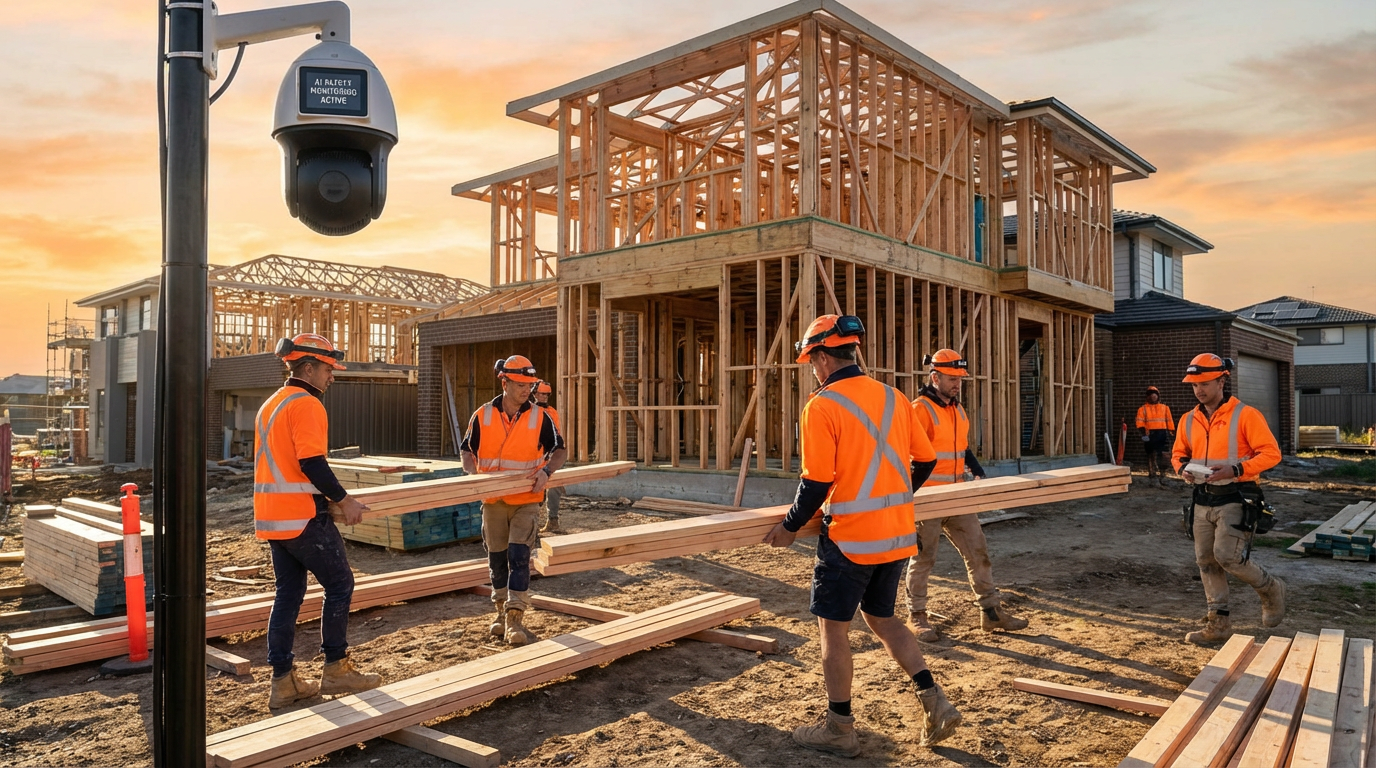
The most mature AI safety technology is computer vision — cameras that watch job sites the way a safety manager would, except they never take breaks, never look away, and never get distracted by a phone call. Platforms like EarthCam, Smartvid.io (now Newmetrix, acquired by Oracle), and Intsite use machine learning to detect over 85 types of hazards in real time.
Missing hard hat? The system flags it in seconds. Worker standing too close to a crane’s swing radius? Alert sent to the site super’s phone. Guardrail removed from a scaffolding platform? Documented and escalated before anyone steps to the edge.
“Behind every labor statistic is someone’s mortgage payment. Behind every fatality statistic is someone who didn’t come home. The technology to prevent most of these deaths exists right now.”
The accuracy is getting remarkable. EarthCam’s latest AI models detect PPE compliance with over 95% accuracy and can identify spatial relationships between workers and equipment — recognizing not just that a forklift is present, but that a worker is in its blind spot.
Wearables That Watch Your Back
Smart helmets and wearable sensors represent the next frontier. Companies like Spot-r (Triax Technologies) and Redpoint Positioning clip sensors onto workers’ hard hats or vests that track location, detect falls, and monitor environmental conditions like heat and toxic gas exposure.
The data is transformative. If a framer working in July shows elevated skin temperature and slowed movement patterns, the AI can flag a potential heat stroke risk before the worker even feels it. Construction accounts for the highest rate of heat-related deaths of any industry — 36% of all occupational heat fatalities — and that number is rising with climate change.
What This Means for Your Home Build
If you’re building a custom home, your builder’s safety record should be on your checklist right next to their portfolio and references. Here’s why it matters to you directly:
Safety incidents cause delays. An OSHA investigation after a serious injury can shut down your job site for days or weeks. AI safety monitoring dramatically reduces that risk.
Insurance costs flow downstream. Builders with poor safety records pay higher workers’ comp premiums — and those costs end up in your bid. Companies using AI safety platforms report 20–40% reductions in recordable incident rates, which translates to lower overhead.
It signals professionalism. A builder who invests in Smartvid.io or site safety cameras is running a modern operation. That same attention to systems and process usually shows up in their scheduling, budgeting, and quality control.
The Hard Truth
Most residential builders haven’t adopted this technology yet. The platforms were built for commercial construction — high-rise towers, hospitals, infrastructure projects with eight-figure budgets. A custom home builder running three crews isn’t paying $2,000/month for an AI safety platform.
But the technology is getting cheaper fast. Versatile Natures offers AI site monitoring starting at $300/month. Simple camera-based PPE detection can run on a $200 Raspberry Pi with open-source models. And the OSHA penalty for a single serious violation is now $16,131 — with willful violations reaching $161,323. The math is starting to work even for small builders.
Three workers died today. Three will die tomorrow. The tools to change that are here. The question is whether the industry will use them before the next family gets a phone call no one should have to answer.