Sixty Years to Earn a Hacking Second: Inside the Omega Caliber 3861
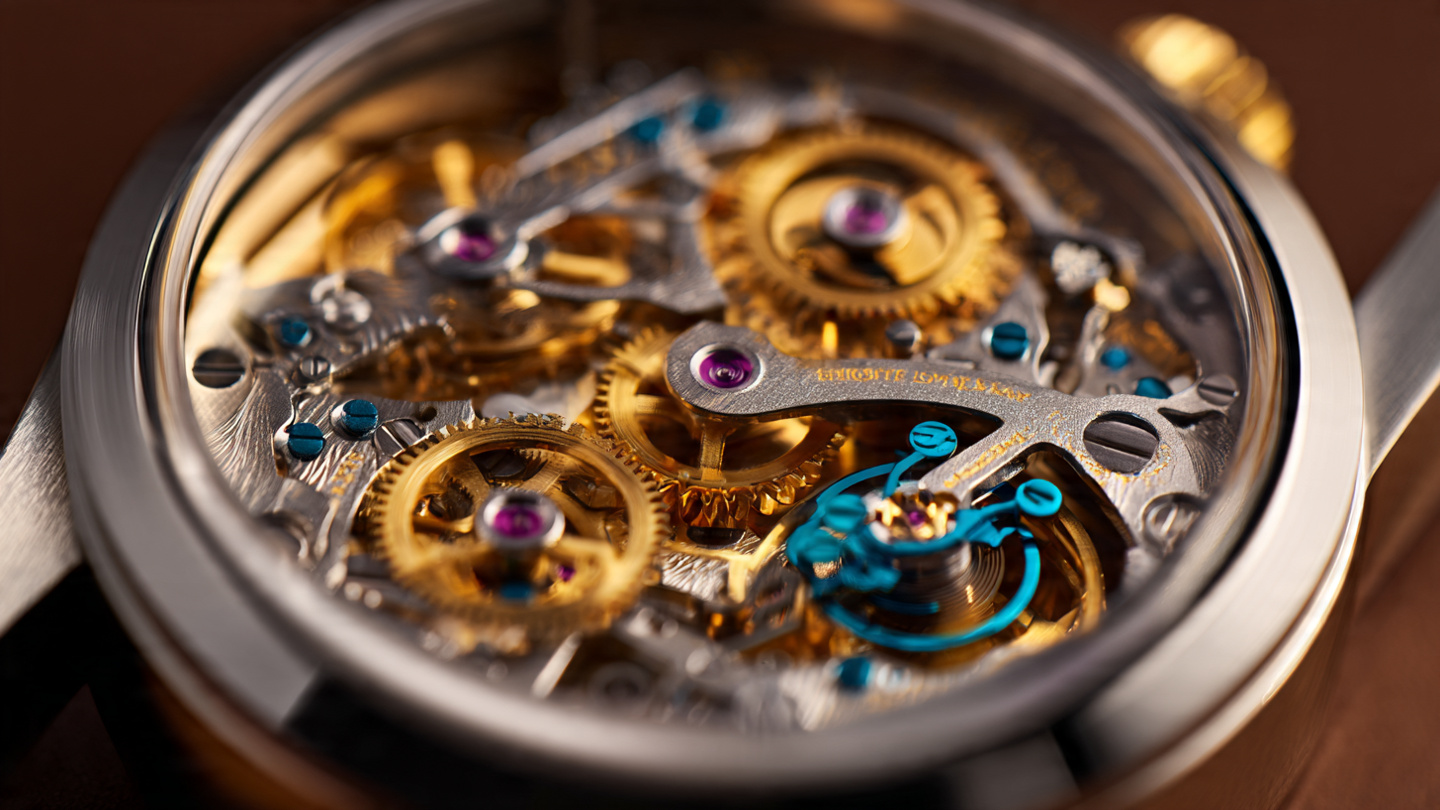
For sixty years, the Omega Speedmaster Moonwatch ran on variations of the same basic movement. Albert Piguet designed the original chronograph caliber at Lemania in the 1940s. Omega adopted it as the Caliber 321, which rode Buzz Aldrin's wrist to the lunar surface in 1969. Simplified versions followed: the 861 in 1968, the 1861 in 1996. Each generation traded away a complication or two in exchange for manufacturing efficiency, but the fundamental architecture persisted. A lever escapement with a flat hairspring, a cam-actuated chronograph, and a hand-wound mainspring delivering 48 hours of power.
In 2021, Omega retired the 1861 and introduced the Caliber 3861. On paper, the specification changes look modest: two additional hours of power reserve, a slightly better accuracy rating, hacking seconds. In practice, the 3861 represents a complete rebuild of the movement's regulatory organ, escapement geometry, and magnetic shielding. Every component between the mainspring barrel and the balance wheel is new. Omega spent over a decade developing these changes and chose to deploy them conservatively, keeping the hand-wound operation and cam-actuated chronograph that define the Moonwatch's character. It is a rare case of a watchmaker restraining itself: the technology existed to automate the winding, add a column wheel, and pack in complications. Omega did none of those things.
From Albert Piguet's Bench to Apollo 11
Understanding the 3861 requires understanding what it replaced. Lemania's Caliber 27 CHRO C12, designed by Albert Piguet in the 1940s, was a manually wound column-wheel chronograph with a 12-hour totalizer. Omega adopted a refined version as the Caliber 321 in 1957 for the first Speedmaster, reference CK 2915. When NASA began qualifying wrist chronographs for the Gemini program in 1964, the 321-powered Speedmaster survived temperature extremes from -18°C to 93°C, 40g acceleration forces, vacuum exposure, humidity, vibration at 8.8g across multiple axes, and shock loads of 40g for 11 milliseconds. No other chronograph passed every test.
By 1968, production economics demanded simplification. Lemania replaced the Caliber 321's column wheel with a cam-lever switching system, creating the Caliber 861. Column wheels require multi-axis machining and hand-finishing of each individual column. Cam levers stamp out of flat stock. Functionally, both systems start and stop the chronograph, but the cam lever produces a slightly less crisp engagement. Enthusiasts noticed. The watchmaking world has debated column wheel versus cam lever ever since.
In 1996, the 861 became the 1861 with cosmetic refinements: rhodium plating on bridges and a redesigned balance cock. Mechanically, the two are nearly identical. A Delrin (polyoxymethylene) plastic brake replaced the steel chronograph brake in the 1861 found behind solid casebacks, while the display-back variant (Caliber 1863) retained a metal brake for aesthetic reasons. Both versions lacked hacking seconds, meaning the seconds hand could not be stopped independently for time-setting. Both versions tolerated magnetic fields of roughly 60 gauss before accuracy degraded, placing them at risk from any smartphone, laptop, or magnetic clasp within a few centimeters.
Co-Axial Escapement: George Daniels Meets Lemania
George Daniels, the English watchmaker widely regarded as the greatest of the twentieth century, invented the co-axial escapement in 1974 and spent the next two decades attempting to convince the Swiss industry to adopt it. His argument was mechanical: the standard Swiss lever escapement requires sliding friction between the pallet jewels and the escape wheel teeth during each impulse. That friction demands lubrication with synthetic oils that degrade over time, causing accuracy drift and requiring service intervals of three to five years. Daniels's co-axial design separates the locking function from the impulse function using two co-axial escape wheels that deliver energy to the balance through a radial impulse rather than a tangential slide. Friction drops by roughly an order of magnitude. Service intervals extend.
Omega licensed the co-axial escapement in 1999 and debuted it in the De Ville series. Adapting it for the Speedmaster's chronograph architecture took considerably longer. A chronograph movement's gear train is more complex than a simple time-only caliber, with coupling mechanisms, return-to-zero hearts, and totalizer gearing that must coexist with the escapement without introducing parasitic friction. Omega's solution in the 3861 integrates the co-axial escape wheel assembly into the existing Lemania mainplate geometry, maintaining the original bridge layout while completely redesigning the balance cock and escapement bridge.
In operation, the co-axial escapement delivers impulse to the balance wheel through three levels: a co-axial wheel mounted beneath the escape wheel provides the primary impulse, the escape wheel itself provides a secondary impulse, and the locking function occurs on a separate pallet. Because impulse is delivered radially rather than tangentially, the pallet stones do not slide against the escape wheel teeth during the energy transfer phase. Lubrication requirements drop to a single point: the pivots of the escape wheel arbor, which rotate in jeweled bearings. In Omega's testing, this translates to accuracy stability over significantly longer periods between services compared to the lever escapement in the 1861.
Si14 Silicon: Killing the Magnetic Problem
Silicon balance springs represent arguably the most consequential materials innovation in mechanical watchmaking since synthetic rubies replaced natural gemstone bearings in the nineteenth century. Omega's Si14 variant, developed in partnership with the Swatch Group research laboratory CSEM and Rolex, uses a monocrystalline silicon wafer etched into hairspring geometry using deep reactive ion etching (DRIE), the same photolithography-derived process used to manufacture microelectromechanical systems (MEMS).
Silicon brings three properties that conventional Nivarox hairsprings cannot match simultaneously. First, silicon is paramagnetic. Where a Nivarox alloy (an iron-nickel-chromium-titanium-beryllium spring) saturates at roughly 60 gauss and begins distorting its oscillation geometry, silicon is unaffected by magnetic fields up to and beyond 15,000 gauss. A smartphone generates 10 to 20 gauss at its speaker magnet. A laptop's lid clasp generates 50 to 100 gauss. An MRI machine generates 15,000 to 30,000 gauss. With a silicon hairspring, the 3861 can sit on a laptop speaker indefinitely without losing a second.
Second, silicon's thermoelastic coefficient can be tuned during manufacturing. By doping the silicon crystal with specific concentrations of gallium, oxygen, or phosphorus, CSEM adjusts the material's elastic modulus temperature sensitivity to near zero across the -10°C to +40°C range relevant to wristwatch wear. Nivarox achieves temperature compensation through alloy composition, but the compensation is approximate and varies between individual springs. Silicon compensation is built into the crystal lattice itself and is consistent across every spring cut from the same wafer.
Third, silicon hairsprings are manufactured by etching, not forming. A Nivarox hairspring is drawn from wire, rolled to thickness, coiled, heat-treated, and individually adjusted. Dimensional tolerances depend on mechanical forming precision. A silicon hairspring is lithographically patterned on a wafer and etched to sub-micron dimensional accuracy. Hundreds of springs emerge from a single wafer with identical geometry. Batch consistency eliminates one of the largest sources of rate variation in traditional watchmaking: the individual character of each hairspring.
Free-Sprung Balance and the Death of the Regulator
Coupled with the silicon hairspring, the 3861 uses a free-sprung balance wheel. In the outgoing 1861, rate adjustment was performed with a regulator index, a small lever that changes the effective vibrating length of the hairspring by moving two curb pins along its outermost coil. Regulator adjustment is quick and accessible, which is why most workshop-serviced watches use it. But it introduces a mechanical compromise: the curb pins contact the hairspring, creating a friction point that can cause positional rate errors when the watch changes orientation on the wrist.
A free-sprung balance eliminates the regulator entirely. Rate adjustment on the 3861 occurs through inertia screws mounted on the balance wheel rim. Turning these screws in or out changes the wheel's moment of inertia, which changes the oscillation frequency without touching the hairspring. No curb pins. No friction point. No positional rate penalty from the regulator. Adjustment is slower, requiring careful measurement on a timing machine after each incremental change, but the result is a more stable rate across all six standard timing positions (dial up, dial down, crown up, crown down, crown left, crown right).
Combined with the co-axial escapement's lower friction profile and the silicon hairspring's magnetic immunity, the free-sprung balance enables the 3861 to meet METAS Master Chronometer standards: 0 to +5 seconds per day, measured on the fully cased watch, after exposure to a 15,000 gauss magnetic field. For context, COSC chronometer certification tests the bare movement only and permits -4 to +6 seconds per day without any magnetic exposure requirement. METAS testing adds eight discrete tests over ten days at the Swiss Federal Institute of Metrology, including temperature cycling and simulated daily-wear accuracy measurement with the movement already installed in its case.
Hacking Seconds: A Sixty-Year Wait
From 1957 through 2020, no production Speedmaster Professional Moonwatch offered hacking seconds. Pull the crown to the time-setting position, and the seconds hand kept running. Setting the time to the exact second required watching the hand sweep past the 12 o'clock marker and pushing the crown in at the right moment, a technique that experienced Speedmaster owners learned through repetition and that new owners found maddening.
Adding a hack mechanism to the 3861 required a lever that contacts the balance wheel rim when the crown is pulled. On a movement with a conventional metal hairspring, this presents a risk: if the hack lever's pressure is uneven, it can deform the hairspring or create a set that persists after the lever releases. Silicon hairsprings are rigid enough to absorb hack lever contact without deformation, making the addition mechanically cleaner than it would have been in the 1861 era.
Omega could have added hacking to the 1861 at any point during its production run. Other Lemania-based movements incorporated hack mechanisms decades earlier. Omega chose not to, partly out of fidelity to the original Moonwatch specification (NASA's qualification did not require hacking seconds) and partly because the 1861's Nivarox hairspring made the engineering less clean. With the 3861's silicon spring, the excuse evaporated.
What Omega Chose Not to Change
Hand-wound chronograph movements are functionally extinct in mainstream watchmaking. Nearly every chronograph sold today at the Moonwatch's price point uses an automatic winding rotor: the Zenith El Primero, the Tudor MT5813, the Breitling B01, the TAG Heuer TH20-00. Manual winding is reserved for ultra-high-end chronographs from Patek Philippe, A. Lange & Söhne, and independent watchmakers. Omega had the option to automate the 3861. It builds automatic chronographs in other families (the Caliber 9900, for example). It did not automate the Moonwatch because hand-winding is part of the daily ritual. Turning the crown 40 to 50 times each morning connects the wearer to the mechanical reality of the device in a way that a spinning rotor cannot.
Omega also retained the cam-actuated chronograph switching rather than reverting to the column wheel found in the original Caliber 321. In 2019, Omega reissued the 321 as a limited-edition movement for special Speedmaster models, so the tooling and expertise exist. A column wheel in the 3861 would have thrilled enthusiasts but added manufacturing cost and complexity. Omega decided the 3861's engineering advances should focus on accuracy and magnetic resistance rather than chronograph switching aesthetics.
Power reserve increased from 48 to 50 hours, a modest gain achieved by optimizing the mainspring alloy and barrel geometry. It is enough to survive a weekend off the wrist, and the restraint is intentional. Longer power reserves require either a larger barrel (changing the movement dimensions) or a thinner mainspring (reducing torque consistency). Omega chose to keep the movement's 27mm diameter and thickness compatible with the existing Moonwatch case rather than redesign the case to accommodate a larger caliber.
Finishing and the Display Caseback Question
Under the 1861 regime, Omega offered two finishing tiers. Solid-caseback Moonwatches used the 1861 with its Delrin brake and minimal decoration. Display-caseback variants used the 1863, identical mechanically but with a metal brake and Geneva stripes on the bridges. Buyers choosing the entry-level Hesalite crystal model with a closed back received a plainly finished movement they would never see.
With the 3861, Omega eliminated this distinction. Every variant receives the same rhodium-plated movement with straight Geneva waves on the bridges, polished bevels, and recessed countersunk screw heads. Whether the owner chooses the Hesalite model with a solid caseback or the sapphire sandwich with a display back, the movement inside is finished identically. Omega's reasoning is practical: maintaining two finishing lines for the same caliber is a manufacturing inefficiency, and the co-axial escapement looks distinctive enough to justify showing.
Finishing quality sits comfortably in the mid-range for Swiss chronograph movements. Geneva stripes are machine-applied, not hand-polished. Bevels are uniform and clean but not hand-chamfered to the standard of a Lange Datograph or a Patek 5170. At the Moonwatch's retail price of $8,600 to $10,400 depending on variant, the finishing is appropriate. Expecting Lange-level decoration at Omega prices is unreasonable, and Omega does not pretend to deliver it.
What the Numbers Mean on the Wrist
Specification sheets tell part of the story. Wearing the 3861 Moonwatch daily fills in the rest. Accuracy out of the box typically falls between +1 and +3 seconds per day, well within the METAS specification and competitive with chronometers costing twice as much. Positional variation is low, rarely exceeding two seconds between the best and worst positions, a direct benefit of the free-sprung balance and silicon hairspring combination.
Magnetic resistance is effectively invisible in daily life, which is exactly the point. A 1861-era Moonwatch left on a laptop overnight could gain or lose minutes. A 3861 sits on any surface near any consumer electronic device without rate deviation. For owners who do not track accuracy obsessively, the practical benefit is that the watch simply stays accurate without requiring attention. For those who do track accuracy, the benefit is stable numbers day after day, with none of the random excursions that plagued earlier Moonwatches in magnetically saturated environments.
Winding feel has changed. Where the 1861 had a slightly gritty winding action through the crown, the 3861 is smoother. Mainspring click feedback remains tactile and definitive. Chronograph pushpiece feel is largely unchanged from the 1861, with the cam-actuated snap of the start/stop and reset functions. It does not have the buttery column-wheel engagement of the reissued 321, but it is crisper than most automatic chronographs with cam switching.
Service intervals are the longest-term benefit and the hardest to quantify precisely. Omega quotes a recommended service interval of eight to ten years for co-axial Master Chronometer movements, compared to the traditional three to five years for lever-escapement movements. Independent watchmakers report that co-axial escapements show less wear on pallet stones after equivalent running hours, consistent with the lower-friction design. Whether the 3861 actually delivers decade-long service intervals will only be proven by time. The movement is five years old. The data is still accumulating.
Sources
- Hodinkee, “Introducing: The Omega Speedmaster Professional Moonwatch ‘Master Chronometer’ With Co-Axial Caliber 3861,” January 2021.
- SJX Watches, “In-Depth: The New Omega Speedmaster Professional Moonwatch Cal. 3861,” August 2021.
- Omega, “The Master Chronometer Certification,” omegawatches.com.
- Omega, “Speedmaster Moonwatch: The Legacy Continues (2021),” omegawatches.com.
- Caliber Corner, “Omega Caliber 3861 Watch Movement,” calibercorner.com.
- Omega Press, “Rocket Engine: Introducing the Master Chronometer Calibre 3861,” May 2019.
- Quill & Pad, “All You Need to Know About Omega’s METAS Master Chronometer Testing,” July 2019.
- Bob’s Watches, “Omega Speedmaster: The Space Watch Tested by NASA,” bobswatches.com.