Ducted Nostalgia: Inside Porsche’s Patent for a Hybrid Air-and-Water Cooled Flat-Six
Porsche killed the air-cooled 911 in 1998. Twenty-eight years later, they filed a patent to bring part of it back.
Published May 7, 2026 by Germany's DPMA (Deutsches Patent- und Markenamt), the filing carries the straightforward title "Motor Vehicle With An Air And Liquid Cooled Combustion Engine." Straightforward title, radical proposition: seal the entire engine inside a ducted housing, bolt cooling fins onto the crankcase like it is 1973, mount a rear fan capable of moving 5,800 cubic feet of air per minute through the enclosure, and use that directed airflow to cool the block, turbochargers, and exhaust components while a conventional water jacket handles only the cylinder heads. Not a return to pure air cooling. A hybrid system that splits thermal duties between air and liquid the way the 959 did in 1986, except this time Porsche added a duct, a gearbox for the fan, and a reversible airflow mode that recirculates exhaust heat during cold starts to bring the engine up to operating temperature faster.
CarBuzz first unearthed the filing, and within a week every automotive outlet had a take. Most of them missed the engineering.
Why Porsche Abandoned Air Cooling
Start with the 993. Launched in 1993, it was the final 911 to run an air-cooled flat-six: 3.6 liters, 272 horsepower in naturally aspirated form, 402 in the twin-turbo variant. Air-cooled here is slightly misleading. Oil did significant thermal work in every air-cooled Porsche, circulating through a front-mounted oil cooler that handled much of the heat load generated by combustion, with the engine-mounted fan and ambient airflow managing the rest. Still, no water jackets, no radiator plumbing, no coolant to leak. Simplicity was the point.
Four problems killed it.
First, emissions. Air-cooled engines warm up slowly because air has roughly one-quarter the specific heat capacity of water and far lower thermal conductivity, meaning the engine takes longer to reach the temperature window where catalytic converters operate efficiently. Cold-start hydrocarbon emissions are disproportionately large relative to total drive-cycle pollutants, and European and American regulators in the 1990s were tightening limits precisely in that window. Water-cooled engines, by contrast, can be warmed strategically by restricting coolant flow through thermostats, bringing cylinder walls and head temperatures into the optimal range faster.
Second, power density. By the late 1990s, Porsche needed more power from the same displacement to compete with faster turbocharged rivals, and more power means more combustion heat, which means more cooling capacity, which air-cooled designs could not scale without prohibitively large fan assemblies and oil cooler circuits. Water cooling scales linearly: bigger radiator, more coolant flow, problem solved. Air cooling scales logarithmically at best, because convective heat transfer from finned surfaces plateaus as airflow velocity increases and turbulent boundary layers thicken.
Third, noise. An engine-mounted cooling fan spinning at thousands of RPM in an air-cooled 911 contributes directly to cabin noise. Pass-by noise regulations in Europe were becoming stricter, and water cooling eliminated the fan entirely from the thermal equation, allowing Porsche to reduce exterior noise signatures enough to pass the tests that would have required acoustic compromises in an air-cooled architecture.
Fourth, platform economics. Moving to water cooling allowed Porsche to share cooling components, engine block architecture, and manufacturing processes between the 911 and the Boxster, which debuted in 1996 as the company's critical-volume model during a period when bankruptcy was a genuine possibility. Shared tooling saved Porsche.
So the 996 arrived in 1997 with a water-cooled flat-six, fried-egg headlights, and the contempt of purists who swore they would never buy one. Most of them did.
959: The Forgotten Precedent
Porsche has built a hybrid-cooled flat-six before. In 1986, the 959 supercar used an air-cooled crankcase paired with water-cooled cylinder heads, a split architecture that recognized the head as the primary thermal battleground in a turbocharged boxer engine. Exhaust valves, combustion chambers, and the turbocharger mounting flanges all concentrate heat in the head assembly, where exhaust gas temperatures can exceed 900 degrees Celsius under full boost. Water cooling those surfaces while letting the crankcase manage its lower thermal load through oil circulation and ambient airflow was elegant. It was also expensive, complex, and limited to a 292-unit production run that cost Porsche more to build per car than they charged customers.
Nobody copied it, and Porsche themselves abandoned the concept when they went fully water-cooled with the 996. For nearly three decades, the 959's split cooling existed as a footnote in Porsche's engineering history, filed under "interesting but impractical" alongside the Variocam Plus variable-length intake runners and the ceramic clutch plates that cost four figures to replace.
Now the idea is back, wearing a different suit.
What the Patent Actually Describes
Forget the nostalgia headlines. Read the filing and what emerges is a packaging manifesto.
A combustion engine sits inside a largely sealed housing that functions as an air duct. Air enters through a controlled inlet, passes through a radiator mounted close to the engine rather than at the front of the car, flows around the engine block and its attached components, and exits through the rear. A large fan at the back of the housing drives this airflow. Porsche specifies the fan should be capable of moving approximately 5,800 cubic feet per minute, which is more than double the volume capacity of the cooling fans used in classic air-cooled 911s from the 1960s through the 993.
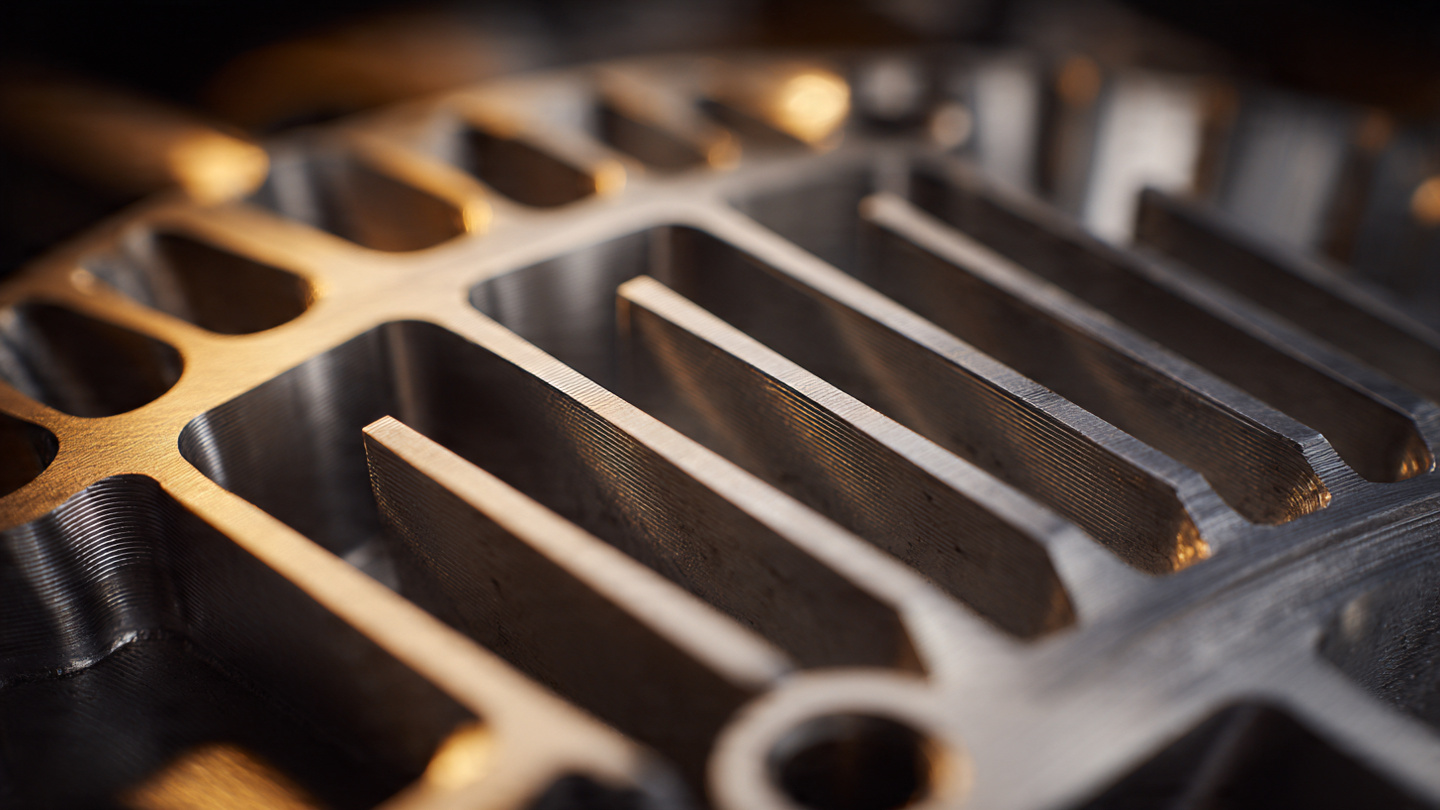
Cooling fins appear on the crankcase exterior. This is the detail that triggered the air-cooled nostalgia cycle, and it matters technically because finned surfaces increase the effective heat-exchange area between the metal block and the moving airstream by a factor of four to six depending on fin geometry, spacing, and height. Without fins, convective cooling from a smooth-walled crankcase requires either much higher airflow velocities or much larger surface areas to achieve the same thermal dissipation rate.
Liquid cooling remains in the system, handling the cylinder heads and potentially other high-heat components. But by moving the radiator from the front of the car to a position adjacent to the engine, Porsche claims several advantages. Coolant lines become shorter and lighter. Packaging simplifies because the front end no longer needs massive cooling apertures, which means less aerodynamic drag from open grille surfaces and more freedom for front-end styling that is not dictated by thermal management requirements. On current 911s, the front bumper's large side intakes exist almost entirely to feed the pair of front-mounted radiators, and their size compromises both aerodynamic cleanliness and frontal crash structure design.
Turbocharger and exhaust cooling also shift partially to airflow. In a conventional turbocharged engine, the turbo housing radiates significant heat into the engine bay, raising under-hood temperatures and demanding thermal shields, heat-resistant wiring, and careful routing of anything that does not enjoy being cooked. Ducting directed airflow across these components could reduce soak temperatures substantially.
Reversible Airflow and the Cold-Start Trick
Most of the coverage focused on the fins. They should have focused on this.
Porsche's patent describes a mode where airflow direction reverses during cold starts. Instead of pulling cool ambient air across the engine, the fan recirculates warm air and exhaust heat back through the housing, wrapping the engine in its own thermal output to accelerate warm-up. This is not trivial. Cold-start emissions remain the single largest contributor to drive-cycle pollutant totals in modern gasoline engines, particularly for particulate matter and unburned hydrocarbons, because catalytic converters require minimum temperatures of approximately 250 to 300 degrees Celsius to achieve light-off (the point at which conversion efficiency exceeds 50 percent). Anything that brings the catalyst to light-off faster directly reduces total trip emissions.
Current 911 models manage cold starts through electrically heated catalysts and engine management strategies that run slightly rich to generate additional exhaust enthalpy. Recirculating warm air around the engine would supplement these strategies by reducing heat loss from the block and exhaust manifold to ambient air during the critical first 60 to 90 seconds after ignition, keeping more thermal energy in the system where it accelerates catalyst warm-up and reduces cold-running fuel enrichment duration.
As Euro 7 emissions standards approach implementation and the EPA continues tightening Tier 3 thresholds, cold-start management becomes a genuine engineering constraint for every internal combustion sports car that wants to remain legally sellable in major markets. Porsche building a cold-start optimization mode into a cooling system patent signals they are thinking about regulatory survival, not just nostalgic aesthetics.
Gordon Murray Got There First
A rear-mounted fan generating aerodynamic benefit on a mid- or rear-engine sports car is not a new concept. Gordon Murray put a 400-millimeter, 48-volt fan on the tail of the T.50 supercar, spinning at up to 7,000 RPM, providing six switchable aerodynamic modes ranging from low-drag streamlining to maximum downforce during braking. In High Downforce mode, the fan entrains stalled air through the car's aggressive diffuser reflex sections, producing 30 percent more downforce than the diffuser geometry alone could generate. In Streamline mode, the diffuser partially closes, the fan draws air from the top deck to reduce base drag by 12.5 percent, and the spinning blades contribute 33 pounds of thrust.
Porsche's patent hints at similar aerodynamic potential, suggesting the rear fan could generate additional downforce through controlled airflow exiting the engine housing. Patent language is necessarily vague on this point, but the physics are sound: a high-volume fan exhausting air rearward through a shaped outlet creates a low-pressure zone on the upper body surface, increasing the pressure differential between the car's underside and topside, which is the definition of aerodynamic downforce.
Murray's system and Porsche's patent differ in intent. Murray designed a ground-effect aerodynamic device that happens to cool things. Porsche designed a thermal management system that might generate aerodynamic benefit as a byproduct. Same fan, different problems. Murray spent decades iterating on fan-assisted aero from the 1978 Brabham BT46B through the McLaren F1's hidden twin fans to the T.50. Porsche is starting from the cooling side and working toward aero. Whether they converge on a similar implementation is an open question that the patent does not answer.
The Noise Problem Nobody Solved
Fan noise killed air cooling in 1998. Fan noise will determine whether this patent reaches production.
A fan moving 5,800 CFM generates substantial acoustic output. Broadband noise from turbulent blade-tip vortices, tonal noise at the blade-pass frequency multiplied by rotational speed, and structural vibration transmitted through the housing into the chassis all contribute to both interior cabin noise and exterior pass-by noise levels. European ECE R51.03 pass-by noise regulations, which took full effect in 2024, limit exterior noise to 68 dB(A) for high-performance vehicles under specified test conditions, down from 74 dB(A) under the previous standard. That six-decibel reduction represents a roughly 75 percent cut in perceived loudness.
Porsche's patent mentions the sealed housing could attenuate engine noise reaching the cabin, which may be true. A largely enclosed engine bay with controlled air paths and acoustic damping material integrated into the housing walls could reduce high-frequency mechanical noise compared to a conventional open engine compartment. But the fan itself becomes a new noise source, and at 5,800 CFM it is not a quiet one. Automotive HVAC blowers moving 300 to 500 CFM are audible inside the cabin. A fan moving an order of magnitude more air, mounted behind the occupants in a rear-engine car, presents an acoustic engineering challenge that the patent does not address.
Porsche also patents a multi-speed transmission for the fan, including a clutch mechanism. Variable fan speed based on thermal demand would help. Running the fan at full volume only under sustained high-load conditions (track driving, Autobahn pulls, mountain passes) and reducing it to minimal flow during urban cruising would keep noise manageable for most driving scenarios. But "most" is not "all," and a buyer who spends north of $200,000 on a 911 Turbo S expects zero compromise between cooling adequacy and acoustic refinement. That expectation is what pushed Porsche to water cooling in the first place.
T-Hybrid Changes the Thermal Equation
Context for why this patent exists now and not a decade ago: the 992.2-generation 911 introduced T-Hybrid powertrains across the lineup in 2025. A GTS now pairs a 3.6-liter flat-six with twin electric turbochargers and an integrated starter-generator motor, producing 532 horsepower in GTS trim and 701 in the Turbo S. Electric turbochargers eliminate lag by spinning the compressor wheel with an electric motor before exhaust gas pressure is sufficient to drive the turbine, but they also add electrical components, wiring, inverters, and battery modules into the engine compartment, each generating heat that must be managed alongside the combustion engine's thermal output.
Hybridization compounds the cooling problem. You no longer have a single dominant heat source in the engine bay. You have combustion heat from the flat-six, electrical heat from the motor-generator and power electronics, resistive heat from the high-voltage wiring, and waste heat from the turbine housings all occupying a tightly packaged rear compartment where space for additional radiators, ducting, and airflow is already constrained by the 911's iconic rear-engine layout. More heat in less space, with no room to grow the conventional cooling system.
A ducted housing that forces high-volume airflow across all these components simultaneously offers a packaging solution that additional radiators and coolant circuits cannot. Instead of routing separate cooling loops to each heat source, you surround everything with moving air and let convective heat transfer manage the distributed thermal load. It is a brute-force approach, but brute force works when precision cooling of individual components becomes spatially impossible.
Production Odds: Low, But Not Zero
Patent filings are not production commitments. Porsche files hundreds of patents annually, and the majority never reach a production vehicle. Intellectual property departments file defensively, broadly, and speculatively, securing future design space against competitors regardless of whether the specific technology described will ever be manufactured at scale.
But this filing is not a throwaway. It describes a complete system with specific engineering solutions to specific problems: fan sizing, airflow management, cold-start optimization, radiator relocation, aerodynamic benefit. The level of detail suggests real engineering work behind the filing, not just a patent attorney sketching a concept on a whiteboard.
Where it plausibly lands: a future GT model where noise penalties are acceptable because the buyer is already wearing a helmet. A 911 GT3 or GT3 RS successor where the fan runs at moderate speeds during road driving and full volume on track, with the sealed housing providing both thermal headroom and a modest aerodynamic downforce supplement that eliminates or reduces the need for a fixed rear wing. Porsche could position the technology as a track-focused engineering solution rather than a replacement for conventional road-car cooling, sidestepping the comfort expectations of Carrera and Turbo buyers entirely.
Or it sits in the patent vault for a decade, waiting for electric fan motors to become quieter, acoustic metamaterials to become cheaper, or noise regulations to become irrelevant because everything is electric by then and nobody remembers what a cooling fin looked like on a crankcase.
What It Actually Means
Strip away the heritage marketing and the patent reveals something important about where Porsche's combustion-engine development stands. They are not winding down. The investment in a novel cooling architecture for future rear- and mid-engine platforms indicates ongoing commitment to internal combustion performance, even as the Taycan and the forthcoming electric Cayenne absorb increasing development resources. Porsche recently announced that CEO Oliver Blume is pulling back from aggressive EV targets and extending the life of combustion models beyond original sunset dates. This patent is the engineering evidence that corporate strategy is real.
It also reveals the thermal wall that hybridization is building. Every hybrid sports car faces the same dilemma: more power means more heat, more heat means more cooling, and more cooling means more weight, more drag, or both. Porsche's solution is to rethink the entire thermal management architecture rather than bolt on additional radiators. Whether the specific system described in this patent reaches production matters less than the fact that Zuffenhausen's engineers are searching for fundamentally different answers to the cooling problem, not incremental improvements to the current one.
Cooling fins on a crankcase in 2026. There is something stubbornly beautiful about that.
Sources
- DPMA (Deutsches Patent- und Markenamt), Patent filing: "Motor Vehicle With An Air And Liquid Cooled Combustion Engine," published May 7, 2026.
- Evan Williams, "A New Porsche Air-Cooled Engine Could Happen, With A Small Liquid Twist," CarBuzz, May 11, 2026.
- Chris Chilton, "The Air-Cooled Porsche Could Return, But Not Like You Remember It," Carscoops, May 14, 2026.
- Marnus Moolman, "Porsche May Bring Back A Piece Of The Air-Cooled 911 Era," Autoblog, May 17, 2026.
- Chris Chin, "Is Porsche Going Back to Air-Cooled Engines and Is Hell Freezing Over?" Gear Patrol, May 19, 2026.
- Iurii Poliakov, "Porsche Patents a Hybrid Air-and-Water Cooling System," AutoNews/AutoUA, May 15, 2026.
- Jalopnik, "Why Porsche Switched From Air-Cooled To Water-Cooled Engines," 2026.
- Porsche Newsroom, "Porsche 959 Coupé," newsroom.porsche.com.
- James Gilboy, "Here's How The Giant Rear Fan Works On Gordon Murray's T.50 Supercar," The Drive, August 5, 2020.
- ECE R51.03, "Uniform provisions concerning the approval of motor vehicles with regard to their sound emissions," United Nations Economic Commission for Europe, 2016 (phased implementation through 2024).