Boost Pressure: Why Euro 7 Is Forcing Turbochargers Into Porsche's Last Naturally Aspirated Track Weapon
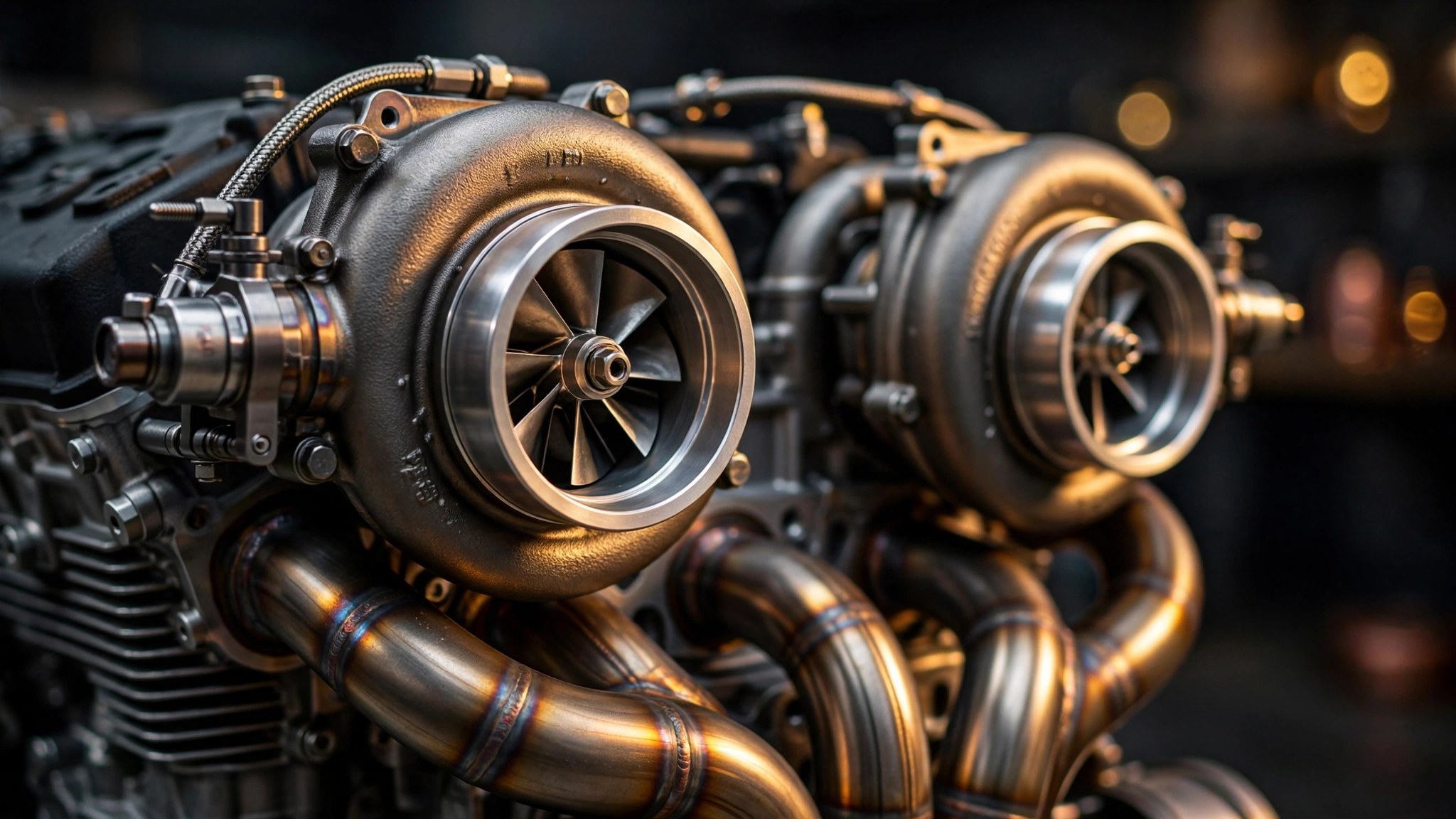
Porsche's GT division has spent eleven years extracting power from the same fundamental architecture. A 3,996 cc flat-six, atmospheric, with individual throttle bodies, titanium connecting rods, and a dry-sump oiling system capable of sustaining 9,000 rpm. It debuted in the 991.1 GT3 RS at 500 hp, climbed to 518 hp at 8,500 rpm in the 992.1 GT3 RS, and by the 992.2 GT3 required fifteen percent shorter gearing just to recover the acceleration that doubled catalytic converters and particulate filters were stealing from every gear change. But the engine was fighting the same opponent the entire time: emission regulations that tighten faster than atmospheric combustion can clean itself up.
That fight is over. Done.
What Euro 7 Actually Demands
Euro 7 Phase 1 becomes mandatory for new type approvals on November 29, 2026. All new vehicle registrations must comply by November 2027. Compared to Euro 6d, the changes look modest on paper: particulate number limits drop, real-driving-emissions testing windows widen, and cold-start allowances shrink. In practice, these requirements compound viciously for high-revving, large-displacement naturally aspirated engines.
Consider what Porsche already did to the 992.2 GT3 to survive the transitional period. Engineers doubled the catalytic converters from two to four, added two gasoline particulate filters, redesigned the throttle bodies, and fitted RS-specification camshafts to compensate for the added exhaust backpressure. All of that effort produced an engine that retained 503 hp but lost 15 lb-ft of torque, dropping from 347 to 332 lb-ft. Backward. An engine went backward on torque despite receiving its most aggressive cams ever, and that regression happened not because the engineering was bad but because the regulatory target moved faster than the calibration could chase it.
Andreas Preuninger said the quiet part out loud in October 2024. "I don't think we can handle Euro 7 without electrification or turbos." Coming from the man who has led Porsche's GT road-car program for two decades, who built his reputation on screaming naturally aspirated flat-sixes, that admission carried finality. Not hedging. Not exploring options. Conceding the physics.
Why Turbocharging Solves the Emissions Problem
A turbocharger recycles exhaust energy to compress incoming air, allowing the engine to burn more fuel per cycle without increasing displacement. More fuel per cycle means more power per liter. More power per liter means the same total output can come from fewer cubic centimeters operating at lower exhaust temperatures and reduced throttle openings during partial-load driving, which is precisely where emissions tests spend most of their time.
Smaller displacement also means less surface area inside the combustion chamber, which reduces unburned hydrocarbon emissions from crevice volumes and quench layers near the cylinder walls. Fewer total cylinders or smaller bore diameters reduce the total length of piston ring contact where oil consumption contributes to particulate formation. And higher exhaust gas temperatures during boost help catalytic converters reach light-off temperature faster during cold starts, which is exactly the test condition where Euro 7 tightened its allowances most aggressively.
None of these benefits are free. Turbocharged engines produce higher peak exhaust temperatures under full load, requiring more aggressive cooling and heavier exhaust components. They add the mass of the turbocharger assembly itself, plus intercooling plumbing, wastegate actuators, and oil-feed lines. For an engine that already carries titanium connecting rods to save rotating mass, bolting two turbochargers onto the exhaust manifolds is an act of philosophical surrender as much as engineering pragmatism.
What the Spy Shots Reveal
Prototype testing has been documented at the Nürburgring, in Arctic conditions, and on public roads near Weissach since at least mid-2024, and the visual evidence from those sessions leaves little room for ambiguity about what sits between the exhaust manifolds. Larger-diameter tailpipes emerge from the rear diffuser alongside additional exhaust outlets on the diffuser's outer edges, consistent with turbine-outlet routing and secondary wastegate or bypass ducting. A large lenticular vent above the rear license plate indicates substantially increased heat rejection requirements from the engine bay, the kind of cooling aperture that a naturally aspirated engine, even one revving to 9,000 rpm, simply does not demand.
Arctic-circle testing captured on video by automotive photographer Joel Reichert included an audible compressor surge, the distinctive whoosh of a turbine wheel decelerating when the throttle closes abruptly. Naturally aspirated engines do not produce that sound under any operating condition. Combined with the visual evidence, the forced-induction conclusion is no longer speculative but engineering fact waiting for Porsche's press office to confirm what the prototypes have already announced.
Aerodynamically, the prototype shows escalation on every axis. A three-element rear wing replaces the current two-element design, suggesting higher target downforce to manage the additional power. Manthey-style dive planes appear on the front bumper corners. Additional vertical fins segment the rear diffuser into discrete channels, each managing a different pressure zone beneath the car. Each of these features correlates with a car that is producing significantly more force, both propulsive and aerodynamic, than its predecessor.
T-Hybrid, Twin-Turbo, or Something Between
Porsche's T-Hybrid system, which debuted on the 992.2 GTS, integrates an electrically driven turbocharger with a 48-volt motor-generator mounted between the compressor and turbine wheels. On the GTS, this arrangement produces 541 hp total from a 3.6-liter flat-six: 478 hp from combustion, approximately 54 hp from a PDK-mounted electric motor, and around 15 hp from the e-turbo generator itself. On the Turbo S, twin e-turbos and a more aggressive calibration deliver 701 hp.
For the GT3 RS, the T-Hybrid system presents both opportunity and complication. On the opportunity side, the electric turbocharger eliminates lag almost entirely because the motor-generator can spin the compressor wheel to operating speed before exhaust gas volume alone would do so. Lag. That single word has been the cardinal objection to turbocharging any track car since the first turbocharged Porsches of the 1970s earned the nickname "widowmaker" for their binary boost delivery and snap oversteer at corner exit, where engine speed is low and exhaust energy is minimal and the driver needs torque right now, not 400 milliseconds from now. An e-turbo closes that gap to something approaching the response characteristics of a naturally aspirated engine, though purists will argue about the difference in pedal feel until the thermal death of the universe.
On the complication side, the T-Hybrid system adds weight. A 48-volt lithium-iron-phosphate battery, DC-DC converter, cooling loops for the power electronics, and wiring harness all contribute mass that a GT3 RS would rather not carry. Porsche could strip the PDK-mounted electric motor to save weight, relying solely on the e-turbo for hybrid functionality, but that sacrifices the low-speed electric torque-fill that makes the GTS system feel so seamless at parking-lot speeds.
A simpler twin-turbo setup without the hybrid components would save weight but reintroduce lag as a variable. Porsche's VTG (variable turbine geometry) technology, which the company has used exclusively on the Turbo since 1999 because it holds the patent for gasoline-engine VTG applications, could mitigate spool time. VTG vanes adjust the effective area of the turbine nozzle, accelerating exhaust velocity at low RPM and reducing backpressure at high RPM. Combined with the GT3's propensity for high-RPM operation, a well-calibrated VTG twin-turbo might deliver acceptable response without the hybrid's mass penalty.
Rumored output sits around 650 hp, which, if accurate, represents a 25 percent increase over the 992.1 GT3 RS's 518 hp from a simultaneous reduction in displacement from 4.0 to 3.6 liters. Power density would leap from 130 hp per liter to approximately 181 hp per liter, a figure that enters supercar territory and demands aggressive thermal management through every cooling circuit, oil scavenge stage, and intercooler pathway in the car.
What 650 Horsepower Does to the GT Hierarchy
Porsche's GT lineup has always maintained a clear organizational principle. Naturally aspirated and track-focused sat on one side: GT3, GT3 RS, GT3 RS with Manthey kit. Turbocharged and power-focused sat on the other: GT2 RS, and above it, the outgoing 935 tribute and occasional limited specials. Aspiration type was the dividing line, legible and clean and understood by every customer who walked into a Porsche Center knowing whether they wanted a screamer or a shover. Remove that divide, and the entire hierarchy must reorganize around fuzzier criteria.
A turbocharged GT3 RS overlaps directly with GT2 RS territory, because both cars would share forced-induction flat-six engines, rear-wheel-drive layouts, PDK transmissions, and aggressive aerodynamic packages, leaving Porsche to differentiate on output levels, weight targets, and chassis calibration rather than the clean engineering separation that aspiration type once provided.
Rumors place the next GT2 RS around €450,000 ($520,000) with output potentially north of 700 hp. If the GT3 RS arrives at approximately 650 hp and a lower price point, the separation becomes roughly 50 hp and perhaps €100,000 to €150,000 in price. That is a thin engineering argument for two distinct models. It would not be surprising if this generation marks the beginning of a convergence, with the GT3 RS absorbing elements of the GT2 RS mission and the GT2 RS pushing further upmarket into hypercar pricing and exclusivity.
Competitive Context
Porsche is not making this decision in isolation. Chevrolet's ZR1X combines a twin-turbo LT7 V8 with an electric front axle for approximately 1,250 hp and all-wheel drive at a rumored $210,000. Ford's Mustang GTD aims its Le Mans-derived suspension and aerodynamics at a $325,000 price point. Both cars represent American manufacturers who are willing to throw electrification and displacement at the track-car problem with an enthusiasm that makes Porsche's meticulous weight-saving approach look almost quaint.
But raw horsepower comparisons miss the point, as they always do with the GT3 RS. Always. Manthey's aftermarket kit for the current car generates over 1,000 kilograms of downforce at 285 km/h and has posted Nürburgring times that embarrass the ZR1X despite conceding more than 700 hp to the Corvette's twin-turbo V8 and electric front axle combined, because downforce multiplied by consistency over thirty consecutive laps beats peak power every single time. A turbocharged GT3 RS with 650 hp, the current car's active aerodynamic architecture, and Porsche's development budget for thermal management could plausibly be faster around a circuit than anything in the American competitive set, not because it makes more power, but because it loses less of it to heat soak, tire degradation, and aero instability across a full session.
What Gets Lost
An honest assessment has to acknowledge what turbocharging takes away, because the loss is real.
A naturally aspirated 4.0-liter flat-six revving to 9,000 rpm produces a sound that no turbo engine replicates. Not because the turbo sounds bad, necessarily, but because the turbocharger acts as an acoustic muffler on the exhaust side, absorbing high-frequency energy that would otherwise reach the driver's ears as a raw mechanical scream, the kind of sound that rises in pitch with RPM until it is physically painful and you do not care because each octave tells you exactly where you are in the rev range without looking at a single gauge. That scream has defined the GT3 RS since the 996 generation.
Throttle response changes character too, and this shift is harder to engineer away than any acoustic compromise. Even with an e-turbo eliminating measurable lag, the fundamental relationship between throttle angle and torque delivery is mediated by compressor physics. A naturally aspirated engine's torque response is essentially instantaneous because it depends only on airflow past the throttle plate and fuel-injector opening time. A turbocharged engine's response involves spool, boost-pressure buildup, and wastegate regulation, adding a layer of system latency that the best engineering can minimize but not eliminate.
And there is the matter of the redline, because 9,000 rpm from a naturally aspirated engine is not just a number on a tachometer but a structural achievement requiring that every connecting rod, wrist pin, valve spring, and crankshaft counterweight survive the inertial forces of a piston reversing direction 150 times per second. That mechanical limit sets the ceiling on the driving experience, a ceiling you can hear and feel approaching as the intake howl sharpens and the vibrations through the seat change frequency. Turbocharged engines rarely exceed 7,500 rpm because boost pressure does the work that additional displacement and high RPM would otherwise provide. Fewer revolutions per minute means a different powerband shape, one with a broad midrange plateau instead of a climbing crescendo.
Porsche will engineer around these compromises, tuning the exhaust note with acoustic valves and resonator chambers, calibrating throttle maps for sharpness, possibly even maintaining a higher redline than typical turbo applications by sacrificing some durability margin for character. None of it will undo the physics. A turbocharged GT3 RS will be faster, cleaner, and very likely a better track car by every measurable metric, but it will not deliver the same kind of visceral experience that has defined this lineage since the 996 generation, and for a car that has always sold on visceral experience as much as lap time, that trade matters.
Whether This Is the Right Call
Yes.
Not because turbocharging is superior in the abstract, but because the regulatory environment has eliminated the alternative, leaving Porsche's GT division with a choice between a compromised naturally aspirated engine strangled by its own aftertreatment hardware and a turbocharged alternative that trades acoustic purity for the headroom to actually compete on the metrics that matter: lap time, thermal consistency, and the ability to sustain performance across a thirty-minute session without the engine management system pulling timing to save catalytic converters from their own operating temperature.
Turbocharging gives Preuninger's team room to grow. 650 hp from 3.6 liters is a starting point, not a ceiling. Future iterations could push further without proportional increases in emissions hardware because the fundamental combustion efficiency advantages of forced induction scale with output. And if Porsche integrates the e-turbo from the T-Hybrid system, the lag objection dissolves into something that only instrumented data can detect.
I have not driven this car. Nobody outside Weissach has. Everything here is analysis built on confirmed statements from Preuninger, spy photographs from multiple sources, regulatory timelines published in the Official Journal of the European Union, and extrapolation from the T-Hybrid system that Porsche has already put into production on the GTS and Turbo S. When the car is officially revealed and independently tested, some of these projections will prove wrong. That is how pre-production analysis works.
What will not change is the regulatory arithmetic. Euro 7 does not negotiate.
Sources
- Andreas Preuninger, interview with Autocar, October 2024: "I don't think we can handle Euro 7 without electrification or turbos," confirming that Porsche's GT division views forced induction or hybridization as unavoidable for future GT3 variants.
- Regulation (EU) 2024/1257 of the European Parliament and of the Council (Euro 7), published in the Official Journal of the European Union: Phase 1 type-approval deadline November 29, 2026; all new registrations November 2027; tightened particulate number limits, expanded RDE windows, reduced cold-start multipliers.
- Porsche Newsroom, 992.2 911 GT3 technical specifications, 2025: 4.0-liter flat-six producing 503 hp and 332 lb-ft of torque, four catalytic converters, two GPFs, updated throttle bodies, RS camshafts, 8% shorter 6th-gear ratio compared to 992.1 GT3.
- Porsche Newsroom, 992.2 911 GTS T-Hybrid technical specifications, 2024: 3.6-liter flat-six with electrically assisted turbocharger producing 541 hp total (478 hp combustion, ~54 hp PDK motor, ~15 hp e-turbo generator), 48V lithium-iron-phosphate battery.
- Porsche Newsroom, 992.2 911 Turbo S T-Hybrid technical specifications, 2025: twin e-turbos, 701 hp total system output.
- Motor Authority, Autocar, and CarScoops spy photo analysis (2024-2026): documentation of 992.2 GT3 RS prototype testing at Nürburgring and in Arctic conditions, noting larger tailpipes, additional exhaust outlets, lenticular engine-bay vent, three-element rear wing, Manthey-style canards, and additional diffuser fins.
- Joel Reichert (@joelre98), Instagram, Arctic-circle prototype footage with audible compressor surge on throttle lift.
- Porsche AG, 992.1 GT3 RS technical specifications: 4.0L flat-six, 518 hp at 8,500 rpm, 342 lb-ft at 6,300 rpm, 9,000-rpm redline, 1,450 kg with Weissach, Nürburgring 20.8 km in 6:49.328 (Jörg Bergmeister), 860 kg downforce at 285 km/h, DRS, central radiator from 911 RSR.
- Autocar, Car Magazine, and 9werks.de reporting on 992.2 GT2 RS pricing (~€450,000) and output rumors (~700+ hp), positioning it above the GT3 RS in the refreshed GT hierarchy.