Created from Dust: How Parivas Built the First Additive-Manufactured Watch Case Worth Wearing
A Los Angeles startup spent six years and 10,000 engineering hours building a watch case that could not exist without metal 3D printing. Every Exo.1 is a single continuous lattice of 316L stainless steel fused from powder, layer by layer, with no seams between bezel, body, and lugs. It is the most radical departure from conventional watch case construction since Rado pressed its first ceramic in 1986.
10 min read
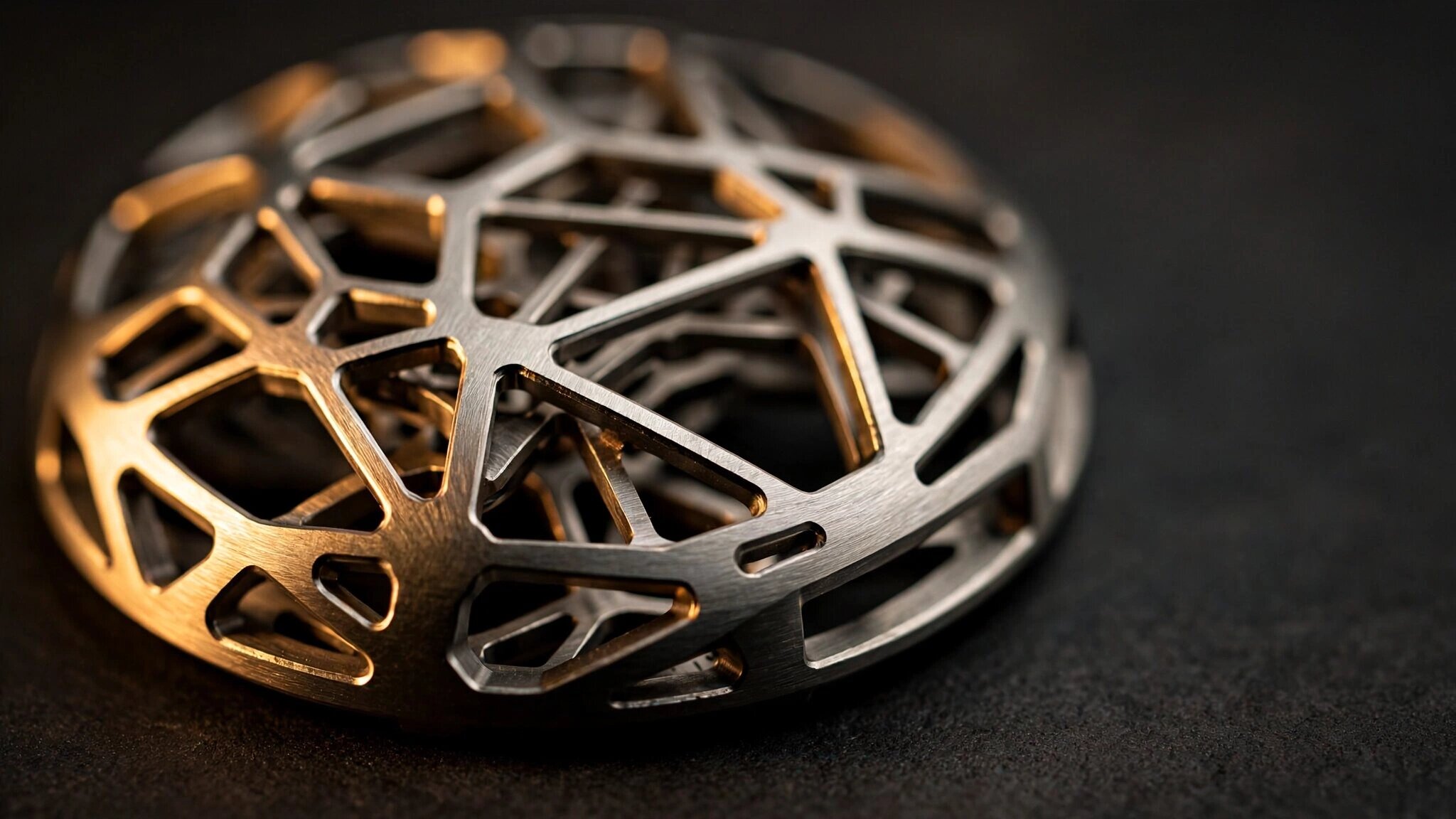
Watch cases are assembled from parts. A bezel is machined from bar stock, a case band is turned on a lathe, lugs are milled or forged, and the whole assembly is screwed, pressed, or snapped together at joints that must be sealed against moisture and aligned to tolerances measured in hundredths of a millimeter. Every Swiss, Japanese, and German watchmaker in production today builds cases this way. Officine Panerai tried a different approach in 2016 with the Lo Scienziato, printing a titanium case shell using direct metal laser sintering, but the result was a conventionally shaped case made by an unconventional method. It looked like every other Luminor. It was not designed around what additive manufacturing could uniquely do.
Parivas is. On May 18, 2026, the Los Angeles-based startup launched the Exo.1, a watch whose entire case exists as a single monolithic lattice structure that flows uninterrupted from bezel through body to lug tips. No joints. No separate components pressed together. No geometry that a CNC mill or stamping die could produce. Mickey Brown, the company's CEO and co-founder, spent six years waiting for laser powder bed fusion technology to catch up with what he had drawn. "The Exo.1 did not adapt to the technology," Brown said at launch. "The technology had to rise to meet it."
Powder Becomes Structure
Every Exo.1 case begins as a bed of atomized 316L stainless steel powder, each particle between 20 and 60 microns in diameter, roughly the width of a fine human hair. A recoater blade spreads a single layer of this powder across a build plate inside an argon-flooded chamber. A fiber laser, typically between 200 and 400 watts, traces the cross-section of the case geometry for that layer, melting the powder particles into a solid metal track. When the laser finishes one layer, the build plate drops by the thickness of a single powder layer, a fresh coat of powder is spread, and the process repeats.
Layer by layer, a watch case grows upward from nothing. Hundreds of layers. Each one fused to the layer below by remelting a thin zone at the interface, creating a metallurgical bond rather than a mechanical joint. In a conventional watch case, the bezel is one piece, the case band is another, and the lugs are either integral to the band or attached separately. All require individual machining operations, and the joints between them represent potential failure points for water ingress, dimensional drift, and aesthetic discontinuity. In the Exo.1, these boundaries simply do not exist. Bezel, body, and lugs are one continuous metallic lattice that was never separate and never joined.
This is not a solid case with decorative perforations drilled afterward. The lattice is the load-bearing structure. Its geometry was designed computationally, optimized for stiffness-to-weight ratio using finite element analysis, and could not be manufactured by any subtractive process. A five-axis CNC mill cannot reach internal surfaces of a three-dimensional lattice without cutting away the structure that encloses them. Casting could approximate the exterior shape but cannot resolve the fine internal channels and suspended nodes that define the Exo.1's architecture. Only a process that builds material additively, depositing it precisely where the design specifies and leaving voids everywhere else, can produce this geometry at the tolerances a watch case demands.
What 316L Buys You
Parivas chose 316L stainless steel for the Exo.1, the same austenitic alloy used in surgical implants, marine hardware, and the vast majority of Swiss watch cases. It contains 16 to 18 percent chromium for corrosion resistance, 10 to 14 percent nickel for toughness and formability, and 2 to 3 percent molybdenum that improves pitting resistance in chloride environments, which means salt water, swimming pools, and human sweat.
In additive manufacturing, 316L is among the most thoroughly characterized alloys. Its melting behavior during laser processing is well understood, its post-build microstructure is predictable, and the mechanical properties of properly processed parts meet or exceed those of wrought and cast equivalents. Yield strength in laser powder bed fusion 316L typically reaches 450 to 550 MPa, compared to 170 to 220 MPa for annealed wrought bar stock. Rapid solidification during laser processing creates a finer grain structure and cellular substructure that hardens the material beyond what conventional processing achieves.
Choosing 316L was a conservative engineering decision disguised as a bold one. Titanium would have been lighter and generated more headlines, but titanium powder is reactive, demands more aggressive inert atmosphere control during processing, and costs roughly four times more per kilogram. For a debut product from a startup establishing both a new brand and a new manufacturing paradigm, picking the alloy with the deepest additive manufacturing knowledge base reduces risk at every stage from powder sourcing through post-processing to long-term wearability.
Floating Markers and Embedded Tritium
Look at the dial of a conventional watch and the hour markers sit on top of it, applied to a flat or textured surface. In the Exo.1, the markers appear to float within the lattice. They are printed as part of the structure, suspended by the lattice nodes surrounding them, with hollow cores designed to receive tritium gas tubes after printing.
Tritium is a radioactive isotope of hydrogen that emits low-energy beta particles, electrons too weak to penetrate skin or even the borosilicate glass of the tube that contains them. When those electrons strike a phosphor coating on the inside of the tube, the phosphor glows continuously without any external light source or battery. Tritium tubes have been used in military and tactical watches for decades. Ball Watch Company has built its identity around them. But in every existing application, the tubes are set into machined recesses in a solid dial or case.
Printing the hour markers with hollow cores sized precisely for tritium tube insertion is something additive manufacturing handles naturally. A subtractive process would require drilling blind holes into tiny features, a slow and fragile operation at this scale. Additive manufacturing simply omits material where the void is specified, building the walls of the cavity and the surrounding lattice nodes in the same pass. No secondary drilling. No risk of breakthrough into an adjacent lattice strut. Each marker becomes a miniature structural cage for its tritium tube, integrated into the case architecture from the first powder layer.
Solar Dusted: A Finish Only Sintering Can Produce
Surface finish has always been the weak point of metal additive manufacturing. As-printed parts from laser powder bed fusion have a characteristic rough texture, typically 6 to 15 microns Ra, caused by partially melted powder particles adhering to the outer surfaces. For functional industrial parts, this is acceptable. For a luxury watch, it is not. The expectation in horology is mirror polishing, fine brushing, or controlled satin finishes that require surface roughness below 0.5 microns Ra.
Most companies that 3D print metal watch components address this by machining or polishing the surfaces after printing, essentially using additive manufacturing to create a near-net shape and then finishing it conventionally. Parivas took a different approach. The company developed a proprietary post-sintering treatment called Solar Dusted that deliberately controls the surface texture rather than eliminating it. Instead of chasing the mirror polish that every conventional watchmaker already achieves with lapping compounds and buffing wheels, Parivas engineered a wave-like surface pattern that emerges from a modified sintering cycle, creating a fingerprint-like texture that shifts and catches light differently depending on the viewing angle.
Because the process involves controlled thermal treatment of the already-printed surface, each Exo.1 develops a slightly different pattern. No two are identical, not as a marketing slogan but as a physical consequence of the stochastic nature of powder particle arrangement and thermal gradient variation during processing. Parivas claims this as a feature, and the claim is supported by the metallurgy: you cannot precisely replicate the boundary conditions of every powder particle on a complex three-dimensional lattice surface across multiple builds.
Six Bars and the Porosity Question
Water resistance is where additive manufacturing faces its most serious challenge in watchmaking. Conventional watch cases achieve water resistance through precision-machined gasket seats, threaded case backs, and screw-down crowns, all of which depend on smooth, dimensionally precise mating surfaces that compress elastomeric gaskets to create a seal. A Rolex Submariner is rated to 300 meters. A Sinn U50 to 500. An Omega Planet Ocean to 600. In these watches, water resistance is a solved problem of surface finish, dimensional tolerance, and gasket engineering refined over decades.
Parivas rates the Exo.1 at 6 bar, equivalent to 60 meters, which in watchmaking terms means it can handle rain, hand washing, and a shallow swim but is not a dive watch. For context, most Swiss dress watches carry a 3 or 5 bar rating, so 6 bar is not embarrassingly low. But it is notably modest for a 42mm sport-adjacent watch at $7,500.
The reason is porosity. Metal parts produced by laser powder bed fusion achieve densities of 99 percent or higher, but the remaining fraction of a percent can include micro-pores, gas-entrapped voids, and lack-of-fusion defects where adjacent laser tracks did not fully consolidate. In a solid-walled case, these defects are generally contained within the bulk material and do not create through-paths for water. In a lattice structure with thin walls and complex internal geometry, the margin shrinks. Each lattice strut is a thin member whose cross-section may be only a few hundred microns wide, and a single pore spanning a significant fraction of that cross-section could compromise structural integrity or create a capillary path.
Hot Isostatic Pressing, a process that subjects the printed part to high temperature and high pressure in an inert gas, can close internal porosity and improve density toward 100 percent. PVD coatings and electropolishing can seal surface-connected pores. Parivas has not disclosed which post-processing methods it uses beyond the Solar Dusted surface treatment, and the 6-bar rating suggests a pragmatic acknowledgment that achieving higher water resistance with this lattice architecture, at this production scale, is a problem that will take more than six years to solve.
What Came Before
Parivas is not the first to put a 3D-printed case on a wrist. Panerai's Lo Scienziato Luminor 1950 Tourbillon GMT Titanio, launched in 2016, used direct metal laser sintering to produce its titanium case. It was a technical milestone and won widespread critical praise. But the case itself was a conventional Luminor shape, a solid-walled cushion case with the brand's signature crown-protecting bridge, that happened to be made by a different manufacturing process. Panerai used additive manufacturing as a substitute for machining, producing a familiar form more efficiently. Nothing about the Lo Scienziato's design required 3D printing. A CNC mill could have made the same case from titanium billet, and Panerai had been doing exactly that for years.
In 2025, Italian studio AnalogLab collaborated with HP and Legor to produce the Amano+, a customizable stainless steel watch using binder jetting, a different additive process where a liquid binding agent is selectively deposited onto metal powder and the entire part is then sintered in a furnace. Binder jetting enables mass customization through an online configurator, letting buyers select case shapes and dial layouts, but the resulting geometry remains within the bounds of what conventional tooling could achieve. Customization, not geometric liberation, was the value proposition.
Parivas represents the third stage. Not additive manufacturing as a substitute for machining, not additive manufacturing for customization, but additive manufacturing as the enabling constraint. Remove the printer and the Exo.1 cannot exist. Its lattice is not decoration applied to a conventional case; it is the case. No prior watch has made this claim with this level of structural integration.
Sellita Inside, Parivas Standard Above
Powering the Exo.1 is the Parivas Caliber P1001S, a customized version of the Sellita SW300-1SA, an automatic movement with 25 jewels, a 56-hour power reserve, and a 28,800 vph (4 Hz) frequency. Sellita is the second-largest movement manufacturer in Switzerland behind ETA, and the SW300 family is a workhorse, a dependable three-hand caliber that dozens of independent brands use as a base.
Parivas skeletonizes the movement with rhodium plating and soleillage decoration, exposing the gear train through the lattice case. More unusually, the company has established its own Parivas Chronometer certification standard, developed in collaboration with the Horological Society of New York, that it claims exceeds ISO 3159, the international standard for chronometer certification that COSC administers in Switzerland. COSC allows a daily rate deviation of -4 to +6 seconds across five positions and two temperatures. Parivas has not published the specific tolerances of its own standard, and until those numbers are public, the "exceeds ISO 3159" claim remains an assertion rather than a verifiable specification.
At $7,500, the Exo.1 sits in a price bracket where modified Sellita movements are common. Oris, Tissot PRX Powermatic, and Longines all use Sellita-based or ETA-based calibers at lower price points, but none of them are printing their cases from powder. Parivas is not charging for the movement. It is charging for the 10,000 hours of additive manufacturing development that produced the case around it.
Where Additive Watchmaking Goes Next
Batch 01 of the Exo.1 is limited to 30 pieces, available through a waitlist that opened May 18, 2026, with delivery expected in Q1 2027. Thirty watches from a startup with three co-founders, hand-assembled in Los Angeles, is a statement of intent, not a production run. Scale will determine whether additive watchmaking is a category or a curiosity.
For scale to work, three problems need solving. First, build speed. Laser powder bed fusion is slow. A single watch case with the Exo.1's lattice complexity could occupy a build plate for hours, and each build cycle includes warm-up, printing, cool-down, depowdering, stress relief heat treatment, support removal, surface finishing, and inspection. Annual capacity on a single machine, even with multiple cases per build plate, is measured in hundreds, not thousands.
Second, post-processing. Every printed case requires support structures that anchor overhanging features to the build plate during printing and prevent thermal distortion. Removing these supports from an intricate lattice without damaging the structure is delicate manual work. Automating it would require advances in support-free printing strategies, topology-optimized orientations that minimize overhang angles, or lattice designs that incorporate sacrificial support paths into the geometry itself.
Third, quality assurance. Inspecting a solid-walled case for defects is straightforward. Inspecting a three-dimensional lattice for internal porosity, incomplete fusion between struts, or dimensional deviation across hundreds of nodes requires computed tomography, scanning the finished case with X-rays to produce a full volumetric model that can be compared against the original CAD file. CT scanning is effective but slow and expensive, and integrating it into a production workflow at watchmaking volumes is an unsolved industrial problem.
Parivas does not need to solve all three problems before Batch 01 ships. Thirty hand-finished pieces can absorb manual labor costs that volume production cannot. But if the Exo.1 is the proof of concept that Mickey Brown claims, if additive watchmaking is genuinely a new category and not a single-product novelty, then the manufacturing roadmap matters as much as the lattice design.
Dust to Wrist
Parivas takes its name from the Latin "Pario e Pulvas," meaning "created from dust." It is not a bad description of what actually happens inside the build chamber. Metal powder, inert and formless, absorbs laser energy and becomes a solid structure with mechanical properties that exceed wrought steel, a surface texture unique to each piece, and a geometry that no other manufacturing process can replicate.
Whether the Exo.1 succeeds commercially is a question for the market. Whether it represents a genuine engineering advance is not. For the first time, a watch case has been designed from scratch for additive manufacturing, not adapted to it, not decorated by it, but structurally dependent on it. A lattice that could not be machined, cast, or stamped. Markers that could not be drilled. A finish that could not be polished into existence. Every prior 3D-printed watch used the technology to make something that already existed in a slightly different way. Parivas used it to make something that could not exist without it.
Thirty watches in Batch 01. Six bars of water resistance. A modified Sellita inside. It is not a conquest of the Swiss establishment. It is a proof of concept from a Los Angeles garage, and the engineering is real.