Weaving Metal into Fabric — How Pagani's Carbo-Titanium HP62 Redefined the Hypercar Monocoque
Beta titanium alloy, platinum-coated and woven through carbon fiber at the filament level, produces a chassis that is both lighter and stiffer than pure carbon alone
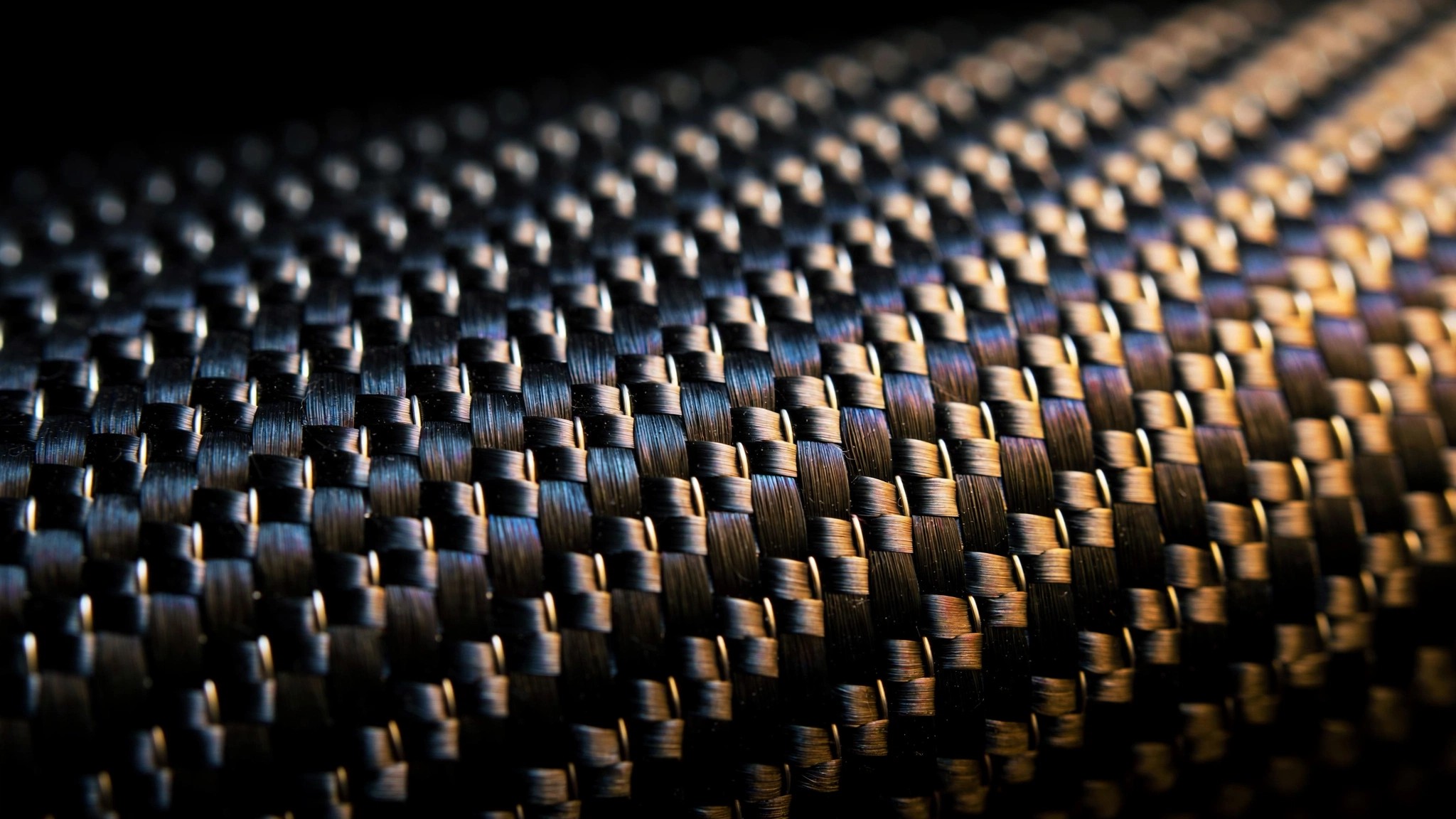
Carbon fiber is strong along its fibers and brittle across them. Hit a pure carbon monocoque hard enough at the wrong angle and it does not dent or bend. It shatters, propagating cracks in jagged splinters that spread through the laminate faster than any resin matrix can arrest. Every hypercar builder knows this. Most respond by adding more layers, thicker cores, or external reinforcement. Pagani's solution was different: weave titanium directly into the carbon fabric so the metal fibers interrupt crack propagation at the filament level, absorbing impact energy before a fracture can travel.
Carbo-Titanium, and its companion material Carbo-Triax HP62, is the structural identity of every Pagani road car built since the Huayra. It is patented, proprietary, and produced entirely through a supplier network that Pagani spent decades assembling in the Modena region. No other manufacturer uses this approach, and the reason has less to do with secrecy than with the compounding difficulty of making it work at hypercar scale.
An Autoclave Purchased with a Personal Loan
Horacio Pagani arrived in Italy from Argentina in 1982, hired by Lamborghini after meeting chief technical director Giulio Alfieri. He started at the bottom of the factory hierarchy, sweeping floors. Within a few years he was chief engineer and responsible for the Countach Evoluzione, a prototype that replaced the production Countach's steel and aluminum structure with carbon fiber composites. Completed in 1985, the Evoluzione weighed approximately 1,000 kilograms, roughly 500 kilograms less than the standard Countach. It was the first production-intent car built entirely from composite materials.
Pagani requested that Lamborghini purchase an autoclave to scale composite production. Management refused, reportedly telling him that if Ferrari did not need one, neither did Lamborghini. So Pagani walked into a bank and borrowed the money himself. He purchased the autoclave in late 1987, a piece of equipment that would outlast his tenure at the company and seed everything that came after.
When Lamborghini crash-tested the Evoluzione, the composite tub survived repeated destructive impacts. But management judged the technology too expensive for series production and scrapped the project. Pagani left in 1991, founded a composites consultancy called Modena Design, and began producing carbon components for Formula One teams, Daimler, Ferrari, and Aprilia. In 1992 he incorporated Pagani Automobili Modena and spent the next seven years developing the Zonda, which debuted in 1999. Every car Pagani has built since descends from a materials philosophy that Lamborghini dismissed four decades ago.
What Carbo-Titanium Actually Is
Carbo-Titanium is a hybrid composite combining beta titanium alloy with advanced carbon fiber, matched at their yield strength and elastic moduli. When adhesively bonded, both constituents approach maximum yield strength and fail at a similar amount of total strain. Neither material dominates the failure mode. Instead, the laminate degrades progressively rather than fracturing catastrophically, a behavior that pure carbon composites struggle to achieve.
Carbon fiber carries the highest strength-to-density ratio of any current structural fiber. Beta titanium carries the highest strength-to-density ratio of any current structural metal. Weaving the two together at the fabric level produces a material that retains carbon's stiffness while gaining titanium's ductility and thermal resilience. Carbo-Titanium can withstand sustained temperatures up to 315°C, well above the resin degradation threshold of conventional carbon-epoxy layups. In the proximity of turbocharger plumbing and exhaust manifolds, that margin matters.
Carbo-Triax HP62, used alongside Carbo-Titanium in Pagani monocoques, is a triaxial carbon weave with fibers oriented at 0°, +60°, and −60°. Where Carbo-Titanium provides energy absorption and crack arrest, Carbo-Triax supplies multidirectional stiffness, resisting torsional and bending loads simultaneously without requiring as many separate plies as a conventional unidirectional layup. Together, the two materials allow Pagani's engineers to address different structural demands at different points in the chassis using the same manufacturing process.
Platinum, Heat, and Adhesion
Bonding titanium to carbon resin is not straightforward. Titanium forms a dense, chemically stable passivation layer (titanium dioxide) on its surface within milliseconds of exposure to air. That oxide layer is what makes titanium corrosion-resistant, but it also makes it nearly impossible to bond adhesively. Any coating or resin applied to untreated titanium will eventually delaminate because the adhesive bonds to the oxide film rather than the metal underneath.
Pagani's manufacturing process addresses this with a multi-stage surface treatment. First, the titanium elements are mechanically abraded to remove the initial oxide layer and create a roughened bonding surface. A platinum coating is then applied. Platinum is chosen for its chemical inertness and its ability to form a stable interface between titanium and the subsequent primer layer. After coating, the titanium is heated in an oven at 500°C for several hours. This step anneals the platinum-titanium interface and burns off any residual contaminants that could compromise adhesion.
A primer is then sprayed onto the platinum-coated surface, followed by a structural adhesive. Finally, the pre-impregnated carbon fiber layers are applied to the adhesive and the entire assembly enters the autoclave for curing under controlled heat and pressure. Pagani guards the specifics of its resin system, stacking sequence, fiber orientation, and cure cycle. What is publicly known suggests a process that requires extraordinary control at each stage, where a contamination event or temperature excursion during the platinum bonding step would compromise the structural integrity of the finished monocoque.
240 Components, No Two Alike
A Pagani chassis is not a single-material shell. Each monocoque contains approximately 240 carbon-based components, each specified for the particular structural demand at its location. Some regions require torsional stiffness to resist chassis flex under cornering loads. Others need controlled deformation for crash energy absorption, allowing the structure to collapse progressively rather than transmitting peak forces into the occupant cell. Still others must tolerate sustained heat from the engine bay without resin degradation.
Carbo-Titanium and Carbo-Triax are deployed according to these requirements, with different layup sequences, thicknesses, and fiber orientations at different points in the tub. Where the monocoque meets the front and rear tubular subframes, fabricated from chromium-molybdenum alloy steel, aluminum inserts are laminated into the composite to distribute bolt-on loads across the laminate rather than concentrating them at point contacts. Epoxy foam spacers fill strategic cavities to increase local stiffness without adding meaningful weight, also damping noise and vibration transmission into the cabin.
Pagani built an entire regional supply chain to produce these components. Modena Design handles composite development and manufacturing. Angeloni Group weaves multiaxial fabrics and produces pre-impregnated fibers. Dianese contributes technical fabrics and structural elements for roof systems. Each supplier's work feeds into a shared quality standard that Pagani certifies at the monocoque assembly stage. When the company says its composites are made in-house, it means they are made within a vertically integrated Italian ecosystem that Pagani controls from fiber specification to final cure.
Huayra Roadster: 176 Pounds Lighter, 52% Stiffer
Converting a coupe into a roadster usually means adding weight. Removing the roof eliminates a major structural member, and conventional engineering compensates with reinforced sill sections, thicker A-pillars, additional bracing behind the seats, or a heavier windshield frame. In a standard roadster conversion, expect 50 to 100 kilograms of added mass and a noticeable loss in torsional rigidity.
Pagani accomplished the opposite. When the Huayra Roadster arrived, it weighed 176 pounds less than the Huayra coupe while delivering a 52% increase in torsional rigidity. Carbo-Triax HP52 and Carbo-Titanium were deployed in a revised layup that redistributed stiffness through the floor, sills, and bulkheads to compensate for the absent roof panel. Rather than bolting on reinforcement, Pagani's engineers redesigned the laminate schedule itself, adjusting fiber orientation and ply counts throughout the tub to carry the loads the roof had previously handled.
At a dry weight of 1,250 kilograms (2,756 pounds) with a twin-turbocharged 6.0-liter AMG V12 producing 791 horsepower, the Huayra Roadster BC achieved a power-to-weight ratio that most track-focused coupes cannot match. More impressive than the ratio itself was the chassis behavior it enabled. With higher torsional rigidity, the suspension engineers could tune damping and spring rates more precisely, knowing the chassis would not absorb or distort the loads the suspension was designed to manage.
Utopia: Lighter Than the Zonda, Stiffer Than Everything Before
Pagani's current production model, the Utopia, uses the latest-generation Carbo-Titanium HP62-G2 and Carbo-Triax HP62 monocoque with front and rear tubular subframes in chromium-molybdenum alloy steel. Torsional rigidity is up 10.5% compared to the Huayra, which was itself significantly stiffer than the Zonda. Dry weight is 1,280 kilograms (2,822 pounds), just 70 kilograms more than the original Zonda and 70 kilograms less than the Huayra.
Consider what that chassis carries. A bespoke Mercedes-AMG V12, displacing 5,980 cc with twin turbochargers, produces 864 horsepower at 6,000 rpm and 1,100 Nm of torque from 2,800 to 5,900 rpm. Power reaches the rear wheels through an Xtrac seven-speed transversal automated manual transmission, or a pure manual gearbox for buyers who prefer three pedals with their 864 horsepower. Brembo carbon-ceramic brakes with 410 mm front rotors and six-piston calipers sit behind 21-inch front and 22-inch rear forged aluminum wheels. An electro-mechanical differential manages torque distribution.
All of that hardware, plus a full leather interior, active aerodynamics, and crash-compliant structure, within a package that weighs less than a base Porsche 911 Carrera.
When Pagani developed the Utopia Roadster, they applied the same principle that had worked on the Huayra Roadster, only more aggressively. Rather than reinforcing the coupe monocoque for open-top duty, they redesigned the entire tub to optimize rigidity and resistance without the roof. The result: the Utopia Roadster weighs exactly the same as the coupe, 1,280 kilograms dry. No additional bracing. No weight penalty for removing the roof. Absolute parity, achieved entirely through composite architecture.
Why Nobody Else Does This
Koenigsegg builds its monocoques from carbon fiber with an aluminum honeycomb core, achieving a torsional rigidity of 47,900 lb-ft per degree in the Jesko Attack. The company focuses on low-mass packaging, serviceability, and in-house technologies like the Light Speed Transmission and advanced carbon wheel manufacturing. Bugatti engineered the Chiron's monocoque from 3,440 square feet of carbon fiber, reaching 36,900 lb-ft per degree. For the Tourbillon, Bugatti advanced to T800-grade carbon with the battery integrated as a structural element of the monocoque.
Neither manufacturer attempted to weave metal into carbon fabric. Both achieved world-class stiffness and crash performance through their own approaches. The question is not whether carbo-titanium is superior to pure carbon in absolute terms. It is whether the engineering advantages it delivers are worth the manufacturing cost and complexity for each builder's particular circumstances.
For Koenigsegg and Bugatti, the answer is no. Koenigsegg produces roughly 80 cars per year and optimizes for manufacturing agility. Adding a multi-stage titanium bonding process to an already complex layup would increase cycle time and sourcing complexity without materially advancing its engineering targets. Bugatti's volumes are similarly constrained, and its parent company Rimac brings its own battery-structural integration expertise that demands a different composite philosophy.
Pagani builds fewer than 40 cars annually. At that scale, the artisanal nature of the carbo-titanium process is not a disadvantage. Each monocoque can receive individual attention during layup, curing, and quality verification. The process suits a manufacturer that defines its identity through material science rather than production volume. Horacio Pagani built his career around composites. He bought an autoclave before he built a car. For his company, the chassis is not a container for performance. It is the engineering statement around which everything else is organized.
Material as Identity
Forty years separate the Countach Evoluzione from the Utopia Roadster. Both represent the same conviction: that the structural material of a car can be a defining creative act rather than a procurement decision. Lamborghini rejected that idea in 1985 and spent the next two decades catching up on composite technology. Pagani built an entire company on it.
Carbo-Titanium HP62-G2 is not a material that scales. It requires platinum, multi-stage heat treatment, proprietary adhesive chemistry, a controlled supplier ecosystem, and a workforce trained to lay up 240 unique components per chassis with positional precision that determines whether each section of the tub will resist the loads it was designed for. No other manufacturer has attempted to replicate this process, and the barriers are as much institutional as they are technical.
But within its narrow production window, the results speak in numbers. A roadster that weighs the same as its coupe. A chassis that gained 10.5% torsional rigidity between generations while losing 70 kilograms. A 2,822-pound hypercar carrying an 864-horsepower twin-turbo V12, active aerodynamics, carbon-ceramic brakes, and a full interior. All resting on a monocoque that began as titanium filaments woven into carbon fabric by a group of specialists working within 40 kilometers of where Horacio Pagani first swept floors at Lamborghini.
| Material | Pagani Carbo-Titanium HP62-G2 + Carbo-Triax HP62 |
|---|---|
| Composition | Beta titanium alloy woven with carbon fiber composite |
| Thermal resistance | Up to 315°C |
| Bond interface | Platinum-coated titanium, 500°C anneal, structural adhesive |
| Components per chassis | ~240 carbon-based elements |
| Subframes | Front and rear tubular, chromium-molybdenum alloy steel |
| Utopia dry weight | 1,280 kg (2,822 lb) |
| Utopia power | 864 HP at 6,000 rpm (Mercedes-AMG V12, 5,980 cc, twin-turbo) |
| Utopia torque | 1,100 Nm (2,800–5,900 rpm) |
| Torsional rigidity vs. Huayra | +10.5% |
| Huayra Roadster vs. coupe | −176 lb weight, +52% torsional rigidity |
| Utopia Roadster vs. coupe | Weight parity (1,280 kg) |
| Annual production | <40 cars |
| Inventor | Modena Design (Pagani’s composite arm), est. 1991 |