Three Parts, Zero Bolts: How IWC Built Its First Full-Ceramic Ingenieur
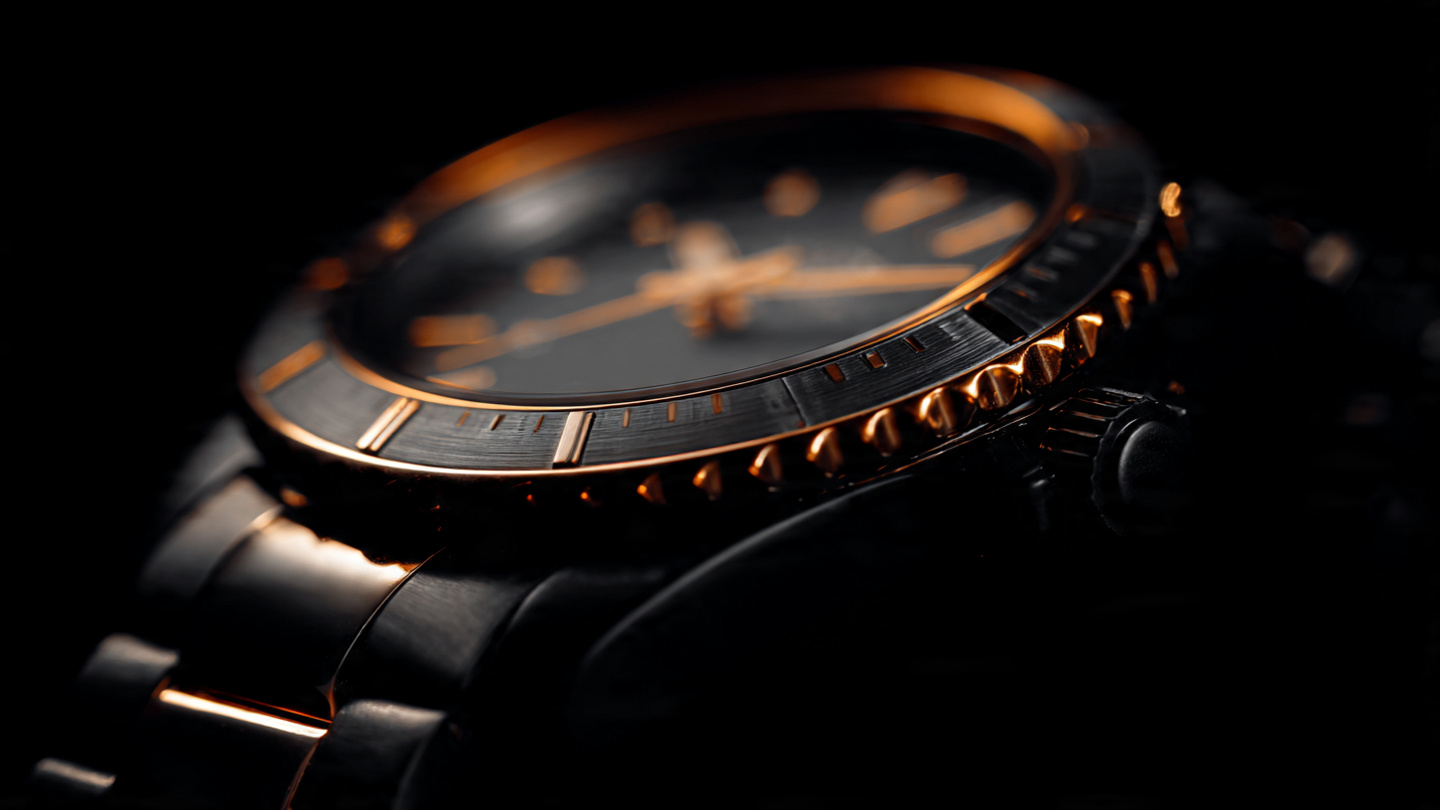
Ceramic watch cases are not new. IWC proved that in 1986 with a Da Vinci that wore a zirconium oxide shell when no other Swiss manufacturer had attempted the material. Nearly four decades later, ceramic cases appear across the industry, from Rado and Chanel to Tudor and Omega. What remains genuinely difficult is building a ceramic watch that preserves every proportion of a design originally conceived in steel, without visible compromise or structural concession.
At Watches and Wonders Geneva in April 2025, IWC introduced the Ingenieur Automatic 42 in black ceramic (Ref. IW338903). It is the first full-ceramic execution of the Ingenieur, and the engineering required to get there explains why it took so long. Converting Gérald Genta’s integrated bracelet design from stainless steel to zirconium oxide ceramic meant solving a structural problem that most brands avoid: how to screw a case together when the case material cannot hold threads.
Genta’s Engineering Drawing, Fifty Years Later
Gérald Genta designed the original Ingenieur SL (Ref. 1832) in 1976. It was the third in his trilogy of luxury steel sports watches with integrated bracelets, following the Audemars Piguet Royal Oak in 1972 and the Patek Philippe Nautilus in 1976. Where the Royal Oak had its octagonal bezel and the Nautilus its porthole ears, Genta gave the Ingenieur a round bezel with five recessed screw heads and an H-link bracelet that flowed from the case without lugs.
IWC produced roughly 1,000 units of the original Ref. 1832 before discontinuing it in 1983. For decades it remained a footnote, overshadowed by its more famous siblings. Collectors rediscovered it in the 1990s, and auction prices climbed steadily. IWC revived the integrated-bracelet Ingenieur format in 2023 with the Ingenieur Automatic 40, returning to Genta’s original proportions after years of oversized iterations that had strayed from the source.
A defining feature of the Ingenieur is its dial. Genta drew the “Grid” pattern of intersecting horizontal and vertical lines as an explicit reference to the graph paper and engineering drawings that the watch’s target audience used daily. On the new ceramic model, black hands and metal indices sit against a black dial carrying that same Grid texture, with Super-LumiNova fills providing the contrast needed for legibility.
Why a Three-Part Ceramic Case Exists
Steel watch cases can be assembled with screws tapped directly into the metal. Titanium works the same way. Ceramic does not. Zirconium oxide is roughly four times harder than 316L stainless steel, which makes it superb at resisting scratches and terrible at accepting threads. A screw driven into ceramic will crack it. Any attempt to tap thread channels into a sintered ceramic component risks shattering the entire part.
IWC’s solution splits the Ingenieur’s case into three ceramic components: the case ring (the main body), the bezel on top, and a caseback ring on the bottom. A titanium inner ring sits inside the ceramic case ring, invisible from the outside. This titanium ring serves three functions. It accepts the screws that secure the bezel and caseback ring from their respective sides. It holds the movement in place. And it provides the structural backbone for achieving 100 meters of water resistance.
Sapphire crystals on both the front and back are pressed directly into the ceramic parts, not mounted into the titanium ring. This detail matters because it means the ceramic defines the visual geometry of the watch from every angle. If the sapphire were seated in titanium, the front face would show a metal lip between glass and ceramic. Instead, the crystal meets ceramic directly, preserving the proportions that Genta drew for the steel original.
Even the crown and its protective guard are ceramic. Producing small ceramic components is notoriously problematic because sintering shrinkage is proportionally harder to control at reduced scale. IWC’s press materials do not detail how they solved the crown tolerances, but the brand’s development of Ceratanium (a titanium alloy with a ceramic surface treatment) for similar applications on Pilot’s Watches suggests extensive in-house expertise with dimensional control in ceramic and ceramic-adjacent materials.
From Powder to Case: Sintering Zirconium Oxide
Zirconium oxide ceramic starts as a fine white powder, a compound of zirconium, oxygen, and stabilizing additives (typically yttrium oxide, which prevents the crystal structure from transforming under stress). Manufacturing a watch component from this powder follows a consistent sequence across the industry, though each manufacturer guards its specific parameters.
First, the powder is mixed with a binder and pressed or injection-molded into a “green body” that approximates the final shape but is substantially oversized. This green body is fragile, roughly the consistency of chalk. It then enters a sintering furnace where temperatures reach approximately 1,400 to 1,500 degrees Celsius. Over hours, the powder particles fuse into a dense polycrystalline structure. During sintering, the part shrinks by 20 to 25 percent in every dimension. Controlling this shrinkage uniformly is the central manufacturing challenge. Uneven shrinkage warps the part beyond usable tolerances, and there is no way to bend it back into shape afterward.
Color is determined before sintering. For black ceramic, metallic oxide pigments are mixed into the powder. Once fired, the color is integral to the material, not a surface coating. It cannot chip, fade, or wear through, because the pigment exists throughout the entire cross-section.
After sintering, the ceramic blank is harder than surgical steel and most tool steels. Only diamond-tipped cutting tools can shape it further. For the Ingenieur, IWC applies three finishing stages: satin-brushing on flat surfaces, sandblasting for a matte texture, and polishing on beveled edges. Each bracelet link receives the same treatment. Given that a ceramic bracelet has dozens of individual links, the cumulative finishing time is substantial.
1986: When IWC Fired the First Ceramic Case
IWC’s relationship with ceramic predates most of the industry. In 1986, the Da Vinci became the first wristwatch in the world with a zirconium oxide ceramic case. At the time, IWC was owned by VDO Schindling AG, a German instruments manufacturer, and run operationally by Günter Blümlein, who believed mechanical watchmaking would survive the quartz crisis through material and complication innovation rather than cost-cutting.
Blümlein’s bet paid off. While competitors waited for the quartz threat to resolve itself, IWC explored titanium (used as early as 1979 in a Porsche Design collaboration), ceramic, and increasingly complex movement architectures. Kurt Klaus developed the perpetual calendar mechanism. Richard Habring created a rattrapante module for the Valjoux 7750. And the ceramics program produced the world’s first ceramic watch case, establishing a competency that IWC has maintained for almost forty years.
Since 1986, IWC has expanded its ceramic palette from black to include sand-colored Mojave Desert ceramic (2017), forest green, and blue variants. Silicon nitride, boron carbide, and Ceramic Matrix Composite (CMC) have all appeared in IWC cases. Most recently, the brand’s XPL advanced engineering division develops materials for extreme-environment applications, including jet aviation and spaceflight. Ceramic is no longer experimental at IWC. It is institutional knowledge.
Pellaton Winding: Ceramic Where It Wears
Albert Pellaton served as IWC’s technical director when he developed his bidirectional pawl-winding system in 1950 for the caliber 85. Unlike a typical switching-rocker automatic mechanism, Pellaton’s design uses an eccentric cam on the rotor shaft to drive two spring-loaded pawls that alternately engage a ratchet wheel. Rotation in either direction advances the ratchet, winding the mainspring. It is an efficient mechanism, but the pawls and ratchet wheel experience constant sliding friction.
Modern IWC calibers, including the 82110 in this Ingenieur, address that friction by manufacturing the high-wear components from ceramic. Both clicking pawls and the automatic wheel are black zirconium oxide ceramic. A white ceramic bearing supports the rotor. At 1,300 Vickers, these components are virtually immune to surface wear. Metal pawls would develop microscopic scoring over years of use, eventually requiring replacement or refinishing during a service. Ceramic pawls do not score. IWC does not claim they are maintenance-free forever, but the practical wear rate is negligible across any reasonable service interval.
Beyond the Pellaton components, the caliber 82110 is a 4 Hz movement with a 60-hour power reserve from a single barrel. A display caseback fitted with tinted sapphire glass shows the movement, including the black ceramic automatic wheel and pawls. At 42 mm by 11.6 mm, the watch wears one size up from the Ingenieur Automatic 40 but remains under 12 mm thick, which keeps it from becoming a wrist puck despite the added diameter.
Finishing Ceramic at This Level of Detail
Most ceramic watches in production use one surface finish. Rado applies a uniform high polish to its True Square models. Hublot sandblasts its Spirit of Big Bang ceramic editions. Chanel polishes the J12. Mixing finishes on a single ceramic component is significantly harder because each transition requires masking, careful tool control, and acceptance that any mistake destroys an expensive sintered blank.
IWC finishes the Ingenieur’s ceramic case with three distinct textures in close proximity. Broad flat surfaces are satin-brushed. Recessed areas receive fine sandblasting. Beveled edges along the bezel and case flanks are polished to a mirror shine. On the bracelet, every link gets the same triple treatment. Hold the watch under a point light source and the interplay between matte, textured, and reflective surfaces creates a depth that monochrome ceramic rarely achieves.
This finishing ambition is what distinguishes the Ingenieur from simpler ceramic implementations. A uniformly sandblasted ceramic case is a solved problem. A multi-finish ceramic case with integrated bracelet links, each carrying three surface textures, is a manufacturing commitment that directly affects yield rates and unit cost.
Competitive Context at $19,500
At $19,500, the Ingenieur Automatic 42 Ceramic sits in an interesting competitive position. Girard-Perregaux offers the Laureato in ceramic at approximately $20,300, making it the closest comparison in both design philosophy (integrated bracelet, Genta-era DNA) and material. Audemars Piguet sells ceramic Royal Oaks, but at prices starting well above $30,000. Below, Nivada Grenchen’s F77 provides a ceramic integrated-bracelet watch at a fraction of the cost, though without IWC’s finishing complexity or in-house movement.
Against its own stainless steel sibling, the ceramic Ingenieur commands a premium of roughly $7,000 over the Ingenieur Automatic 40 in steel ($12,000 to $12,900). That delta buys the full ceramic case and bracelet, the multi-part construction engineering, the diamond-tipped finishing on every surface, and two additional millimeters of case diameter. Whether the premium justifies itself depends on how much value you place on scratch immunity and a watch that will look cosmetically identical after a decade of daily wear.
IWC has not limited production. Ref. IW338903 is a catalog model, not a special edition, which means secondary market premiums should remain modest once initial demand stabilizes. For a brand that spent four decades building ceramic expertise, making its most technically ambitious ceramic watch a permanent collection piece rather than a limited run sends a clear signal about manufacturing confidence.
Weight, Comfort, and Living with 1,300 Vickers
Ceramic is approximately 30 percent lighter than stainless steel at equivalent volume. On an integrated-bracelet watch where case and bracelet form a continuous mass, that weight reduction is felt immediately. IWC has not published an official weight for the ceramic Ingenieur, but comparable full-ceramic constructions from other brands weigh roughly 100 to 120 grams versus 160 to 180 grams for steel equivalents. On the wrist, the watch sits lighter than its visual presence suggests.
Zirconium oxide is also a poor thermal conductor, roughly 2 W/m·K compared to 16 W/m·K for steel. In practice, this means the bracelet feels slightly cool on initial contact and warms quickly to skin temperature without continuously drawing heat away. Steel bracelets never fully warm up because they keep conducting body heat outward. Ceramic reaches thermal equilibrium and stays there.
Scratch resistance at 1,300 Vickers means the case and bracelet will survive contact with keys, zippers, door frames, and desk edges that would leave visible marks on any steel watch within weeks. Ceramic is not indestructible: a sharp impact against a hard edge (granite countertop, concrete floor) can chip or crack it, because ceramic is hard but brittle. Daily wear abrasion, however, will not touch it. Five years from now, the surfaces will look as they did leaving IWC’s finishing department.
Water resistance is rated at 100 meters (10 bar). Not a dive watch, but sufficient for swimming, rain, and accidental submersion. At 42 mm in diameter with a tinted display caseback, this is a watch that wants to be seen on a wrist, not 30 meters underwater.
Forty Years of Ceramic, in Three Parts
IWC filed its ceramic credentials in 1986 and has been expanding the material’s vocabulary ever since. Colored ceramics, Ceratanium, Ceramic Matrix Composites, and now a multi-part integrated-bracelet construction represent a progression that no other Swiss manufacturer matches in breadth. Brands like Rado have focused on ceramic for decades, but within a narrower material range. Hublot pushed composite ceramics aggressively, but largely in big, bold formats rather than faithful recreations of heritage designs.
What makes the Ingenieur Automatic 42 Ceramic interesting from an engineering perspective is the constraint it imposed on itself. IWC did not redesign the Ingenieur for ceramic. Instead, the engineering team worked backward from Genta’s original proportions and figured out how to build them in a material that resists almost every standard watchmaking fabrication technique. No tapping. No threading. No bending. Just pressing, sintering, diamond-cutting, and an internal titanium skeleton that does the structural work while ceramic takes the visual credit.
For $19,500, IWC delivers a permanently cataloged, non-limited watch that pairs four decades of institutional ceramic knowledge with one of watch design’s most underappreciated integrated-bracelet templates. After forty years of ceramic development and fifty years of Genta’s Ingenieur, the two have finally met in the same case. It took a three-part construction, a titanium skeleton, and diamond-tipped tools to make it happen.
Sources
- IWC Schaffhausen, “The IWC Schaffhausen Ingenieur Automatic 42 in Black Ceramic,” press.iwc.com, April 2025.
- Hodinkee, “Introducing: Three New IWC Ingenieur References Including The First Ceramic Version,” April 2025.
- WatchTime, “IWC’s Ceramic Revolution,” Martin Green, March 2026.
- Time and Tide Watches, “IWC Ingenieur Automatic 42 Ceramic (live pics),” April 2025.
- Monochrome Watches, “In-Depth: The History of the IWC Ingenieur Collection,” 2024.
- IWC Schaffhausen, “Pellaton’s Ingenious Automatic Meets State of the Art Engineering,” iwc.com.
- Quill & Pad, “IWC has Ceramic in its History and Today in its Pilot’s Watch collection,” April 2024.