354 Components, Zero Stutter: Inside the Hublot Unico Flyback
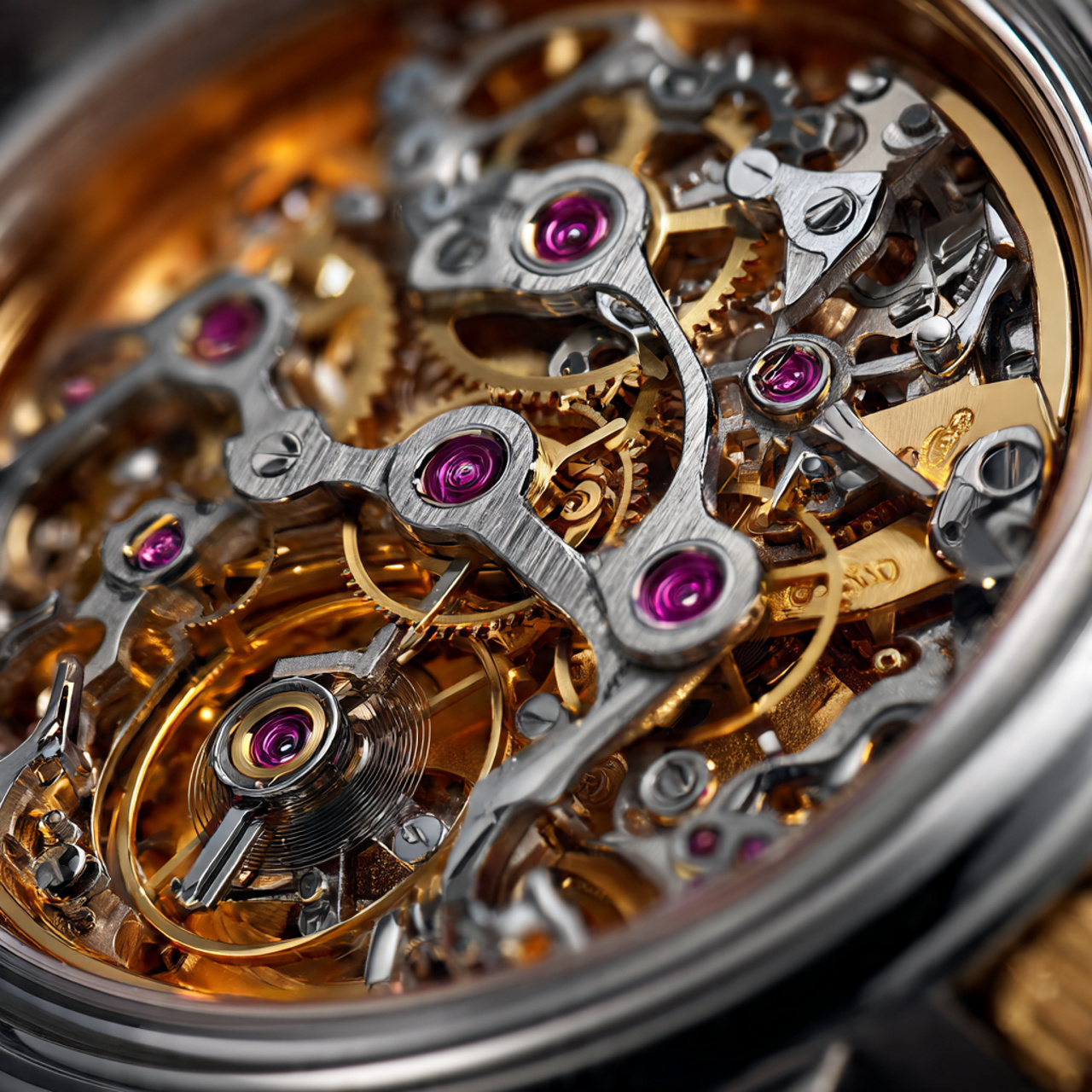
Press the top pusher on a chronograph, and you set off a chain of mechanical events that separates good watchmaking from great. Somewhere inside the case, a coupling mechanism must connect two gear trains that were running independently a millisecond earlier. One train keeps time. Its counterpart counts elapsed seconds. A single engineering question has defined chronograph design since the 19th century: how to join them without disrupting either one.
Two dominant approaches emerged. Horizontal clutches engage by meshing two sets of gear teeth side by side. Vertical clutches drop one friction disc onto another from above. Each solves the coupling problem. Each creates new ones. In 2010, Hublot introduced a third architecture with the original Unico caliber, placing a dual oscillating clutch on the dial side of the movement where owners could watch it work. Sixteen years and five patents later, the second-generation HUB1280 powers the 2026 Big Bang Reloaded and makes the case that the chronograph coupling problem was never really about horizontal versus vertical. It was about engineering discipline applied to whichever geometry you chose.
The Stutter Problem
A horizontal clutch is the oldest approach to engaging a chronograph. Two wheels sit side by side on the same plane. When the pusher is pressed, a lever slides one wheel laterally until its teeth mesh with the other. It is mechanically intuitive, spatially efficient, and easy to service. It is also violent. Teeth meshing cold at 28,800 vibrations per hour do not interlock perfectly on first contact. Chronograph seconds hands jump forward, sometimes by a visible fraction of a second, before settling into their sweep. Watchmakers call this the stutter start.
Stutter is not a manufacturing defect. It is an inherent consequence of the geometry. Gear teeth have clearance between them, called backlash, that allows the wheels to rotate freely without binding. When two sets of teeth mesh for the first time, that clearance manifests as a momentary skip before the driving wheel catches the driven one. Some horizontal clutch movements mask it with tension springs. Some accept it as a character trait. None eliminate it entirely.
Vertical clutches, introduced commercially by Seiko in the 6139 caliber in 1969, attack the problem from a different direction. Instead of meshing teeth laterally, a vertical clutch stacks the chronograph wheel on top of the driving wheel, co-axially, and engages them through friction when pressed together from above. No teeth mesh. No backlash exists. The chronograph hand starts its sweep the instant the clutch engages, with no jump and no stutter. Rolex's 4130 in the Daytona, Breitling's B01, and Omega's 9900 all use vertical clutch systems.
But vertical clutches trade one set of compromises for another. Because the coupling happens beneath the oscillating weight and base plate, it is invisible from the dial side. A watchmaker cannot inspect the clutch engagement without removing the rotor. From an aesthetic standpoint, a vertical clutch hides the most dramatic mechanical event in the chronograph's operation cycle. From a serviceability standpoint, it adds depth to the movement stack, making the overall caliber thicker unless compensatory engineering pushes other components thinner.
Hublot's Third Architecture
Hublot's original Unico caliber, the HUB1240, arrived at Baselworld 2010 with a column wheel and dual horizontal clutch mounted on the dial side of the movement. Positioning the chronograph control mechanism above the main plate rather than below it was an immediate visual statement. But it also created an engineering obligation: if the clutch is visible, its behavior must be flawless. Stutter that might be forgiven behind a caseback becomes unacceptable when displayed through a sapphire crystal at 12 times magnification.
Hublot's answer was the oscillating clutch, a pivoting lever mechanism that replaced the conventional lateral slide. Instead of pushing one gear wheel directly into another, the oscillating clutch uses a pair of intermediate levers that rock back and forth on their own pivots, gradually bringing the chronograph train into engagement with the timekeeping train. Oscillating motion absorbs the initial shock of engagement, spreading what would be an instantaneous gear clash over several oscillation cycles. By the time the teeth are fully meshed, both trains are already synchronized.
What emerges is a chronograph with the visibility advantage of a horizontal layout and the smooth engagement of a vertical one. The column wheel sits at 6 o'clock on the dial side, its star-shaped profile clearly visible through the crystal. The dual oscillating clutch occupies the space between 7 and 8 o'clock. Both operate in full view, turning every start and stop of the chronograph into a visible mechanical event.
From HUB1240 to HUB1280: What Five Patents Changed
Eight years after the original Unico launched, Hublot filed five patents and released the HUB1280, also called the Unico 2. Each patent addressed a specific failure mode or inefficiency in the chronograph architecture.
Patent one refined the oscillating clutch itself. The original HUB1240 clutch worked but was sensitive to manufacturing tolerances. Small variations in lever geometry could produce inconsistent engagement force across different production runs. The HUB1280 patent specified new pivot geometries and spring constants that made the engagement force more uniform, reducing unit-to-unit variation.
Patent two targeted the chronograph seconds hand. On any chronograph, starting and stopping the timing mechanism sends a vibration pulse through the gear train. In most movements, this pulse is small enough to be invisible. In an open-worked movement where every component is on display, even minor hand vibration becomes visible. Hublot's anti-shaking system damps the impulse at the cannon pinion, preventing it from propagating to the hand arbor. The seconds hand starts and stops cleanly, without the oscillatory ringing that can plague exposed chronograph displays.
Patent three covered the ratchet wheel, the component that prevents the mainspring from unwinding during the automatic winding cycle. Conventional ratchet systems use a click spring that rides over saw-tooth profiles on the barrel wheel. Each click generates friction and noise. Hublot's "zero-friction" ratchet replaces the sliding contact with a blocker mechanism that locks and unlocks without scraping across the tooth profile, reducing parasitic energy loss in the winding system.
Patent four simplified the regulation system. Adjusting the active length of a balance spring to fine-tune the watch's rate traditionally requires a skilled watchmaker with specialized tools and considerable patience. The HUB1280's patented system allows the balance spring's active length to be adjusted through a simplified mechanism that reduces both the skill threshold and the time required for final regulation during assembly. Hublot has not published the specific geometry, but the practical result is faster production without sacrificing accuracy.
Patent five addressed the cannon pinion's shock resistance. The cannon pinion connects the minute wheel to the hour wheel and transmits the timekeeping train's motion to the hands. In a watch subject to wrist impacts, the cannon pinion is a weak point: a sharp blow can momentarily decouple it, causing the hands to skip. Hublot's shock-resistant cannon pinion design maintains coupling integrity through impacts that would displace a conventional friction-fit joint.
What 1.3 Millimeters Buys You
At 8.05 mm thick, the HUB1240 was too tall for slim cases. Its successor measures 6.75 mm. That 1.3 mm reduction sounds modest in absolute terms, but in a mechanical movement containing 354 components across a 30 mm diameter, it represents a fundamental rearrangement of the internal architecture.
Thickness reduction came primarily from a new automatic winding system. Its predecessor used a conventional rotor mounted on a ball bearing above the movement plates. Hublot's replacement switched to a flatter rotor design with a ceramic ball bearing that reduces the height of the winding assembly. Ceramic bearings run without lubrication and produce less friction than steel equivalents, contributing to the movement's 72-hour power reserve despite the reduced rotor inertia that comes with a thinner profile.
Slimming the caliber opened the HUB1280 to 42 mm case designs. Originally built for 45 mm cases, the Unico suited Hublot's aesthetic but limited its audience. At 42 mm, the Big Bang Unico became accessible to smaller wrists without the movement rattling around inside an oversized case. Engineering constraints drove the design toward broader market reach.
Silicon at 28,800
Running at 4 Hz (28,800 vibrations per hour), the HUB1280's silicon lever escapement offers three properties that matter in a chronograph context. First, it is antimagnetic. A chronograph worn daily encounters magnetic fields from phones, laptop speakers, and bag clasps. Magnetic interference alters the oscillation period of a traditional steel hairspring, degrading timekeeping accuracy. Silicon is immune.
Second, silicon has a lower coefficient of friction than hardened steel against ruby jewels. Lower friction means less energy lost per oscillation, which compounds across 28,800 beats per hour and 72 hours of power reserve. In a movement where the chronograph function places additional load on the mainspring, every fraction of energy saved in the escapement extends the useful reserve.
Third, silicon components can be manufactured to tighter tolerances through deep reactive ion etching (DRIE) rather than conventional machining. DRIE produces geometries with micron-level precision, enabling lever and wheel profiles that would be impractical to machine from metal. What results is an escapement whose geometry is mathematically computed and photolithographically reproduced rather than approximated through grinding and polishing.
Why the Big Bang Reloaded Puts It on Stage
At Watches and Wonders 2026, Hublot launched the Big Bang Reloaded in five materials: titanium with black ceramic, all-black ceramic, blue ceramic, dark green ceramic, and 18K Magic Gold. All five use the HUB1280 and all five are open-worked to showcase the movement. But the Reloaded differs from previous open-worked Big Bangs in how deliberately it directs attention to specific components.
Previous Big Bang Unico models used uniform skeletonization that exposed the entire dial-side architecture. Everything was visible, but nothing was emphasized. Selective contrast replaces the uniform approach. At 6 o'clock, the column wheel gets its own color-highlighted window with a label. Between 7 and 8 o'clock, the dual oscillating clutch receives the same treatment. An exposed gear train runs from the center to 12 o'clock, leading the eye to the skeletonized chronograph hand tip and a "Flyback" inscription on the rehaut.
This is a design philosophy borrowed from automotive engineering, where performance cars use contrast stitching, visible bolts, and colored brake calipers to draw attention to the components that do the work. A Porsche GT3 RS does not hide its roll cage or paint its calipers body color. It advertises them. Hublot is doing the same with its chronograph mechanism: using visual hierarchy to tell the wearer where to look and why it matters.
At 3 o'clock, the chronograph counter was redesigned to be more legible, with tighter spacing and higher contrast numerals. The date moved from 3 o'clock to between 4 and 5 o'clock to avoid visual interference with the timing display. These are small changes, but they shift the dial's information hierarchy from "show everything equally" to "show the chronograph first."
The Flyback Advantage
A standard chronograph requires three operations to reset and restart timing: press once to stop, press again to reset, press a third time to start. Each press activates the column wheel, which rotates by one position and actuates the corresponding lever. Three presses, three rotations, three mechanical events, and a gap of at least a second between measurements while the hands return to zero.
A flyback chronograph compresses the sequence. While the chronograph is running, a single press of the reset pusher stops the mechanism, returns the hands to zero, and restarts timing in one continuous motion. The column wheel rotates through the stop-reset-start positions in rapid succession, fast enough that the hands snap to zero and immediately resume sweeping without a visible pause.
Flyback functionality places enormous stress on the reset mechanism. Three column wheel positions actuated in rapid sequence means the heart piece, the cam that drives the hands back to zero, must operate while the gear train is still spinning. In a conventional reset, the chronograph wheels are stationary when the heart piece engages them. In a flyback reset, they are still rotating. The heart piece must overcome their rotational inertia, and it must do so without damaging itself or the wheels.
In the HUB1280, the flyback function benefits from the oscillating clutch's smooth disengagement. Because the clutch does not snap open like a conventional horizontal system, the transition from engaged to disengaged to re-engaged happens with less mechanical shock. The heart piece meets wheels that have been gently decoupled rather than violently separated, reducing wear on both components over thousands of flyback cycles.
What the Movement Does Not Do
The HUB1280 does not display a running seconds subdial at its native position. Small seconds sits at 9 o'clock, driven through a separate gear train from the fourth wheel. This means the seconds display is mechanically independent of the chronograph function and continues running regardless of whether the chronograph is engaged. It is a detail that matters when evaluating the movement's architecture: the timekeeping train and the chronograph train share a common power source but maintain separate gear paths.
The movement also does not incorporate any form of constant-force mechanism. As the mainspring unwinds from full wind to reserve depletion, the torque delivered to the escapement decreases. This declining force affects the amplitude of the balance wheel, which in turn affects the rate. Silicon's low friction reduces the impact, but it does not eliminate it. Over a 72-hour power reserve, some rate variation between a freshly wound movement and one approaching its reserve limit is unavoidable.
Hublot does not publish COSC certification data for the HUB1280, though the movement's 4 Hz frequency and silicon escapement place it within the performance envelope of movements that routinely achieve chronometer certification. The absence of COSC papers is a brand choice, not a technical limitation. Hublot has historically prioritized its own internal standards over external certification.
354 Components in 30 Millimeters
The HUB1280 contains 354 parts across a 30 mm diameter, with 43 jewels positioned at critical friction points. For context, a standard three-hand automatic movement typically contains 130 to 200 components. A vertical clutch chronograph like the Rolex 4130 contains approximately 290. The Unico's higher component count reflects both its integrated flyback mechanism and the additional parts required by the oscillating clutch system.
Integration matters here. Many chronograph movements, particularly those derived from the Valjoux 7750 architecture, use modular construction: a base timekeeping movement with a chronograph module bolted on top. Modular construction simplifies servicing but adds height and introduces potential alignment issues between the base movement and the module. The HUB1280 is fully integrated, meaning its chronograph components are built into the same structural plates as the timekeeping train. No module. No extra layer. Everything occupies the same 6.75 mm envelope.
Integrated construction also means the column wheel can sit on the dial side without an intervening plate. In a modular movement, the chronograph module sits on top of the base movement, and the column wheel typically lives between the two layers, hidden from both sides. Hublot's integrated architecture places the column wheel above the main plate, directly visible through the crystal. The "H" logo engraved on the column wheel is not decoration. It is proof of address: this component belongs here, on stage, not buried in the basement.
The Big Bang Reloaded starts at $24,000 in titanium and climbs to $44,500 in Magic Gold. Five references form the permanent collection. Two limited editions of 200 pieces each honor Usain Bolt and Kylian Mbappé. All seven watches contain the same HUB1280 caliber, the same 354 components, and the same five patents. The case material changes. The engineering does not.