600 Hours per Case: How Hublot Machines Sapphire into Transparent Architecture
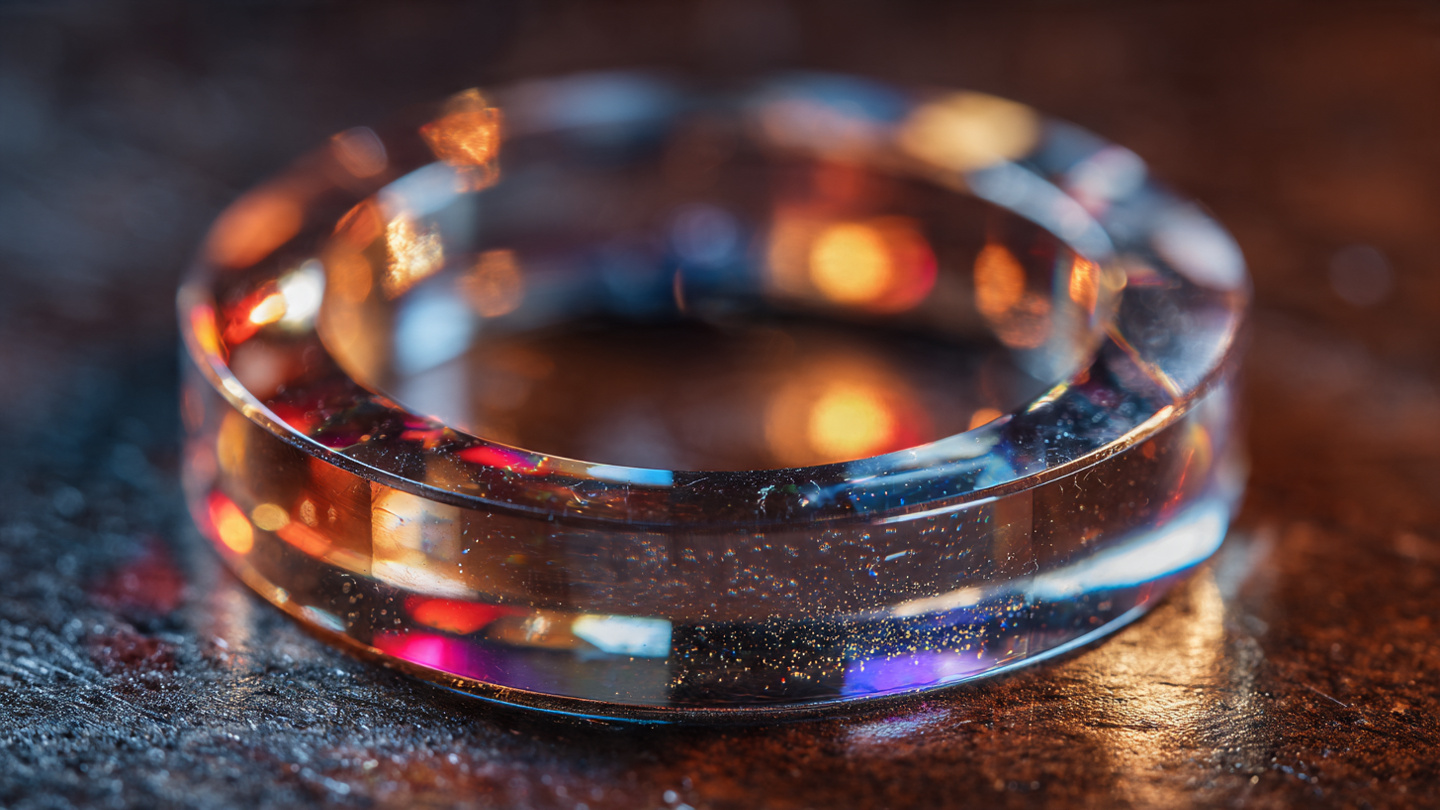
Every watchmaker on earth knows how to machine stainless steel: heat it, mill it, turn it on a lathe, drill it, tap threads, polish it, done, and a skilled CNC operator can rough-cut a 316L case blank in under an hour. Sapphire does not work that way. It resists machining the way a diamond resists a butter knife, and the penalty for pushing too hard is not a ruined tool but a shattered case worth thousands of dollars in raw material and weeks of accumulated labor.
Hublot began casing watches in sapphire crystal in 2016 with the Big Bang Unico Sapphire, a run of 500 pieces priced at $57,900 each. Not coincidentally, that was roughly three times the price of the equivalent titanium-cased Unico. Raw sapphire is cheap. Labor is not. Each case consumed approximately 600 hours of machining time across seven discrete operations, all performed with diamond-impregnated tooling at feed rates that would make a metal machinist weep. In the decade since, Hublot has expanded its sapphire catalog to more than twenty references, introduced through-tinted colored variants in blue, purple, orange, and green, engineered a complete sapphire bracelet for the Big Bang Integral, and developed SAXEM, a garnet-family crystal that extends the color palette beyond what aluminum oxide can achieve. No other brand has built a comparable sapphire manufacturing program at this scale.
Corundum: What Sapphire Actually Is
Sapphire is crystalline aluminum oxide, α-Al₂O₃, arranged in a hexagonal close-packed lattice that crystallographers call the corundum structure, and in its pure form it is completely colorless. Blue sapphire gets its color from trace amounts of iron and titanium substituting for aluminum atoms in the lattice; ruby is the same crystal structure with chromium as the chromophore, which means every colored variety of corundum shares identical mechanical properties regardless of hue. Every sapphire watch crystal on every wristwatch sold in the last fifty years is synthetic corundum grown in a laboratory, not mined from the ground.
What matters for case engineering is the combination of properties that corundum provides, and they are remarkable in aggregate even if each one individually exists in other materials. Hardness: 9 on Mohs, approximately 2,000 Vickers, surpassed only by diamond and cubic boron nitride among production materials. Optical transparency: corundum transmits roughly 85 percent of visible light without anti-reflective coating, exceeding 95 percent with a double-sided AR stack. Chemical inertness: aluminum oxide does not corrode, tarnish, oxidize further, or react with skin chemistry. Density: 3.98 g/cm³, less than half that of stainless steel at 7.9 g/cm³ and one-fifth that of gold at 19.3 g/cm³, which means a sapphire Big Bang case weighs noticeably less than its titanium equivalent despite enclosing the same movement volume.
But sapphire is brittle, and that single word is the counterweight to every advantage listed above. It has essentially zero plastic deformation before fracture. Metals dent; sapphire cracks. A stainless steel case dropped on concrete picks up a ding that a polishing wheel can remove in minutes. A sapphire case dropped on concrete can shatter into fragments that no amount of skill can reassemble. Fracture toughness sits around 2 MPa√m, compared to 50 MPa√m for 316L steel and 25 MPa√m for titanium, and managing this brittleness drives every design decision in sapphire case engineering, from wall thickness to corner radii to the precise geometry of each gasket groove.
Growing the Crystal
Flat sapphire watch crystals come from thin wafers sliced off boules grown by the Verneuil flame-fusion process, a technique Auguste Verneuil patented in 1902 that remains the workhorse of commodity sapphire production more than a century later. A fine stream of alumina powder falls through an oxyhydrogen flame at approximately 2,050°C, melting and recrystallizing on a ceramic pedestal to form a roughly cylindrical single crystal called a boule, typically 25 to 50 mm in diameter and 80 to 100 mm long for watch crystal production. Slice, grind flat, polish, coat with AR, punch out discs. Straightforward.
Case manufacturing demands substantially larger crystals with substantially fewer internal defects. A Big Bang case blank needs a sapphire block roughly 55 mm in diameter and 30 mm tall before machining begins, and Verneuil boules at these diameters contain internal stresses and crystal defects that cause cracking during precision grinding operations. Instead, case-grade sapphire is grown by the Kyropoulos method or, increasingly, by the heat exchanger method (HEM) developed by Crystal Systems, now part of GTAT, where both techniques pull or directionally solidify large single crystals from a molten alumina bath in an iridium or molybdenum crucible at temperatures exceeding 2,050°C, under carefully controlled thermal gradients that minimize stress buildup in the growing crystal.
HEM boules can reach 200 kg and 350 mm in diameter, dwarfing the Verneuil product by orders of magnitude in usable volume. For watch cases, the relevant output is a crystal large enough to yield multiple case blanks when sawn into blocks, with sufficiently low dislocation density to survive the stress concentrations introduced by complex machining. Crystal quality is graded by examining birefringence patterns under crossed polarizers: uniform extinction indicates a stress-free crystal; irregular color banding reveals internal strain that will cause problems downstream. Rejected boules go to LED substrate manufacturers, where smaller wafer sizes and less aggressive machining make crystal perfection less critical than it is for a case that must remain intact through seven stages of diamond grinding.
Seven Stages of Diamond Grinding
Hublot has described its sapphire machining process as seven stages, each using diamond-impregnated tools because nothing else cuts corundum effectively. Cubic boron nitride works on some ceramics but lacks the hardness differential needed for efficient sapphire removal, and carbide tooling, the workhorse of metalworking, is softer than the workpiece and would wear to nothing before removing meaningful material.
Stage one is sawing, where diamond wire saws or annular diamond saws cut the boule into case-sized blocks at a rate of 0.5 to 2 mm per minute depending on cross-section, slow but relatively forgiving because the geometry is simple and the mechanical precision required at this stage is secondary to simply not shattering the block.
Stage two is rough profiling, where CNC machining centers equipped with diamond-plated grinding wheels remove bulk material to approximate the case shape. Feed rates are critical: too fast, and localized heating creates thermal gradients that nucleate fractures; too slow, and each case occupies a machine for weeks while production schedules collapse. Hublot uses constant water-jet cooling at the cutting interface to manage temperatures, but even with cooling, material removal rates for sapphire are roughly one-hundredth those of stainless steel on the same machines, which means a roughing pass that takes minutes in 316L takes hours in sapphire and requires the kind of patience that metalworking CNC operators rarely need to exercise.
Stages three and four refine the case geometry, carving interior cavities, pushpiece holes, crown tube recesses, and the critical gasket grooves through progressively finer diamond tooling. Gasket grooves demand tolerances below 10 micrometers, and the groove walls must be free of micro-fractures that would compromise the seal under pressure. Inspectors examine each groove under magnification, looking for chipping or subsurface damage introduced by the grinding process, because a single micro-crack in a gasket groove can propagate under the cyclic stress of case-back tightening, eventually failing catastrophically when the watch is submerged or exposed to sudden pressure changes.
Stages five and six are polishing, where diamond slurry with progressively finer particle sizes removes the subsurface damage layer left by each preceding machining step. Starting at roughly 15 micrometers and finishing at 1 micrometer or below, each polishing grade eliminates the scratches and micro-fractures embedded by the previous, coarser grade, and skipping a grade leaves scratches beneath the surface that can grow into cracks under mechanical or thermal stress even months after the case enters service. Polishing the exterior surfaces of a Big Bang case to optical clarity takes longer than the rough machining that preceded it.
Stage seven is final inspection and AR coating, where completed cases go through pressure testing for water resistance, dimensional verification against CAD tolerances, and optical inspection for clarity and surface defects before anti-reflective coatings are applied by physical vapor deposition to reduce reflections from 15 percent to below 5 percent per surface. Without AR coating, a sapphire case produces distracting reflections that obscure the movement visible through the transparent walls, defeating much of the purpose of building a transparent case in the first place.
Why Not Just Injection-Mold It?
Fair question, and one that every engineer encountering sapphire case manufacturing for the first time asks immediately. Ceramics like zirconia, used in IWC, Rado, and Omega cases, are manufactured by powder injection molding: mix ceramic powder with a polymer binder, inject into a mold, burn off the binder, sinter to full density. Zirconia cases cost a fraction of sapphire cases and can be produced in complex geometries without the hundreds of hours of diamond grinding that sapphire demands.
Sapphire cannot follow this path because sintered alumina is polycrystalline, consisting of millions of tiny crystal grains separated by grain boundaries that scatter light, making the finished product translucent at best and fully opaque at worst. Transparent sapphire requires a single crystal with no grain boundaries whatsoever, which means growing it from a melt rather than sintering it from powder, and there is no shortcut around this fundamental constraint of crystallography. Transparent alumina ceramics do exist: Surmet Corporation’s ALON and CoorsTek’s transparent alumina are used in military armor windows where they achieve transparency through hot isostatic pressing of nanopowders to near-theoretical density. But even those advanced polycrystalline products fall short of single-crystal sapphire in optical clarity, and neither has found its way into watchmaking.
Casting is equally impossible because sapphire melts at 2,050°C and solidifies as a polycrystalline mass unless crystal growth is carefully controlled through the thermal gradient techniques described above. Pouring molten alumina into a case-shaped mold produces an opaque ceramic casting, not a transparent watch case. Growing a single crystal large enough to machine the entire case from one piece is the only path to transparency, and subtractive diamond grinding is the only way to shape that grown crystal into the complex three-dimensional geometry that a watch case requires, with its screw channels, gasket grooves, pushpiece holes, and crown tube recesses. Every apparent shortcut has been investigated by materials scientists inside and outside the watch industry. None has produced a viable alternative.
Color: Dopants, Diffusion, and SAXEM
After establishing transparent sapphire manufacturing, Hublot expanded into colored variants, beginning in 2018 with the Big Bang Unico Blue Sapphire, which introduced the first through-tinted sapphire case in production watchmaking. Subsequent releases added red, orange, and purple to the palette, each requiring the sapphire boule to be grown with specific transition-metal dopants incorporated uniformly throughout the entire crystal volume. Blue comes from iron (Fe²⁺) and titanium (Ti⁴⁺) co-dopants, which create an intervalence charge transfer absorption band centered near 580 nm that preferentially absorbs yellow-orange light. Purple results from chromium (Cr³⁺) dopants at concentrations lower than those that produce ruby, while orange requires a carefully controlled combination of chromium and iron at ratios that would be unstable in naturally forming crystals.
Uniform dopant distribution across a 200 mm boule is extraordinarily difficult because dopants tend to segregate during crystal growth, their distribution coefficients differing from unity in ways that create concentration gradients along the growth axis. Chromium, for instance, preferentially partitions into the growing crystal, producing higher concentrations at the seed end and progressively lower saturation toward the tail, which means case blanks cut from different positions in the same boule will show visibly different color depth unless the growth parameters actively compensate for this segregation through feed-rate modulation and thermal gradient adjustment. Hublot and its crystal suppliers have invested heavily in optimizing these parameters to achieve batch-to-batch color consistency, but the limited production runs of 20 to 100 pieces per colored reference suggest the yield challenge remains real and commercially significant.
SAXEM represents a more radical departure from aluminum oxide altogether. Rather than doping corundum with transition metals, Hublot partnered with crystal growth specialists to produce cases from entirely different crystal chemistries belonging to the garnet family, specifically yttrium aluminum garnet (YAG, Y₃Al₅O₁₂), which accepts rare-earth dopants more readily than corundum and enables vivid neon yellow, emerald green, and other saturated colors that aluminum oxide simply cannot achieve regardless of dopant selection. Laser physicist and watch commentator Ian Skellern identified SAXEM as YAG based on its optical properties and refractive index, which differ measurably from sapphire and confirm that what Hublot calls SAXEM is not sapphire at all but a distinct crystalline material with its own mechanical and optical characteristics. YAG is harder than glass at 8 to 8.5 Mohs but slightly softer than sapphire at 9, and it crystallizes in a cubic structure rather than hexagonal, making it optically isotropic and free from the birefringence that sapphire exhibits under polarized light.
Machining SAXEM follows the same diamond-grinding process as sapphire, with adjusted parameters for the slightly different hardness and fracture characteristics of the garnet crystal. Hublot produces SAXEM cases in extremely limited quantities, typically 18 to 25 pieces per reference, at prices exceeding $100,000, and whether SAXEM represents the future of transparent case materials or an expensive curiosity depends on whether crystal growth yields improve enough over time to justify broader production volumes.
Bracelet: Forty Links of Controlled Fragility
In 2022, Hublot released the Big Bang Integral Tourbillon Full Sapphire at $422,000 for a run of 30 pieces, and what justified the price beyond the tourbillon movement was the bracelet: every visible link machined from sapphire crystal, connected by concealed titanium pins and springs, marking the first time any watchmaker had produced a complete sapphire bracelet and delivered it as a finished, wearable product rather than a concept piece.
A metal bracelet is fundamentally a chain of hinged plates where each link absorbs torsional and bending loads through plastic deformation at the pivot points, distributing stress across the bracelet length without catastrophic failure. Sapphire cannot deform plastically at any load level. Every force applied to a sapphire link must remain within the elastic regime, and stress concentrations at pivot holes, pin channels, and link edges must be managed through generous radii and wall thickness because a link geometry optimized for stainless steel will shatter in sapphire when the stress concentrations at sharp internal corners exceed the fracture strength of corundum.
Hublot redesigned the entire Big Bang case architecture specifically for sapphire integration, eliminating visible screws wherever possible because threading sapphire is impractical at the M1.2 to M1.6 screw sizes typical in watchmaking. Instead, sapphire components connect through precision-ground mating surfaces with titanium inserts that carry the mechanical loads invisible to the wearer, and the case geometry was altered to reduce the number of separate sapphire pieces since each junction represents a potential failure point where stress concentrations could initiate fracture.
Assembly requires extraordinary precision because sapphire components have zero compliance, meaning fit must be perfect before the bracelet is joined. In a metal bracelet, slight dimensional variations of 20 or even 50 micrometers are absorbed by the material flexing into place without any structural consequence, but sapphire links that are 20 micrometers oversize will not flex; they will crack at the point of interference, destroying 40 hours of machining time in the process. Quality control rejects individual links that fall outside tolerance, and because each rejection represents both the material cost and the accumulated labor of diamond grinding, the economic pressure to achieve first-pass yield is intense in a way that metal bracelet manufacturing never experiences.
Competitive Landscape
Hublot did not invent the sapphire watch case, and several competitors deserve credit for independent work in the same material. Bell & Ross produced a sapphire BR-X1 Tourbillon in 2016 at $500,000. Richard Mille has cased several high-complication movements in sapphire, including the RM 056 Tourbillon Felipe Massa at over $1.6 million. Greubel Forsey spent three years machining a sapphire case for the Double Tourbillon 30° Technique, with each case consuming 900 hours of grinding time, 50 percent more than Hublot’s process requires for a geometrically simpler case shape.
What distinguishes Hublot is not priority but volume and breadth of production. Bell & Ross and Richard Mille produce sapphire cases in single-digit quantities per reference, and Greubel Forsey made exactly eight pieces of the Double Tourbillon Sapphire, each effectively a unique manufacturing campaign. Hublot’s initial Big Bang Unico Sapphire run of 500 units exceeded the combined sapphire output of every other brand in watchmaking history at that point, and subsequent references have maintained production volumes between 20 and 500 pieces, building cumulative manufacturing experience that reduces failure rates and machining time per case in ways that competitors producing single-digit quantities simply cannot replicate. Process learning matters enormously in sapphire work because the failure modes are empirical: specific tool pressures, feed rates, cooling parameters, and fixture geometries that cause fracture are discovered by fracturing workpieces, and each fractured crystal teaches something about the material’s behavior that no crystal growth textbook fully anticipated.
Limitations Worth Acknowledging
Sapphire is scratch-proof in the practical sense that no daily-wear abrasive can mark it, since only diamond at Mohs 10 and a few synthetic superabrasives score higher on the hardness scale. But scratch-proof is not shatter-proof, and this distinction matters more for sapphire than for any other case material in production. A sapphire case dropped onto a hard surface from desk height will survive in most orientations because the case walls are thick enough to absorb the impact energy elastically, but striking a corner or edge at precisely the wrong angle can concentrate stress beyond the fracture toughness of 2 MPa√m, propagating a crack through the entire case wall in milliseconds while a comparable metal case would simply pick up a dent. Hublot wisely rates its sapphire models for 100 meters water resistance rather than the 200 or 300 meters that some metal-cased competitors achieve, because the gasket interface between sapphire and case-back is inherently less forgiving of the micro-deformations that higher pressures would induce in a material with zero plastic compliance.
Repairability is limited in ways that matter to long-term ownership. A scratched metal case can be re-polished by any competent watchmaker with a buffing wheel. A cracked sapphire case must be replaced entirely, and because each replacement requires 600 hours of production time, the process is neither quick nor inexpensive, with service timelines extending well beyond what metal-cased watches require even for major overhauls.
Cost reflects these constraints at every level of the sapphire product line. A Big Bang Unico Sapphire starts at approximately $57,900, colored sapphire variants range from $70,000 to $120,000, and full sapphire pieces with tourbillons and sapphire bracelets exceed $400,000, while at every price point the equivalent metal-cased model costs roughly one-third as much for identical movement finishing and complication level. Buyers are paying for 600 hours of diamond grinding, a material that cannot be reworked if it fails in final inspection, and the structural audacity of encasing a mechanical movement in transparent armor that simultaneously reveals and protects. Whether that audacity justifies the premium is a question of values, not engineering.
Transparent Engineering, Opaque Economics
Watchmaking and materials science have always had a complicated relationship. For centuries, the industry treated case materials as packaging: brass, silver, gold, and eventually steel served as containers for the movement, and the movement was the product. Hublot, more than any other brand, has argued that the case is part of the engineering statement. Magic Gold took a structural ceramic and filled it with precious metal. Sapphire cases take the logic further. You can see the movement, yes. But you can also see the engineering that made the container possible. Every polished surface, every gasket groove, every screw channel machined into a material that fights machining at every step is visible through the case walls.
Six hundred hours of diamond grinding, seven machining stages, a material that shatters if you rush any one of them. Watchmaking usually hides its hardest work behind polished metal. Sapphire puts it on display.
Sources
- Hublot, “A new frontier is reached in the art of sapphire,” hublot.com (Big Bang Tourbillon Automatic Purple Sapphire).
- Wallpaper*, “Hublot’s sapphire crystal casing,” Big Bang Unico Magic Sapphire seven-stage process.
- Digital Trends, “The amazing story behind the making of Hublot’s $422,000 all-sapphire watch,” Big Bang Integral Tourbillon Full Sapphire.
- Quill & Pad, “Give Me Five! Sapphire Crystal Cases at Baselworld 2016.”
- Quill & Pad, Ian Skellern, “Reflections of a Laser Physicist on SAXEM,” Big Bang Tourbillon Automatic Yellow Neon Saxem.
- Hodinkee, “Here’s Why Watches Use Sapphire Crystals.”
- Time and Tide Watches, “Hublot’s Sapphire Evolution: 13 Watches with Ultimate Transparency.”
- Highsnobiety, “Diamonds? Hublot’s Got Us Wearing Sapphire Now,” Watches & Wonders 2025 coverage.
- Crystal Systems / GTAT, heat exchanger method (HEM) sapphire growth process documentation.
- Europa Star, “Sapphire: The Quest for Transparency.”