Cars / Propulsion Engineering
Thirty Years In, Every Winner Needs a Battery
The Corvette ZR1X's hybrid LT7 just won a 2026 Wards 10 Best Engines award. It is the most powerful winner on the list. It is also the proof that WardsAuto's engine competition has quietly become a propulsion competition, and this year, for the first time in three decades, pure combustion lost every slot.
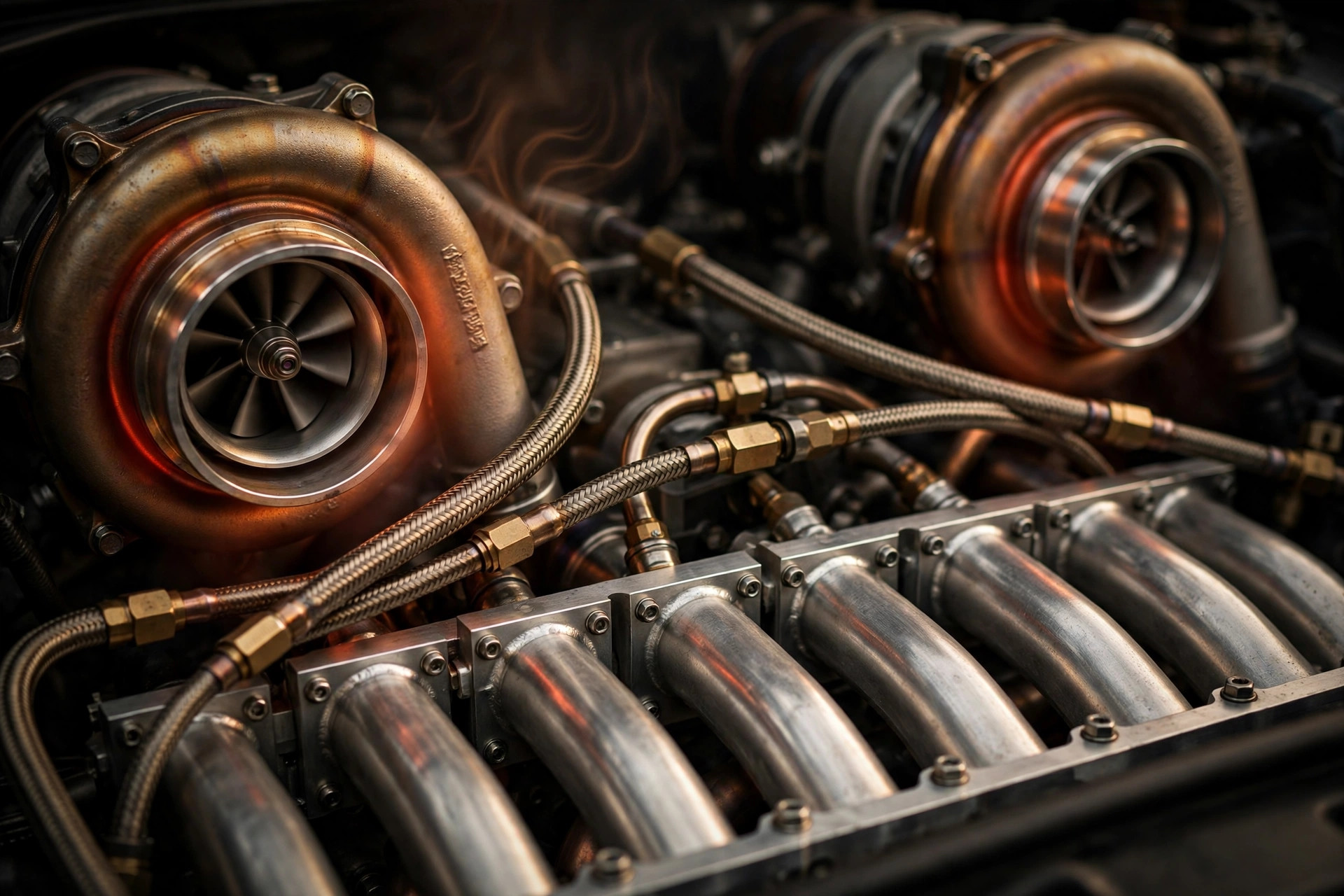
WardsAuto announced the 2026 10 Best Engines & Propulsion Systems winners in Detroit on October 13, and the headline inside the headline is the Corvette ZR1X. Its hybrid twin-turbo 5.5-liter V8 took one of the ten slots, making it the most powerful winner on the list by an enormous margin: 1,250 combined horsepower against a field that includes the Nissan Rogue Hybrid and the Hyundai Palisade Hybrid. Nobody was going to confuse this list for a drag strip, and the ZR1X showed up on it anyway.
But the real story is the shape of the list itself. Every single one of the ten winners carries electric assistance. Four conventional hybrids, four battery-electric vehicles, two plug-in hybrids. Zero pure internal combustion engines. Wards has run this competition since 1995, and the first electrified winner, a first-generation Toyota Prius, arrived in 2001. It took a quarter century to go from one electrified winner to ten. Now there are no exceptions left, and the trophy at the top of the horsepower column belongs to a twin-turbo flat-plane crank V8 with an electric motor bolted to the opposite axle.
Gemini small-block
Start with the engine, because the engine is the point. Hand-built, twin-turbocharged, 5.5 liters of flat-plane crank V8: the LT7 makes 1,064 horsepower and 828 pound-feet of torque with no electric help whatsoever. Chevrolet calls it the Gemini small-block V8, and says it was developed alongside the naturally aspirated engines GM runs in its racing programs. That lineage matters more than the marketing name suggests.
A flat-plane crank V8 is an inherently compromised layout that engineers keep choosing anyway. Cross-plane cranks dominate American V8s because they cancel secondary vibration: counterweights arranged at 90 degrees smooth out the second-order imbalance that a flat-plane layout, with its 180-degree crank throws, simply accepts. Accepting it buys you even firing intervals bank to bank, an exhaust note that behaves like two inline-fours in stereo, and the freedom to rev, because the flat-plane crank is lighter and the firing order keeps exhaust pulses evenly spaced so scavenging works properly at high rpm. The tradeoff is vibration that grows with displacement and rpm, and the engineering bill for controlling it: stiffer blocks, tuned mounts, valvetrain that stays composed when the whole assembly is shaking.
Then GM bolted two turbochargers onto it, which is the part that should give you pause. Turbocharging and flat-plane cranks historically keep a polite distance, because uneven exhaust pulse behavior across a cross-plane layout complicates turbine work, while flat-plane layouts are friendlier to turbos but usually show up in smaller displacements. A 5.5-liter twin-turbo flat-plane crank V8 is almost nobody's first draft of an engine program. It is the draft you write when the racing program already taught you how to keep the bottom end alive at sustained high revs, and the only question left is how much boost the structure can take before the engineering stops being worth the complexity.
Details from Chevrolet's own release fill out the picture: finger-follower valvetrain, dry-sump lubrication, hand assembly. Finger followers matter here because the LT7 needs to breathe at the top of its rev range while surviving the vibration signature of a flat-plane crank at 5.5 liters, and bucket followers at that size get heavy and unhappy. Dry-sump matters because a mid-engine car pulling sustained lateral load cannot afford oil starvation at 1.4 g, and a turbocharged engine making 1,064 horsepower cannot afford hot oil pooling anywhere. These are not luxury choices. They are the minimum price of admission for what this engine is asked to do.
Electric half of the award
Wards judges score powertrains on real-world driving, and they look at horsepower, torque, noise, vibration and harshness, observed efficiency, and technical innovation. Only new or substantially updated powertrains qualify. So it is worth being precise about what the electric side of the ZR1X contributes, because the award names a propulsion system, not an engine.
Up front, the motor adds 186 horsepower and 145 pound-feet of torque. It occupies the same package as the E-Ray's motor, the unit that introduced hybrid power to the Corvette lineup for the 2024 model year, but Chevrolet says the ZR1X version uses strengthened internal components and improved energy deployment to extract an additional 26 horsepower and 20 pound-feet over the E-Ray's unit. Same shape, harder job. That is a refreshingly honest engineering admission: the motor did not get bigger, the margins inside it did.
Two details about the system deserve more attention than they usually get. First, there is no plug. Charging happens through regenerative efforts, which means the battery's state of charge is a function of how the car is driven, not how it is parked, and the calibration has to treat every braking event as a refueling event. Second, the two drive systems are not physically connected in any way. The V8 drives the rear wheels through an eight-speed dual-clutch transmission; the motor drives the front axle; the only link between them is software deciding how much each axle gets. Get that arbitration wrong and you have two cars fighting each other. Get it right and you have 1,250 horsepower with a 60 mph time under two seconds and an estimated quarter mile under nine.
And when you do not want any of that, the car can run as a silent electric runabout: Stealth Mode gives four to five miles of electric-only driving. It is a small thing. It is also the whole story in miniature, because the same hardware that qualifies the ZR1X as a hybrid award winner is the hardware that lets a 1,064-horsepower V8 supercar leave a neighborhood without waking it.
Always the plan
Here is the part that reframes the win. In a lengthy interview on The Drive's Drivecast this week, Corvette chief engineer Tony Roma said the ZR1X was in the plan from the moment the E-Ray was designed: "we always had the ZR1X in mind when we did the E-Ray, and just the performance that it gave the car, the attributes that it brings, all the crazy things we've been able to do with the Nürburgring and Pikes Peak." The electrified front axle was never a one-model experiment. It was an architecture looking for its full expression.
Roma also confirmed what the renaming already hinted at. For 2027, the E-Ray becomes the Grand Sport X, because X now denotes the electrified all-wheel-drive system across the Corvette lineup. The hybrid system that won a Wards award under a 1,064-horsepower V8 is the same system that now anchors a grand touring model rated at 721 horsepower. That range, from grand tourer to the most powerful production Corvette ever built, is the actual technical achievement the award recognizes. Scaling a hybrid architecture up without breaking it is harder than inventing it once.
Roma's other remark this week, made to Autoblog, is the one that will age either beautifully or badly: "someday we will fully electrify Corvette, but not today." He also confirmed GM is putting new clean-sheet V8s into the marketplace, a sentence nobody would have written with confidence three years ago. The ZR1X is the evidence for the position: electric assistance deployed as a performance tool on a car whose entire identity is a flat-plane crank V8 wailing past 8,000 rpm, the experience Roma described as something no amount of money spent anywhere else in the world can currently buy.
What a list without combustion says
Twenty-six powertrains entered. Judges drove them in the real world. Among the ten winners: the ZR1X, the Hyundai Palisade Hybrid, the Nissan Rogue Hybrid, and the Porsche 911 Carrera GTS T-Hybrid among conventional hybrids; the BMW M5 Touring and Toyota RAV4 PHEV GR Sport as plug-in hybrids; the Mercedes-Benz GLC 400 4Matic Electric, Rivian R2 Performance, Subaru Trailseeker, and Volvo EX60 P10 AWD as battery electrics. Note the 911 Carrera GTS T-Hybrid sitting in the conventional hybrid column: Porsche's icon is on this list too, and not in the battery-electric column either. Both of the great rear-engine and mid-engine sports car traditions arrived at the same answer from opposite directions.
Robin Warner, who manages the Wards 10 Best awards programs, put the obvious sentence on the record: "The sheer number of hybrids, plug-in hybrids and battery-electric vehicles that made up this year's nominees tells a story in its own right. Even the hottest sports cars utilize electric help to engage drivers and, indeed, enhance the experience." The key word in that quote is the last verb. Enhance, not replace. Nobody at Wards is arguing the electric motor makes the V8 obsolete. They are arguing, with a straight face and a stopwatch, that the best propulsion system in a 1,250-horsepower Corvette is the one where the motor makes the V8 better at being a V8.
That distinction is the whole argument of the ZR1X, and it is why this win matters more than the trophy. A decade ago, hybrid meant compromise: a smaller engine, a heavier car, an apology. The LT7 is none of those things. It is the most extreme flat-plane crank V8 GM has ever put in a production car, hand-built, dry-sumped, turbocharged, and then given an electric front axle that was architected years in advance to meet it. Electrification did not soften the Corvette's flagship. It is the reason the flagship exists in its current form.
Read the list as a tombstone for combustion and you miss the point. Thirty-one years of Wards judging just produced its first pure-combustion shutout, and the car that delivered the news is the loudest, most unapologetically mechanical machine on it: a 1,250-horsepower hybrid Corvette. There is a certain symmetry in that. The engine that proved the electric motor belongs is the one that needed it least.
ZR1X hybrid LT7: key figures
| Engine | LT7 "Gemini" 5.5L twin-turbo flat-plane crank V8, hand-built |
|---|---|
| Engine output | 1,064 hp, 828 lb-ft |
| Valvetrain / oiling | Finger-follower valvetrain, dry-sump lubrication |
| Front-axle motor | 186 hp, 145 lb-ft (strengthened vs. E-Ray unit: +26 hp, +20 lb-ft) |
| Combined output | 1,250 hp |
| Drivetrain | Electrified all-wheel drive; no mechanical link between axles |
| Charging | Regenerative only; no plug |
| Stealth Mode | 4 to 5 miles electric-only |
| Performance (GM) | 0 to 60 mph under 2 seconds; quarter mile under 9 seconds, 150+ mph trap |
| Award | 2026 Wards 10 Best Engines & Propulsion Systems, announced Oct 13, 2026, Detroit |
Sources: WardsAuto 2026 10 Best Engines & Propulsion Systems winners (announced Oct 13, 2026); GM Authority, "Corvette ZR1X Hybrid LT7 Is 2026 Wards 10 Best Engines & Propulsion Systems Winner," Oct 14, 2026; CorvSport, "The 1,250-HP Corvette ZR1X Is a 2026 Wards 10 Best Engines Winner," Oct 2026; PASMAG industry coverage of the ZR1X announcement; The Drive, Drivecast EP35 interview with Tony Roma, Oct 2026; Autoblog, "Chevy Confirms an All-Electric Corvette Is Coming, Just Not Yet," Oct 15, 2026; Chevrolet ZR1X press materials.