Three Watches, One Soundboard: Audemars Piguet’s Supersonnerie Trio and the Guitar Inside the Case
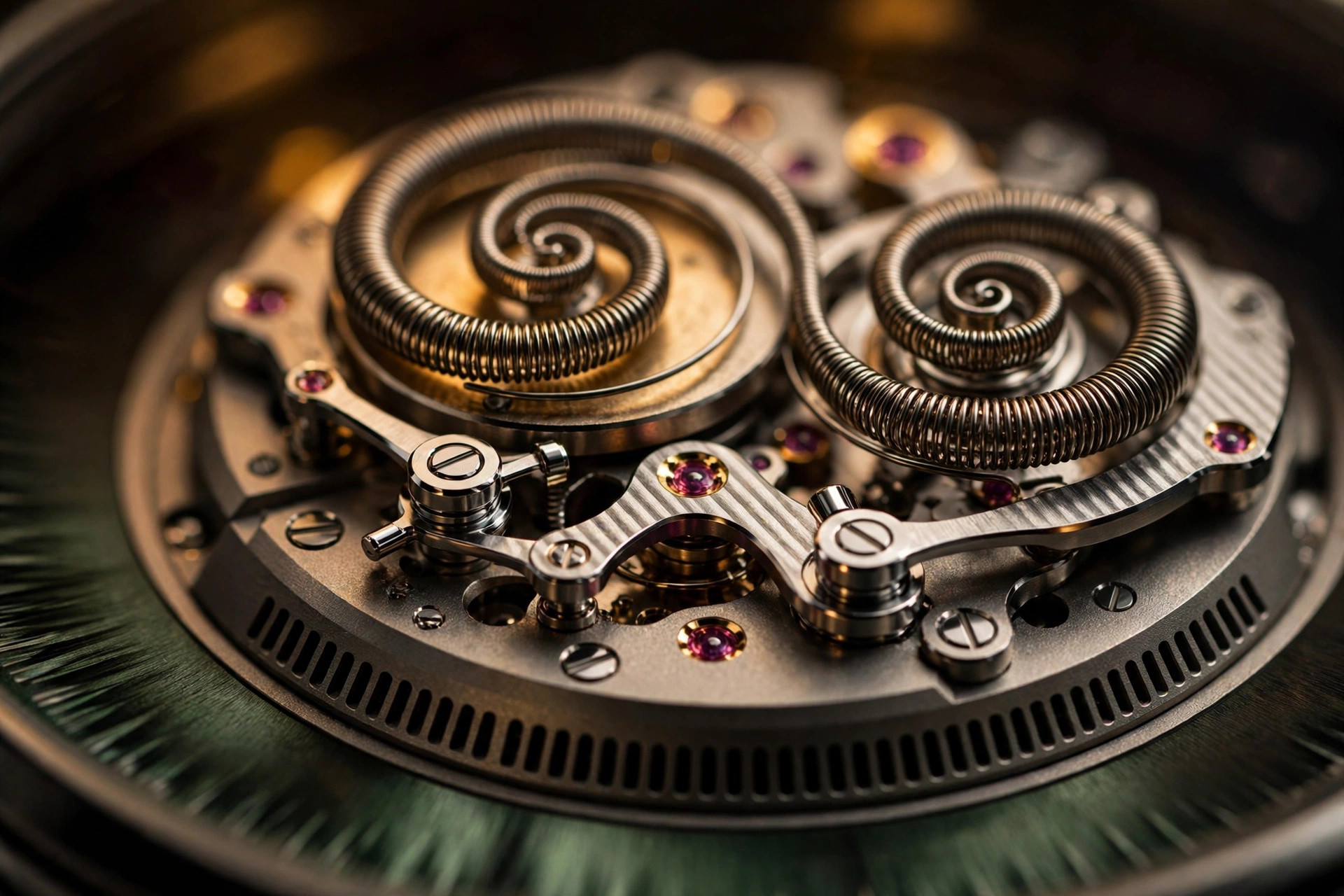
Minute repeaters have a volume problem. Hammers strike coiled steel gongs, the gongs vibrate, and in a conventional repeater those gongs are bolted to the movement mainplate, which is itself a dense stack of bridges, wheels, and screws carrying a whole chronometric machine. A mainplate loaded with parts is a terrible loudspeaker. It absorbs vibration instead of radiating it, which is why most wristwatch repeaters sound like a music box heard through a closed door, and why the loudest repeaters in history were pocket watches, where a large case gave the sound somewhere to go.
Audemars Piguet spent eight years refusing that trade. Working with watchmakers, musicians, and acoustic researchers from EPFL in Lausanne, the manufacture rebuilt the repeater as a musical instrument, and the result, first shown in the Royal Oak Concept RD#1 in 2015 and in production from 2016, is Supersonnerie. Three new references arrived on November 2, 2026, and they change nothing about the mechanism. That is the interesting part. Ten years on, AP is still building watches around one acoustic argument, and the argument has not got weaker.
The Guitar Inside the Case
Picture an acoustic guitar. Strings vibrate, a bridge transfers that vibration to a thin wooden soundboard, the hollow body enriches the harmonics, and a sound hole projects the result toward the listener. Supersonnerie maps that chain onto a watch case, component by component. Steel gongs play the strings, hammers play the fingers. A gong stud, the post the coiled gong is soldered to, plays the bridge. And spread beneath the movement sits a thin plate of titanium alloy, the soundboard, doing the work the guitar body does.
That last substitution is the whole invention. In a traditional repeater, gongs are fixed to the mainplate, so every strike shakes the movement itself, and the movement, built to keep time rather than to resonate, swallows most of the energy. Supersonnerie detaches the gongs from the mainplate entirely and solders them to the soundboard instead, so vibration goes straight into a plate whose only job is to vibrate. One account of the development specifies a titanium-copper alloy for the plate, chosen after trial and error for how it rings; other coverage describes it simply as titanium. Either way, the material was picked for acoustics, not for strength or looks, and titanium brings a second benefit: it tolerates water, which matters for reasons below.
Below the soundboard sits a cavity, and below that, a caseback raised slightly off the case and cut with slots. Sound leaves through those vents, the way it leaves a guitar through its sound hole. A gasket between the soundboard and the case body seals the movement chamber, which is how a watch with deliberate holes in its back still carries a 20-meter water resistance rating. Water can reach the soundboard chamber without reaching the movement. AP prints a soundwave motif on the titanium caseback, which is either charming or shameless depending on your tolerance for a brand engraving its own marketing onto the part that does the work.
Volume is not the only problem Supersonnerie attacks. A repeater also needs a governor, the striking regulator that paces the hours, quarters, and minutes so the chime arrives at a listenable speed instead of a blur. Traditional governors are noisy: a spinning anchor clicks against gear teeth, adding mechanical chatter to the very sound the watch is trying to produce. AP redesigned the regulator with a longer, more flexible anchor that absorbs the shock of each contact instead of transmitting it, cutting the parasitic noise at the source. Two smaller fixes came with it: the awkward pause between the quarter chime and the minute chime, when no quarters are struck, was shortened, and a security function now blocks hand-setting while the repeater is striking, so an owner cannot jam the mechanism mid-chime.
A Thirty-Year-Old Movement, Deliberately
Calibre 2953 is not new. It arrived in 2019 as the production form of the RD#1 research, and its architecture reaches back roughly three decades to an earlier AP repeater calibre. 362 components, 32 jewels, 3 Hz, a minimum 72-hour power reserve, 30mm across and 6mm thick. Hours, minutes, a small seconds at six o’clock, and the repeater on demand. Nothing in that list would surprise a watchmaker from 1995.
Keeping the old movement was a deliberate choice, and it makes the acoustic contribution easier to judge. Had AP built a new calibre at the same time, nobody could say whether the sound came from the movement or the case. By dropping the Supersonnerie system onto a known quantity, the improvement is attributable: same gears, same racks, same hammers, different sound path. Rivals have taken the opposite route, building entirely new repeater architectures, and some of them, like Chopard’s LUC Full Strike with its sapphire crystal gongs, are arguably more radical. AP bet that the case, not the calibre, was the bottleneck, and spent a decade proving it.
Finishing deserves a sentence, because limited production lets AP finish by hand in ways its industrial lines cannot. Bevels are wide, inward angles are crisp, and the mainplate carries small-diameter perlage front and back. Finger bridges for the train wheels and a long bridge for the center wheel mark the calibre as a traditional repeater layout, the kind of architecture that is becoming rare as competitors modernize. Whether that reads as heritage or as stubbornness depends on what you want a repeater to be.
Three Watches, Three Registers
Two 42mm Royal Oaks lead the trio. Titanium first, reference 26591TI.OO.1252TI.08, limited to 50 pieces, with a smoked green sunburst dial that fades from viridian at the center to black at the edge. No Grande Tapisserie here, a deliberate break from the Royal Oak script, with a tone-on-tone green small seconds counter, rhodium-toned pink gold markers, and white gold hands, all luminescent. Titanium is the lightest choice and, by SJX’s reading, the one that best serves the acoustics: less mass in the case means less energy lost before the sound reaches the air. 14mm thick, integrated titanium bracelet, AP folding clasp, 20 meters of water resistance.
Pink gold second, reference 26591OR.OO.1252OR.01, the first pink gold Royal Oak Supersonnerie. Brown Grande Tapisserie dial, snailed small seconds, matching pink gold bracelet, same 42 by 14mm case. It is the most expensive of the three and the heaviest, which creates a small irony: the metal that looks most like a traditional grande complication is the one least suited to the acoustic argument. AP’s own photography leads with the titanium watch, which suggests the manufacture knows which one makes the case.
Code 11.59 third, reference 26395BC.OO.D009CR.01, 41mm by 13.6mm in 18k white gold with a fully polished mid-case and a smoked sapphire dial. This format first appeared in pink gold in 2023, and the smoked sapphire makes engineering sense here in a way a solid dial would not: the striking racks sit on the dial side of the mainplate in this traditional calibre, so a transparent dial puts the chiming works on display without full skeletonization, and the dark tint keeps the visual noise down. Grey alligator strap, white gold folding clasp. At CHF 325,000 it is the least expensive of the three, a phrase that only makes sense inside this price bracket.
Swiss list prices run CHF 351,100 for the titanium Royal Oak, CHF 391,400 for the pink gold, and CHF 325,000 for the Code 11.59. Outlets converting those figures put the range at roughly $397,000 to $478,000, though AP itself lists price on request and sells only through its own boutiques and AP Houses. Production is limited by the labor of acoustic tuning, which is done by ear, watch by watch. Two 38mm Code 11.59 Selfwinding models with natural stone dials, gold obsidian and black onyx on calibre 5909, arrived the same day, for anyone who wants the case without the chime.
The Counterargument: Louder, for Whom?
Start with the honest accounting. These are variants, not a new watch: a proven calibre, a proven acoustic system, three case and dial combinations that had not existed before. Dial & Crown calls the trio a consolidation rather than a reinvention, and that verdict is hard to argue with. Nothing here advances the state of the art. It extends it to new metal.
Then the price. CHF 325,000 buys the cheapest Supersonnerie, and the complication it buys is one most owners will trigger a few times a year, in quiet rooms, for an audience of one. A repeater’s volume is measured in silence, and in any environment with ambient noise, the difference between a good conventional repeater and a Supersonnerie is academic. AP’s claim is real, the physics checks out, and the use case is narrow enough that the improvement is mostly theoretical for the person wearing it.
Thickness and water resistance cut the other way too. 14mm is thick for a Royal Oak, and the soundboard architecture is the reason: the case needs internal volume for the cavity to work in. AP chose audibility over slimness, and has done so consistently in this line, but a 42mm by 14mm watch in titanium still wears like the engineering compromise it is. 20 meters of water resistance is genuinely impressive for a chiming watch with a vented caseback, and also genuinely inadequate for a sports watch case. Both facts are true at once.
Finally, the titanium reference, the one that best serves the acoustics and the one AP leads with, is limited to 50 pieces. The most wearable version of the argument is the hardest to obtain, while the pink gold version, the heaviest and most expensive, is the one a boutique is most likely to have. That is how luxury works, and it is also a small contradiction at the heart of an engineering story: the best-sounding watch in the trio is the one almost nobody will hear.
None of that makes the Supersonnerie idea less sound. A repeater should be heard properly, and AP spent eight years with EPFL building a case that treats sound as a design input rather than a byproduct. The trio does not reinvent the repeater. It puts the same good argument in three new cases and lets the titanium one, limited as it is, make the point most clearly: the loudest part of a chiming watch was never the movement. It was always the box it sits in.
Specifications: Audemars Piguet Minute Repeater Supersonnerie Trio (November 2026)
| References | 26591TI.OO.1252TI.08 (titanium Royal Oak); 26591OR.OO.1252OR.01 (pink gold Royal Oak); 26395BC.OO.D009CR.01 (white gold Code 11.59) |
| Movement | Calibre 2953, hand-wound minute repeater with Supersonnerie acoustic system |
| Components | 362 (32 jewels) |
| Frequency | 3 Hz (21,600 vph) |
| Power Reserve | 72 hours minimum |
| Movement Size | 30mm diameter, 6mm thick |
| Functions | Hours, minutes, small seconds at 6 o’clock, minute repeater |
| Soundboard | Titanium alloy plate beneath the movement; steel gongs mounted to the soundboard, not the mainplate |
| Case Venting | Raised caseback with slots; cavity between soundboard and caseback amplifies the strike |
| Governor | Redesigned striking regulator with flexible anchor; shortened quarter-to-minute pause; anti-setting security function |
| Royal Oak Cases | 42mm × 14mm, titanium or 18k pink gold, integrated bracelet, AP folding clasp |
| Code 11.59 Case | 41mm × 13.6mm, 18k white gold, fully polished mid-case, grey alligator strap |
| Dials | Smoked green sunburst (titanium); brown Grande Tapisserie (pink gold); smoked sapphire (Code 11.59) |
| Water Resistance | 20 meters |
| Limited Edition | 50 pieces, titanium Royal Oak only |
| Swiss Prices | CHF 325,000 (Code 11.59); CHF 351,100 (titanium Royal Oak); CHF 391,400 (pink gold Royal Oak); price on request from AP |
| Availability | AP Houses and boutiques only; production limited by hand acoustic tuning |
Sources & Methodology
Launch facts, references, and Swiss prices from Watches by SJX (November 3, 2026), Dial & Crown (November 10, 2026), Gear Patrol (November 2, 2026), Watchonista (November 2, 2026), and Notebookcheck (November 2026), corroborated across at least three outlets. Supersonnerie mechanics, soundboard construction, governor redesign, and EPFL collaboration from Monochrome’s technical survey of repeater optimization, Deployant’s Royal Oak Concept Supersonnerie review, and Chronos Japan’s AP sound-lab feature. USD figures are outlet conversions of the Swiss list prices, not AP-published prices; AP lists price on request. One reference-number discrepancy exists in the coverage: Watchonista prints the Code 11.59 reference as 26395BC.OO.D002KB.01, while SJX, Dial & Crown, WatchAdvice, and Gear Patrol give 26395BC.OO.D009CR.01; the majority reading is used here. Author has not handled any of the three watches, and no independent acoustic measurements of the new references have been published; volume and tone claims are the manufacturer’s, corroborated by the physics of the construction rather than by measurement.