Three Ways to Fight a Magnet: The Engineering of Anti-Magnetic Watchmaking
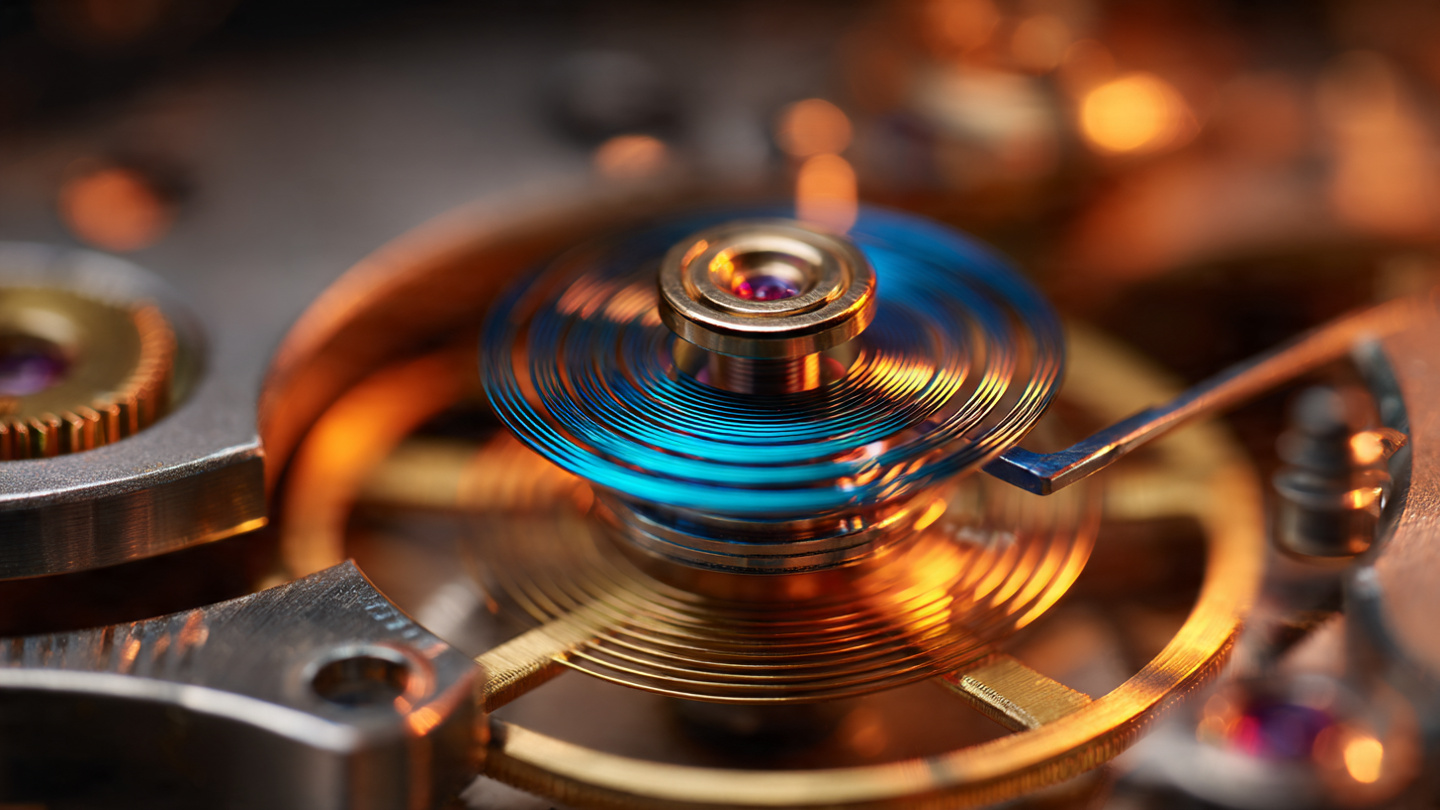
Set your mechanical watch on top of your phone overnight. In the morning, it might be running two minutes fast. Do it again the next night and it could be running fine, or four minutes fast, or stopped entirely. Nothing is broken. Nothing needs repair. A magnet simply rearranged the coils of a spring thinner than a human hair, and that spring is the only thing standing between accurate timekeeping and chaos.
Magnetism has always been the quiet enemy of mechanical watchmaking. But in 2026, it is everywhere. An iPhone's MagSafe ring generates roughly 200 gauss at its surface. Laptop speakers produce 100 to 300 gauss depending on the model. Magnetic purse clasps, tablet covers, wireless charging pads, and even the buckle on a leather bag can cross the 60-gauss threshold that ISO 764 sets as the minimum a "magnetic-resistant" watch must survive.
Sixty gauss. In a world that routinely produces 200.
Over the past seven decades, the watch industry has developed three distinct philosophies for dealing with this problem. Each one works. Each one comes with trade-offs. And each one reveals something different about how materials science can solve a physics problem that no amount of careful engineering alone can fix.
What Magnetism Actually Does
A mechanical watch keeps time because a hairspring oscillates at a precise frequency. In a movement rated at 4 Hz, the balance wheel swings back and forth 28,800 times per hour, and the hairspring determines the duration of each swing. If the hairspring's effective length or stiffness changes by even a fraction, the rate shifts.
Conventional hairsprings are made from Nivarox, a nickel-iron alloy chosen for its low thermal coefficient. Nivarox is excellent at maintaining a consistent elastic modulus across temperature swings. It is also ferromagnetic. Expose it to a strong magnetic field and adjacent coils can stick together, effectively shortening the spring. A shorter spring oscillates faster. A faster oscillation means the watch runs ahead.
Worse, the magnetization persists after the field is removed. Unlike temperature effects that self-correct, a magnetized hairspring stays magnetized until someone runs a degausser over it. A watchmaker can fix this in seconds, but the owner first has to realize something is wrong, which might take days of accumulated error before the two-minutes-fast pattern becomes obvious.
Beyond the hairspring, other steel components can also magnetize. Pallet fork jewels sit in steel slots. Screws hold the movement together. Certain rotor bearings use steel races. Any ferromagnetic part in the escapement or oscillator chain is a potential failure point. But the hairspring is the most sensitive component by far, because its function depends on dimensional precision measured in microns.
Philosophy One: Build a Shield
In 1956, Rolex introduced the Milgauss (from the French mille, one thousand, and gauss). CERN had approached Rolex with a practical problem: their physicists worked near particle accelerators and synchrotrons that generated magnetic fields strong enough to stop a mechanical watch. Rolex's answer was a Faraday cage built from soft iron.
Soft iron has a crucial property: it is extremely permeable to magnetic fields, meaning it absorbs and redirects flux lines rather than letting them penetrate through to the interior. By enclosing the movement in a two-piece soft iron shield, one screwed to the movement ring and the other to the caseback, Rolex created a path of least resistance around the movement. Magnetic flux travels through the shield wall instead of through the hairspring.
IWC had arrived at the same solution a year earlier with the Ingenieur in 1955. Albert Pellaton, IWC's legendary technical director, designed a complete inner case of soft iron. Both brands built on the same physics. Surround a conductor-free zone with a highly permeable material, and the field wraps around the outside rather than punching through the center.
This approach works, and it is conceptually elegant. But it imposes three significant constraints.
First, the shield adds thickness. A soft iron inner case is typically 0.5 to 1mm thick on each side, which adds 1 to 2mm to the total case height. For a dive watch or a tool watch, that thickness is tolerable. For a dress watch, it may not be.
Second, the shield blocks visibility. You cannot see the movement through a transparent caseback if there is a solid iron plate in the way. Rolex never offered a display caseback on the Milgauss, and IWC had the same limitation on shield-equipped Ingenieur references. For collectors who value movement finishing and decoration, this is a meaningful sacrifice.
Third, the shield adds weight. Soft iron is dense. In a watch already built from stainless steel, the additional mass is noticeable on the wrist, especially on models sized at 40mm or larger.
Rolex refined its implementation over the decades. Caliber 3131, the final Milgauss movement, combined the soft iron shield with two material upgrades: a blue Parachrom hairspring made from a paramagnetic niobium-zirconium alloy, and a nickel-phosphorus escape wheel that is also paramagnetic. These components cannot be magnetized at all. Parachrom ignores magnetic fields entirely, because niobium-zirconium is not ferromagnetic at any field strength encountered in daily life.
So by its final years, the Milgauss was running a belt-and-suspenders approach: a Faraday cage for whole-movement protection, plus paramagnetic materials in the two most sensitive components. When Rolex discontinued the Milgauss in 2023, the watch was arguably over-engineered for its rated 1,000-gauss specification, because the movement's most critical parts were already immune to fields many times higher.
Philosophy Two: Eliminate Every Ferromagnetic Part
In 2013, Omega revealed Caliber 8508 and made a different argument entirely. Instead of shielding the movement from magnetic fields, Omega asked: what if nothing inside the movement could be magnetized in the first place?
Working with Swatch Group sister companies Nivarox-FAR (hairsprings) and ASUAG-derived metallurgy labs, Omega developed a movement where every component that previously relied on ferromagnetic materials was replaced with a non-ferromagnetic alternative. Silicon hairsprings replaced Nivarox. Non-magnetic alloys replaced steel in the pallet fork, anchor, and various pins. Titanium and non-ferrous alloys replaced steel screws and levers throughout the gear train.
When tested by METAS (the Swiss Federal Institute of Metrology), Caliber 8508 survived exposure to 15,000 gauss with no effect on rate. Not 1,000 gauss. Not 5,000. Fifteen thousand, a field strength strong enough to erase a hard drive and pull tools out of a mechanic's hand.
Omega subsequently rolled this technology into the Master Chronometer certification program, which requires every certified watch to pass METAS testing at 15,000 gauss. As of 2026, virtually every new Omega movement carries Master Chronometer certification, from the Seamaster 300 to the Speedmaster to the Constellation. What was once a flagship feature became the baseline.
Without a soft iron cage, Omega was free to use transparent casebacks. Without the weight of a shield, cases could stay thinner. Without the thickness penalty, even dress-sized watches like the De Ville Trésor could carry 15,000-gauss resistance in a slim profile that would be impossible with a Faraday cage approach.
But the "no ferromagnetic parts" philosophy has its own costs. Silicon hairsprings behave differently from Nivarox under shock loading. Silicon is brittle. A Nivarox spring can deform and return to shape after a hard impact; a silicon spring either survives intact or shatters. Modern silicon hairsprings are engineered with geometry (the Breguet overcoil, concentric terminal curves) that distributes stress across the full length, and shattering in normal use is vanishingly rare. It is not, however, zero.
Additionally, replacing every ferromagnetic component means abandoning some traditional manufacturing techniques. Certain decorative finishes (anglage, perlage on steel bridges) require ferromagnetic substrates. Omega addressed this by developing finishing techniques for non-ferrous materials, but the visual character of a movement finished entirely in non-magnetic alloys is subtly different from one using traditional German silver or steel bridges.
Philosophy Three: Silicon and Nothing Else
Parallel to Omega's whole-movement approach, several manufacturers pursued a narrower strategy: replace only the hairspring and escape wheel with silicon, and leave everything else alone.
Rolex's Syloxi hairspring, used in women's calibers like the 2236, is monocrystalline silicon. Patek Philippe's Spiromax, introduced in Caliber 240, is silicon with a proprietary terminal curve geometry. Swatch Group's Nivachron, used in Tissot and Hamilton movements, is a titanium-based alloy that achieves paramagnetic behavior without going to silicon at all.
Each of these solves the hairspring magnetization problem without redesigning the entire movement. A silicon hairspring is diamagnetic, meaning it actively repels magnetic fields at a molecular level. It cannot be magnetized. Period. And because the hairspring is responsible for roughly 90% of a movement's sensitivity to magnetic fields, replacing just that one component eliminates most of the risk.
Swatch Group took the silicon path furthest with the Sistem51, a fully machine-assembled movement where the hairspring, escape wheel, and pallet horns are all silicon, produced by DRIE (Deep Reactive Ion Etching), the same photolithographic process used to manufacture semiconductor chips. One silicon wafer yields hundreds of identical hairsprings, each with geometry impossible to achieve by traditional metalworking: variable-pitch coils, integrated terminal curves, and thicknesses uniform to within a micron.
For the collector, this philosophy has a practical appeal. A watch with a silicon hairspring and steel bridges still looks like a traditional mechanical watch. Movement finishing remains conventional. Transparent casebacks work fine because there is no shield. And the magnetic resistance, while not rated at 15,000 gauss, is vastly better than the 60-gauss ISO minimum, because the component most vulnerable to magnetism is now permanently immune.
What Your Phone Actually Does
Apple's MagSafe alignment magnet array generates approximately 200 gauss at its surface and decays rapidly with distance. At one centimeter, the field drops to roughly 50 gauss. At two centimeters, it is negligible for watchmaking purposes.
Samsung's Galaxy phones with wireless charging coils produce similar fields. Laptop speakers, which contain permanent magnets, can generate 100 to 300 gauss at the case surface directly above the driver. iPad Smart Covers use magnets rated around 200 gauss at the closure point.
For a watch rated to ISO 764's 60-gauss standard, any of these devices poses a credible threat if the watch sits directly on top of them. An iPhone face-down on a nightstand with a watch resting on the back of the phone is exactly the scenario that magnetizes hairsprings. Stacking a watch on a closed laptop, especially near the hinge where the speaker magnets live, is another common culprit.
For a Milgauss-class watch rated to 1,000 gauss, none of these consumer devices poses a meaningful risk. For an Omega Master Chronometer rated to 15,000 gauss, the question is academic. You would need an MRI machine (15,000 to 70,000 gauss) or an industrial electromagnet to approach the threshold.
Comparing the Costs
Building a Faraday cage requires machining additional components, sourcing soft iron (which is not a standard watch material), and accepting the thickness and opacity penalties. Rolex absorbed this cost into the Milgauss, which retailed at $9,150 before discontinuation, roughly $1,000 to $1,500 more than a comparable-sized Oyster Perpetual without the shield.
Eliminating ferromagnetic materials requires investment in alternative supply chains: silicon wafer fabrication for hairsprings, non-ferrous alloy development for pins and levers, and METAS certification fees for every caliber. Omega amortizes this across its entire production volume, which means the per-unit cost is low, but the upfront R&D was substantial.
Replacing only the hairspring is the cheapest solution. Rolex, Patek Philippe, and Swatch Group all operate silicon fabrication facilities that produce hairsprings at scale. A silicon hairspring costs more than a Nivarox one in absolute terms, but the premium is small relative to the retail price of a Swiss mechanical watch.
Which Philosophy Won
All three work. None has disappeared. But the market has voted with production volumes.
Rolex discontinued the Milgauss in 2023 but kept Parachrom hairsprings and paramagnetic escape wheels across its entire catalog, from the Submariner to the Daytona. Every current Rolex is antimagnetic at the component level, even without a dedicated shield. Rolex effectively adopted Philosophy Three (replace the critical parts) as a universal standard while retiring the Philosophy One product (the shielded Milgauss) as redundant.
Omega committed to Philosophy Two as its brand identity. Master Chronometer certification is now a marketing pillar, and the 15,000-gauss number appears in virtually every Omega product description. The transparent caseback, enabled by eliminating the shield, has become a key design element across the lineup.
And silicon hairsprings, the core of Philosophy Three, are spreading across price points. Tissot PRX Powermatic 80 movements use silicon hairsprings in a watch that retails for $395. Frederique Constant uses them at $1,500. Tudor uses them in the Pelagos at $4,500. Silicon has gone from exotic to expected in under 15 years.
What no manufacturer has done is go backward. Nobody is building new movements with Nivarox hairsprings and no magnetic protection at all. In the smartphone era, a traditional Nivarox hairspring with no shielding or material upgrade is a liability, and the industry has quietly acknowledged this by making every new caliber design at least partially antimagnetic.
For the Collector
If you own a watch made before approximately 2010 with a traditional Nivarox hairspring and no inner shield, be careful where you set it down at night. A watch box on the nightstand, not the nightstand itself next to your phone, is the safest home.
If you own a Milgauss, Ingenieur, or similar shielded watch, your movement is protected to 1,000 gauss and you have nothing to worry about from consumer electronics. You gave up a display caseback and some case thickness for the privilege.
If you own a recent Omega with Master Chronometer certification, your watch is functionally immune to any magnetic field you will encounter in daily life, including airport security, medical equipment waiting rooms, and even close proximity to large electric motors.
And if you own almost any Swiss watch made after 2020 with a silicon or paramagnetic hairspring, you are protected against the magnetism that matters most, which is the accidental kind: the phone left face-down, the watch resting on a laptop, the magnetic clasp on a jacket.
Magnetism is a solved problem. It just took three different solutions to get there.
Sources
- Rolex SA, "Milgauss: A Shield Against Magnetic Fields," official product documentation, Caliber 3131 specifications including Parachrom hairspring and paramagnetic escape wheel.
- Omega SA, "Solving a Modern Problem: Co-Axial Caliber 8508," 2013 press release detailing 15,000-gauss resistance via non-ferromagnetic movement components.
- METAS (Swiss Federal Institute of Metrology), "Master Chronometer Certification Protocol," technical criteria for magnetic resistance testing at 15,000 gauss.
- Bob's Watches, "Antimagnetic Rolex Watches: Milgauss vs. Air-King," Caliber 3131 review covering niobium-zirconium Parachrom alloy and nickel-phosphorus escape wheel.
- Monochrome Watches, "In-Depth: The History of the IWC Ingenieur Collection," Albert Pellaton's 1955 soft iron inner case design and 70th anniversary retrospective.
- ISO 764:2020, "Horology: Magnetic-resistant watches," specifying 4,800 A/m (approximately 60 gauss) minimum resistance standard.
- Apple Inc., "iPhone and MagSafe: Magnets and Magnetic Fields," product safety documentation noting magnetic field strengths at various distances.
- Swatch Group, "Sistem51: The First Fully Machine-Assembled Swiss Watch," DRIE silicon component fabrication process and Nivachron hairspring specifications.