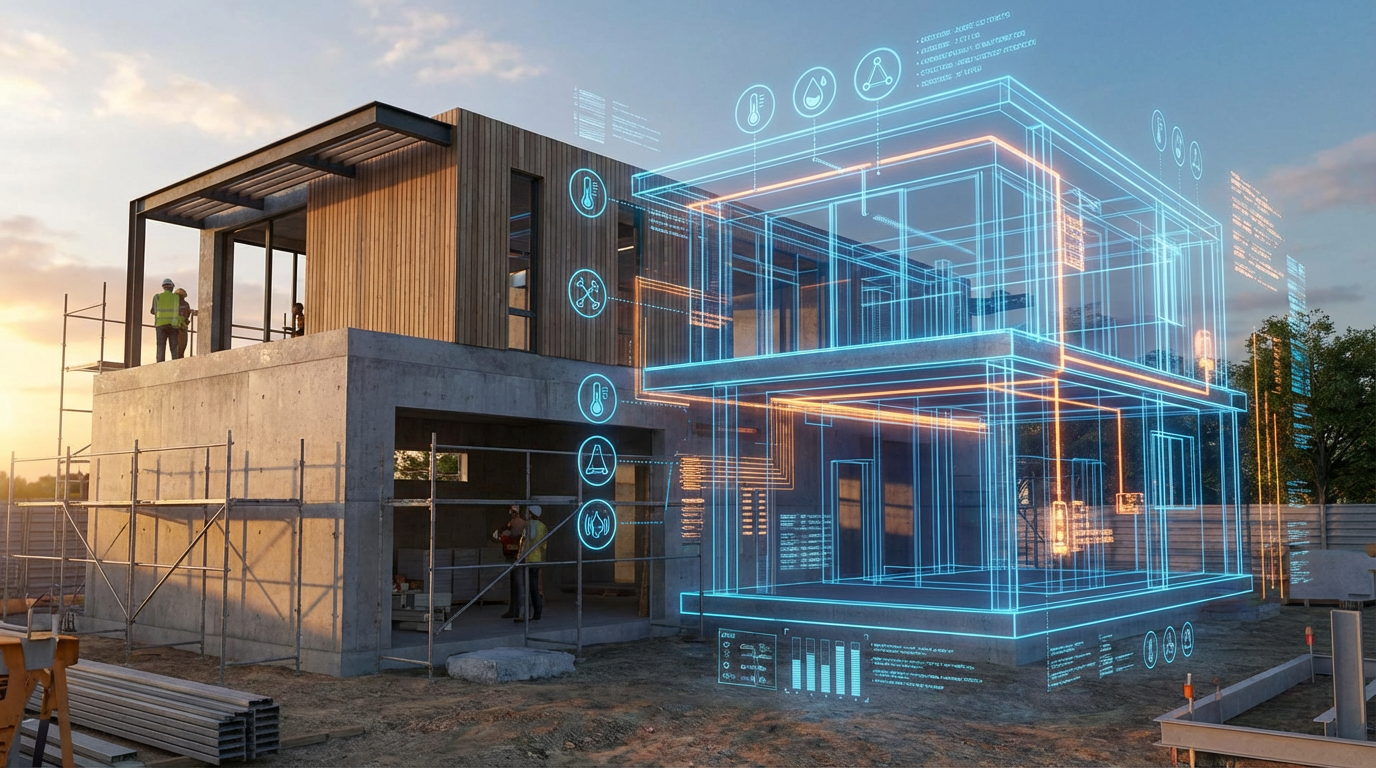
Before the first shovel breaks ground, your house already exists. Not as a sketch on paper or a static 3D render, but as a living, breathing digital replica that simulates everything from structural loads to energy performance — and keeps learning after you move in. Welcome to the era of the residential digital twin.
The digital twin in construction market is projected to reach $19.49 billion by 2029, growing at over 30% annually. What started as an aerospace concept — NASA coined the term in 2010 to model spacecraft — has trickled down to homebuilding, and it's transforming every phase of the process.
What Exactly Is a Digital Twin?
A digital twin isn't just a fancy 3D model. It's a dynamic virtual replica fed by real-time data from sensors, drones, and construction management platforms. Built on top of Building Information Modeling (BIM), a digital twin continuously mirrors its physical counterpart — during design, construction, and the decades of life that follow.
"The difference between a BIM model and a digital twin is the difference between a photograph and a mirror. One captures a moment. The other reflects reality in real time."
Matterport became an Autodesk Premium Partner in late 2025, deepening their collaboration on digital twin workflows that connect 3D reality capture directly to design and construction tools. The partnership signals that the infrastructure for residential digital twins is maturing fast.
Catching Mistakes Before They Cost You
The most immediate payoff is clash detection. Traditional construction discovers conflicts — an HVAC duct routing through a structural beam, plumbing intersecting electrical — only when workers encounter them on site. A digital twin runs these collision checks automatically, resolving problems in the virtual world where fixes cost nothing.
For a $500,000 custom home, that's $20,000–$30,000 in avoided rework — money that would have gone to tearing out drywall and rerouting pipes. Immersive Homes, a startup specifically targeting the custom residential market, reports that homeowners using their digital twin platform experience zero major change orders after construction begins, compared to the industry average of 3–5 per project.
Real-Time Construction Monitoring
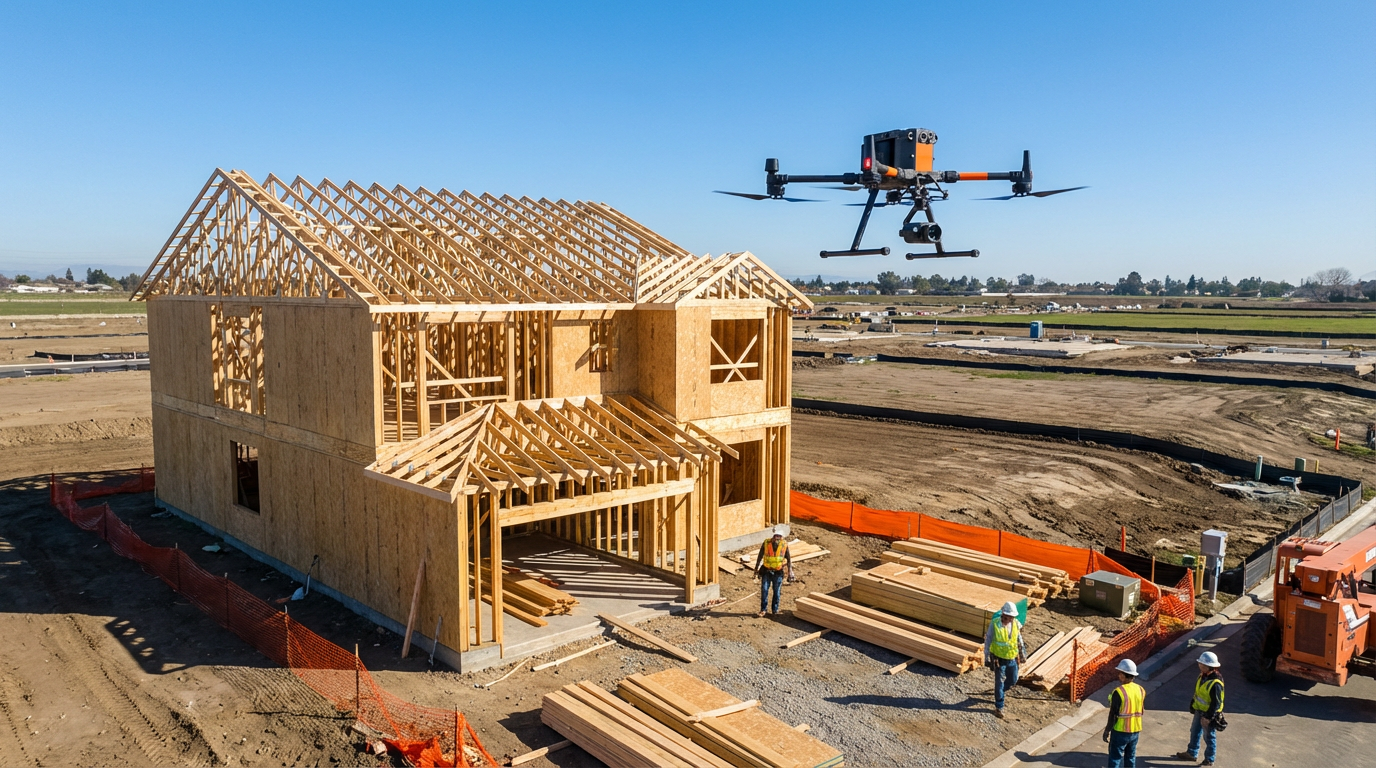
During the build, the digital twin becomes a live dashboard. Drone captures and IoT sensors feed progress data back into the model, so you can verify that what's being built matches what was designed — without driving to the job site.
OpenSpace, which we covered in our drone monitoring piece, integrates directly with BIM platforms to overlay 360° reality captures onto the digital twin. Project managers can spot a misplaced window or incorrect pipe diameter within hours of installation, not weeks.
Every material spec, installation date, warranty detail, and inspection result gets embedded in the model. When the home is handed over, the buyer receives a complete digital record — not a box of paper files.
The Twin Lives On After Move-In
Here's where digital twins diverge from every other construction technology: they don't stop being useful when the home is finished.
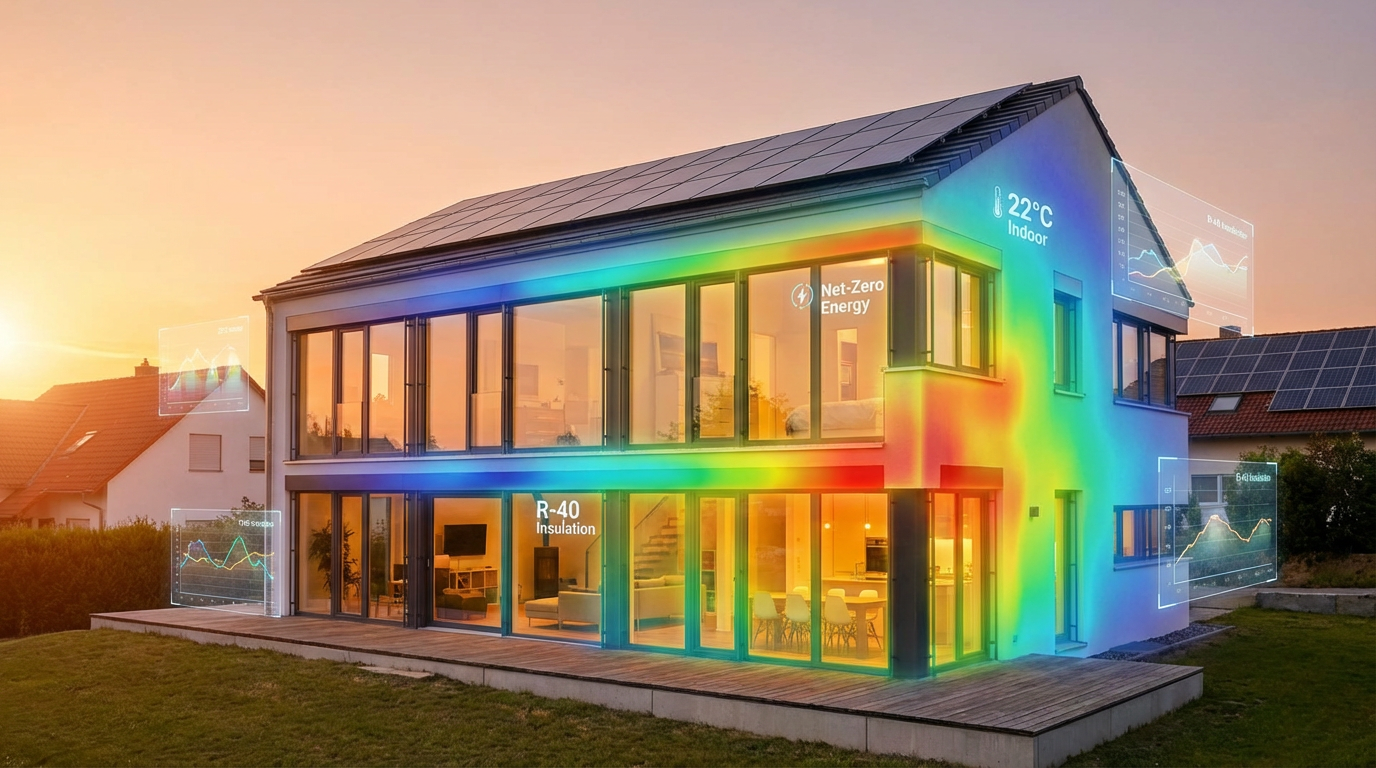
IoT sensors embedded during construction continue feeding data — HVAC performance, energy consumption, structural vibrations, humidity levels. The twin becomes a predictive maintenance engine. It can flag that your heat pump is drawing 18% more power than modeled, suggesting a failing compressor before you notice your bills creeping up.
For energy performance, the twin runs continuous simulations against actual weather data. If your home was designed for net-zero energy but is consistently underperforming, the twin pinpoints exactly where the envelope is leaking or which system needs recalibration.
The Cost Question
Full digital twin implementation adds roughly 1–3% to project costs for a custom home. For a $400,000 build, that's $4,000–$12,000. The payback comes from avoided rework (4–6% savings), energy optimization (15–25% utility reduction over the home's life), and dramatically better resale documentation.
Platforms are getting more accessible too. Autodesk Forma now offers digital twin capabilities integrated into its design tools, and open-source frameworks like IFC.js are lowering the barrier for smaller builders. The days when this technology required a $100M hospital project to justify the investment are ending.
"Within five years, buying a home without a digital twin will feel like buying a car without a Carfax. You'll wonder what they're hiding."
The question isn't whether digital twins will become standard in homebuilding. It's whether your next home will be the one that proves it.