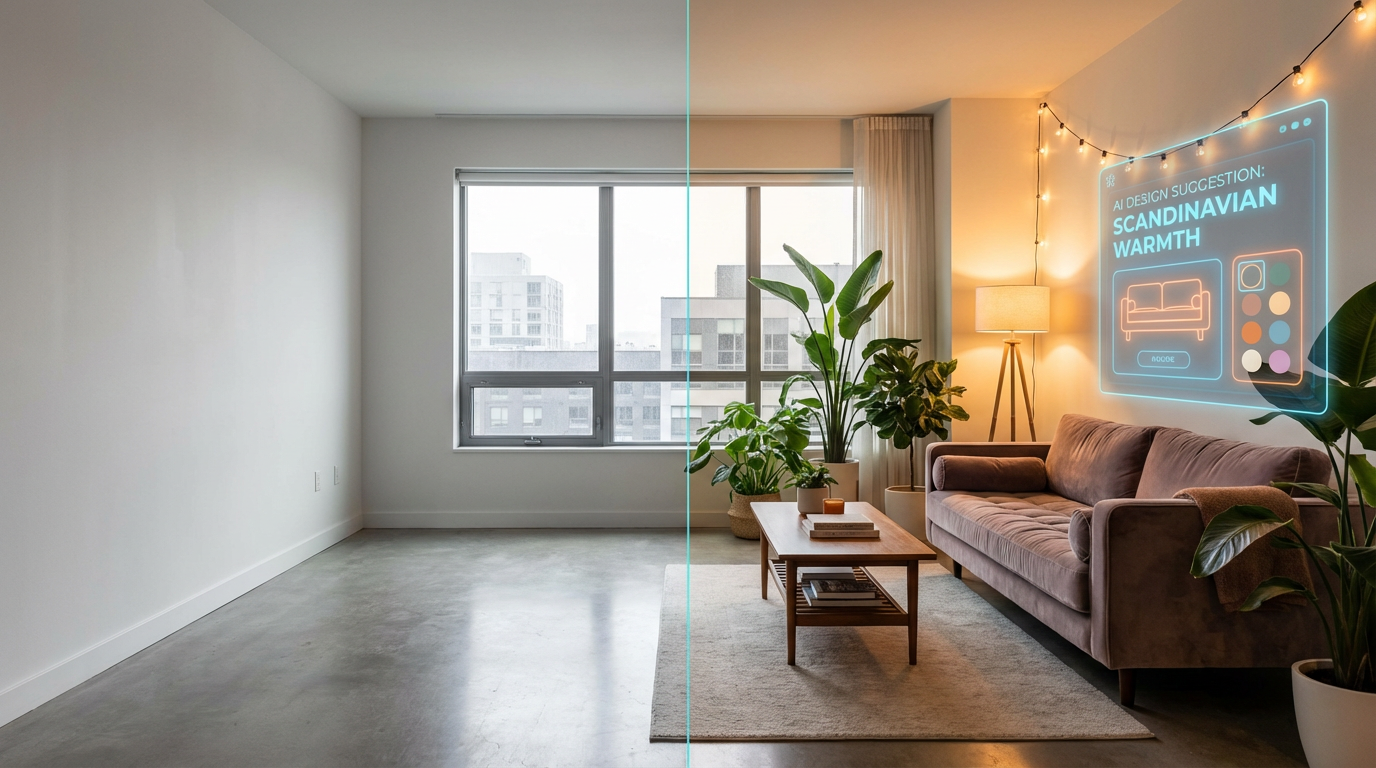
The interior design industry just got democratized by a smartphone camera. A new generation of AI tools lets anyone — homeowners, renters, real estate agents, even contractors staging a flip — snap a photo of any room and see it completely redesigned in under 10 seconds. No design degree. No $5,000 consultation fee. No three-month wait for mood boards. Just a photo and a prompt.
The New Tools
The market leader is Interior AI, which pioneered the “upload a photo, pick a style” workflow. Upload a picture of your living room, choose from over 75 design styles — Scandinavian, mid-century modern, japandi, industrial, coastal grandmother — and the AI generates a photorealistic render of that room transformed. The technology uses diffusion models trained on millions of professionally designed spaces to understand spatial relationships, furniture scale, lighting, and material textures.
Collov AI takes it further with a conversational interface. Describe what you want in plain language: “Make my bedroom feel like a boutique hotel with warm tones and a reading nook.” The AI interprets the intent, not just the style label. HomeDesigns AI extends beyond interiors to exteriors, gardens, and patios — useful for homeowners planning renovations who want to visualize curb appeal changes.
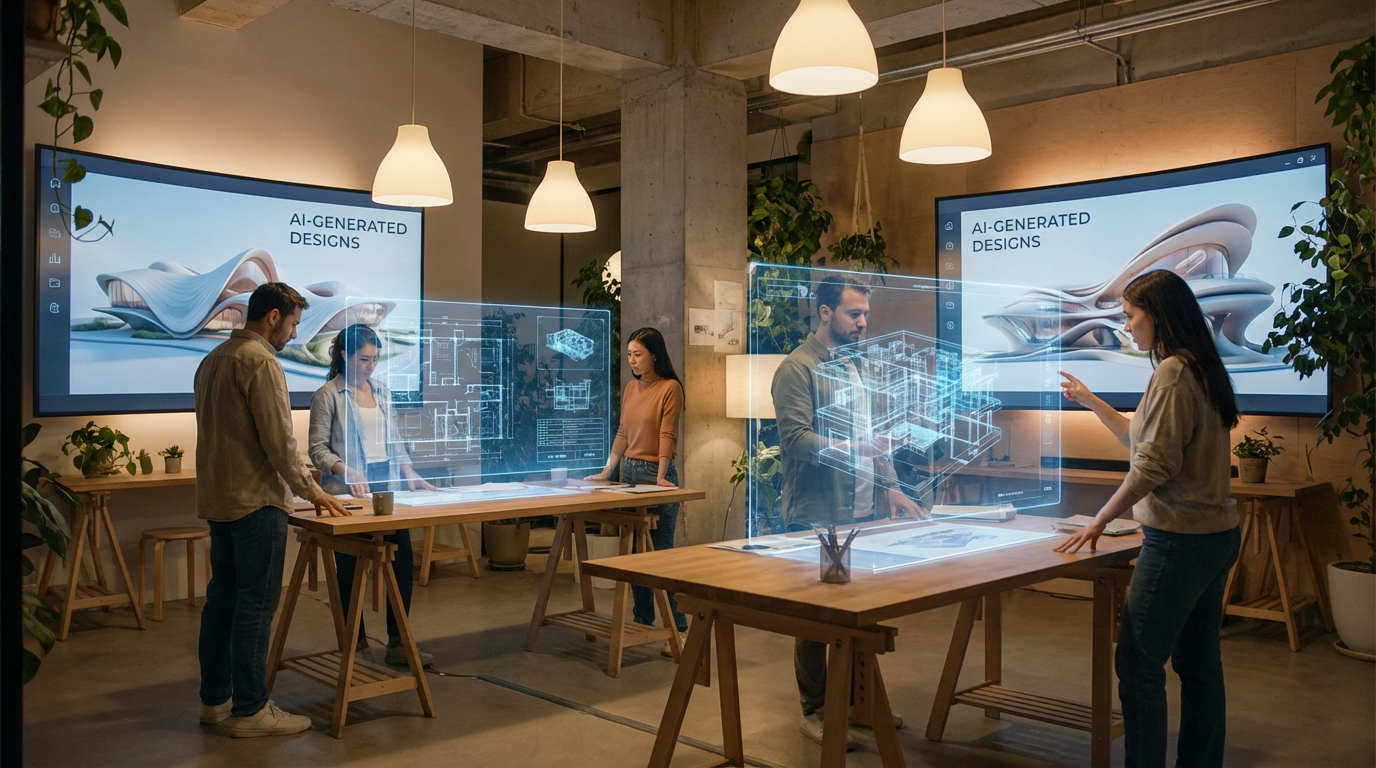
For professionals, tools like ArchiVinci and InteriorGPT offer multi-engine rendering that produces presentation-quality images from sketches, 3D models, or phone photos. No GPU required — everything runs in the browser. Pricing ranges from $19–$149/month depending on volume, with commercial-use rights included on paid plans.
“The blueprint is dead. Long live the algorithm. These tools don’t replace taste — they democratize access to visualization that used to cost thousands of dollars and weeks of waiting.”
What This Actually Changes
The real disruption isn’t the renders. It’s the decision speed. A homeowner building a new house used to make finish selections from tiny swatches and sample tiles, praying the combinations worked in their actual space. Now they can see their actual kitchen — with their actual window placement and ceiling height — rendered in six different cabinet-countertop-backsplash combinations in under a minute.
For real estate staging, the impact is immediate and measurable. Virtual staging an empty listing used to cost $200–500 per room with a 24–48 hour turnaround. AI staging tools do it for $1–5 per image in seconds. Agents report that virtually staged listings receive 40% more online engagement than empty-room photos.
The Limitations Are Real
These tools are brilliant at showing you what something could look like. They’re terrible at telling you what it costs, whether it’s structurally possible, or where to buy the furniture they just invented. The AI might render a stunning built-in bookshelf across a wall that contains your home’s main electrical panel. It might suggest a paint color that doesn’t exist from any manufacturer.
The gap between “beautiful render” and “buildable design” remains wide. AI interior design tools are best understood as a communication accelerator — a way to show your designer, contractor, or partner what you’re imagining, rather than a replacement for professional design expertise. The best firms are already integrating these tools into their client workflows, using AI-generated concepts as a starting point for detailed, buildable plans.
The $4.18 billion market didn’t come from replacing designers. It came from giving 100 million people who would never have hired a designer the ability to see their vision before committing to it. That’s not disruption. That’s expansion.