The construction industry is short 349,000 workers right now. Not next year. Right now. And 41% of today’s workforce is expected to retire by 2031, according to the National Center for Construction Research and Education. So when Procore Technologies rolled out its suite of AI agents last year — digital assistants that can write daily logs, generate submittals from project documents, and flag safety risks in real time — the question stopped being “Should we adopt AI?” and became “How fast can we deploy it?”
The answer, it turns out, is pretty fast. And for homeowners hiring general contractors in 2026, the AI revolution is already changing what happens behind the scenes on your job site.
The Digital Foreman
At Mortenson, one of the nation’s largest builders, superintendents now dictate daily site updates into Procore’s AI system while walking the job. The agent transcribes, categorizes, and formats the notes into structured daily reports — pulling in weather data, crew counts, and equipment logs automatically.
“If you can input data that way, and not have to do it in front of a computer, having that user interface improvement is really great,” said Gene Hodge, Mortenson’s VP of Innovation. That might sound modest. It isn’t. Daily reporting is one of the most despised tasks in construction management — and one of the most legally critical. When disputes arise on residential projects, the daily log is exhibit A.
Florida-based contractor Kaufman Lynn has gone further, building a custom AI agent on Procore’s platform that pulls data from nearly a dozen internal systems to automatically generate formatted monthly progress reports. Tasks that consumed 20+ hours of project manager time now take minutes.
From Documents to Decisions
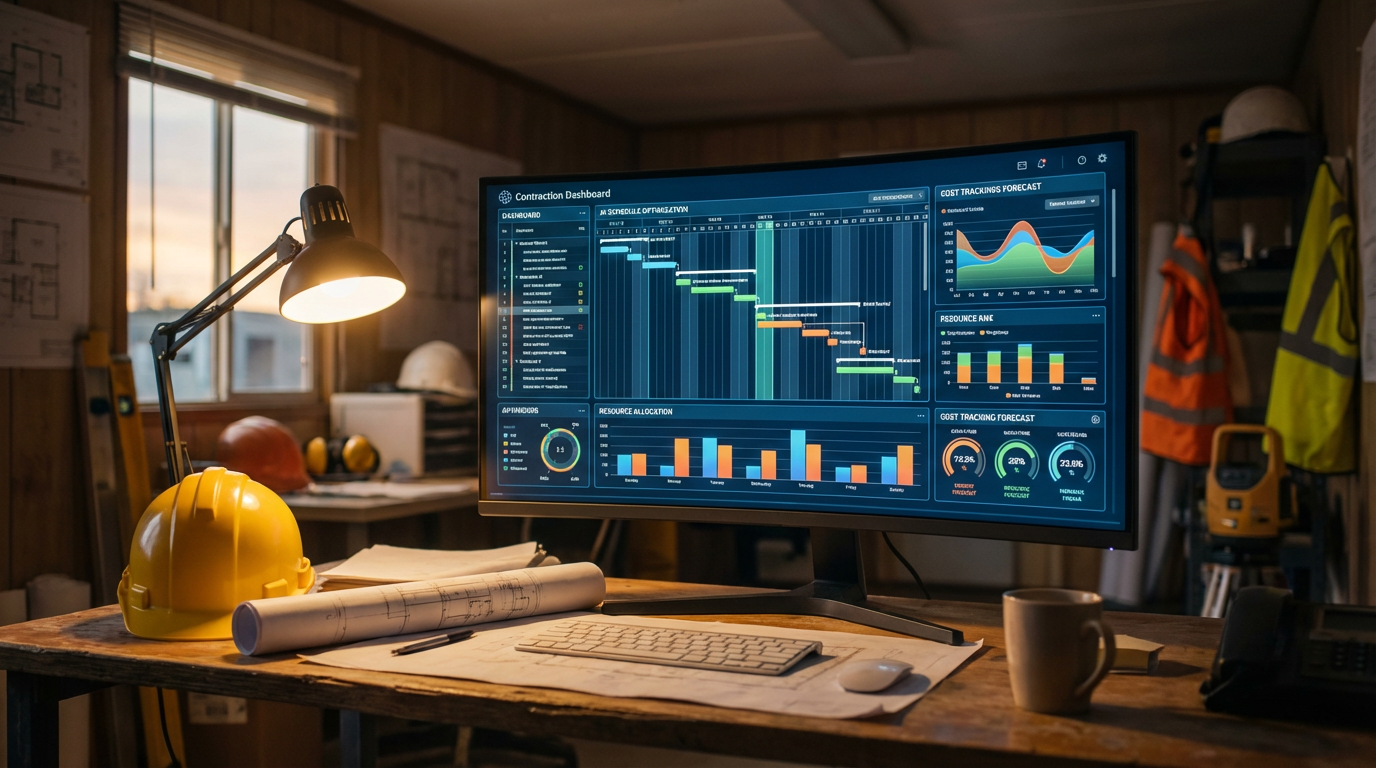
The real power of construction AI agents isn’t voice-to-text. It’s document intelligence. A typical residential project generates thousands of pages: specs, submittals, RFIs, change orders, inspection reports. Procore’s Assist tool uses large language models (powered by OpenAI) to let project managers query this mountain of paperwork in natural language.
“What’s the fire-rating requirement for the bedroom walls?” — a question that used to mean 45 minutes with a highlighter. Now it takes five seconds.
Other AI features automatically extract data from project files to generate required submittal lists. For a homeowner, this means fewer delays caused by missed submittals — one of the most common reasons residential projects fall behind schedule.
The Competitive Landscape
Procore isn’t alone. The construction AI space is crowding fast:
AI Clearing and OpenSpace use computer vision to analyze aerial and ground-level site images, automatically tracking progress against the schedule. Skillit deploys AI agents to match construction workers with available jobs — like a smart staffing agency. Alice Technologies uses AI to optimize construction sequencing, finding the fastest path through complex builds. And larger players like Trimble and Autodesk are embedding AI across their existing platforms.
For residential builders, the most immediately useful tools are the ones that reduce administrative burden. A 2025 McKinsey analysis found that project managers spend up to 40% of their time on documentation and coordination — time that could be spent actually managing the build. AI agents are clawing back that time.
What This Means for Your Home Build
If you’re hiring a general contractor this year, ask about their tech stack. The builders adopting AI agents aren’t doing it to replace workers — they literally can’t find enough workers to replace. They’re doing it to make the workers they have dramatically more effective.
That translates to fewer documentation errors, faster RFI turnaround, earlier detection of schedule risks, and — crucially — a superintendent who spends more time watching your house go up and less time typing into a laptop.
The 349,000-worker gap isn’t closing. AI agents are the construction industry’s answer to a problem that education and immigration policy haven’t solved. Your next home might be built by a crew of 12 humans and one very busy algorithm.